Posted in Goal, Manifestation, Mindset

12 Simple And Totally Weird Confidence Building Exercises

Do you really need confidence building exercises?

Some people seem to be born with a high level of confidence, but for the rest of us, it’s something that must be earned and constantly developed. When you start thinking negatively about yourself, it’s hard to convince yourself otherwise.

You need to go beyond positive thinking and really believe that what you’re saying is true. If you aren’t sure how to get started with this, consider working through these 12 simple activities.

Compliment a stranger

It might feel awkward, but it will make you feel good. When people hear compliments, it makes them feel good about themselves and about the world around them. You never know where your compliment may go; it could end up back in your lap! This is one of the most fun confidence building exercises.

confidence building exercises
Photo by Diego Ramirez on Pexels.com

Stand up straight

Stand up straight and tall with your shoulders back. Hold this position for a few seconds. Let go, relax and repeat. Of the confidence building exercises, this one will help you feel more confident because it makes you feel like you’re on top of things.

Talk to yourself

When we’re alone, it’s easy to talk to ourselves. We may think that talking to ourselves is a sign of being crazy, but there are many benefits of talking to yourself. This may sound like one of the weirder confidence building exercises.

When you talk about your problems and concerns with yourself, you can find solutions for them easily. You can’t solve a problem until you know what it is and have identified the root cause. When we talk about our problems with others, they give us suggestions or advice that doesn’t always help us solve our problems.

Talking to yourself gives you an opportunity to analyze your situation from different perspectives and come up with unique solutions that would never occur to anyone else.

Make eye contact with people you make purchases from or talk to throughout the day (barista, cashier, etc)

It’s an easy way to start small and build up your confidence. The first time I did this I was surprised at how many people looked away as soon as they saw me looking at them! It was kind of embarrassing but also helped me realize that people aren’t always looking at you because they hate you — it’s just human nature.

Call a business and ask to speak to someone you admire

This one is totally easy and one of the most surprisingly effective confidence building exercises. Find someone who inspires you and call their office. Tell them who you are, what you do, and ask if they would be willing to meet up over coffee or drinks sometime soon. Even if they say no, this exercise is great for building confidence because it teaches us that rejection isn’t scary — it’s just part of life. This exercise makes the top of the list of confidence building exercises.

confidence building exercises
Photo by Pavel Danilyuk on Pexels.com

Smile at everyone you see for an entire day

Smiling is one of the most powerful ways to boost your self-esteem and happiness. It also helps other people feel good, too! So when you smile at someone as they walk by on the street or in an elevator, they’re more likely to smile back at you and it creates a positive feedback loop. This positive feedback loop is an excellent addition to your confidence building exercises.

Listen to music that makes you happy and energetic

Music has an amazing power to influence moods and emotions. So crank up the tunes and dance around like nobody’s watching! This can be a great way to get yourself in the mood for an upcoming event where you want to feel confident and energized. Right before I defended my dissertation, I had a mini-dance party on Zoom with some friends!

Unfollow people on social media who make you feel bad about yourself

Social media can be a great way to stay connected with friends, but it also has the potential to make us feel like crap about ourselves. If you’re feeling down on yourself, take some time to unfollow people who post things that make you feel bad or insecure.

Wear a super confident outfit

Dress up in something that makes you feel good about yourself. The more comfortable you are, the more confident you’ll be.

Make a list of all your accomplishments

Write down all the things you’ve accomplished in life, whether it’s getting good grades or achieving a certain goal at work or school. Be sure to include big wins as well as small ones, because even if you don’t feel confident about yourself right now, there’s no doubt that you have some amazing qualities and abilities!

Do something small and silly to embarrass yourself on purpose

You’re going to do something small and silly to embarrass yourself on purpose.

You’re going to do it in front of a mirror, so you can see exactly how you look as you do it.

You’re going to make a fool of yourself and then laugh at yourself for doing so.

Why? Because we all want to be confident in our own skin. Sometimes, we get caught up in thinking about how others see us, instead of just being ourselves.

This exercise is designed to help you overcome that fear, and remind yourself that there’s nothing wrong with being who you are — even if it means making a fool of yourself every now and then!

Compliment yourself every day for a week

Start by looking in the mirror and saying something positive about yourself out loud. Then make a habit of doing this every morning and evening, no matter how hard it feels at first. It’s best if you begin with one-word compliments, such as “I’m smart” or “I’m funny”. Once you’ve gotten used to this exercise it’s time to go bigger! Try complimenting yourself on more than just one aspect of yourself each day until eventually, you’re confident enough to say nice things about all aspects of your personality.

Final thoughts on confidence building exercises

By consistently striving to improve yourself, or just small bits at a time, you will begin to feel better about yourself in the long run. You’ll have a better sense of who you are, and that is the first step toward becoming a better person. So what’s the next step? Start trying out some of these weird exercises to learn more about yourself and remember that no one else can do them for you.


Posted in Goal

Evergreen Content: 5 Reasons Why You Need To Create Today

You’ve probably heard of evergreen content before, but you might not know what it is or why it’s so important. I’m going to clear that up for you and give you five reasons why you should be creating your own evergreen content today.

What Is Evergreen Content?

It is content that’s suitable for and relevant at any time or in any situation, which means it will always be clicked on and shared.

According to Wikipedia, “Evergreen content is any piece of information that remains relevant over time and across different web pages.” Evergreen content is also known as timeless content or long-form SEO copywriting.

Evergreen content will help you get organic search traffic

Evergreen content helps your site rank higher in search engines like Google and Bing by providing value to your readers. Google has said that it considers the length of time each page has been on the web when calculating search results — so if someone searches for a keyword related to your product or service, they will see your page more often if it has been around longer than other sites offering similar products or services.

Evergreen content can last for months and even years

Evergreen content is a type of article that can be read by readers at any time during the year without losing any value or becoming outdated. It’s not seasonal or tied to a holiday or event. It’s always relevant and never becomes obsolete because it provides information that people want to know about their businesses and their lives in general. The best part about evergreen content is that once you publish it on your website it will continue to bring in traffic for months or even years after it was first published!

evergreen content
Photo by Julia M Cameron on Pexels.com

Evergreen content will build your brand

This type of content helps build trust with potential customers. If consumers see that you’re sharing valuable information on a regular basis, they’ll feel more confident visiting your site or buying from you in the future. In fact, 80 percent of consumers trust recommendations from friends and family over any other form of advertising — including paid ads.

It can help you build your brand by:

Creating trust

Informing customers

Increasing traffic

Building authority

Generating leads

Serves as a point of reference from which you can develop other forms of content

For example, if you have written a blog post about how to get rid of weeds in your garden, this article would be considered evergreen because it will continue to generate traffic long after the gardening season ends. You could also write a similar article about how to get rid of pests in the garden, but this article would not be considered evergreen because it would only generate traffic during the summer months when pests are prevalent.

Evergreen content brings in the big bucks

Evergreen content brings in the big bucks because people will find your page whenever they search for the topic you’ve covered. The best part? You don’t need to create new pages every time someone wants new information on the subject — just update your old page with new information as needed!

Evergreen content is a great investment because it will keep working for you long after you’ve written it. You can create one piece of content and have it generate income for years, even decades.

Final Thoughts

There is no question that to build your brand, you must publish content on a regular basis. It doesn’t matter if you are a blogger, writer, or small business owner – publishing new content that your audience will love is crucial for your brand’s success. I have found through my journey that evergreen content does wonders for my brand and whether you know it or not (or want to admit it), there are many benefits to creating evergreen content.

Posted in Goal

How can setting goals help you in the long term? 5 things to consider now

You may have wondered, how can setting goals help you in the long term? I use goal-setting methods for my own life in every setting. It allows me to have my goals in front of me throughout the year, so I can see what steps I need to take next, and provides an outline to follow if I change my goals.  

Goal setting also allows me to reexamine what I am doing and make changes if something isn’t working.  The year is long enough to get a lot of things done, so let’s look at some ways you can use goal setting throughout the year and beyond!

Clarifying what you want brings clarity to your life

How can setting goals help you in the long term when it comes to gaining clarity?

This is the first step in setting goals. It is a process of defining, refining and prioritizing what you want. This clarification process can be done alone or with a friend or coach. It is important that you are honest and objective with yourself during this process, as it will help you achieve the results that you desire.

The second step is setting specific, measurable, achievable and timely goals. These goals should be tied to your vision statement and be SMART: Specific, Measurable, Attainable, Realistic (and) Time-bound.

The third step is creating an action plan that includes steps to achieve each goal with dates/time frames for completion. For example: “By March 1st I will have successfully completed my first fitness test at boot camp (specific).”

How can setting goals help you in the long term?
Photo by Polina Zimmerman on Pexels.com

Goals help you to find purpose and meaning in your work and life

How can setting goals help you in the long term when it comes to finding purpose and meaning?

When people talk about goals, they often think of them in terms of productivity and achievement. But there’s another way to think about them: as a way to find direction and purpose in life. This is especially true for people who feel that their work is meaningless or unfulfilling.

Goals can help you find purpose and meaning in your work and life because they make it easier for you to understand what success means to you. Once you know what success looks like, then it becomes easier to make decisions about how you spend your time and effort.

This doesn’t mean that everyone should set goals — sometimes it’s better not to have any particular destination in mind when doing something. But if it works for you, then setting goals can be an important tool for finding fulfillment in your work

You’ll challenge yourself to grow as you pursue goals

How can setting goals help you in the long term and help you grow?

Setting goals is one of the most powerful tools we have to shape our lives and make them more meaningful. They can help us reach our full potential, achieve greater success, and feel more fulfilled in our lives.

When you set goals, you’re telling yourself that “this is what I want.” And by doing so, you’re giving yourself permission to move towards it. You’re giving yourself permission to take action on what matters most to you in life.

But if you don’t know where you’re going, how will anyone else?

Setting goals leads to more success

Have you ever wondered why some people seem to accomplish more than others? It’s not because they’re smarter, have more money or are better at hiding their flaws.

The answer lies in their approach to life. They have a habit of setting goals and achieving them.

Setting goals is one of the most important habits you can develop if you want to succeed in any area of life, whether it’s career, health or finances.

Having a specific goal helps you focus on what matters most, instead of getting overwhelmed by all the things that you could be doing.

black and white dartboard. how can setting goals help you in the long term
Photo by Engin Akyurt on Pexels.com

Goals can keep you motivated

How can setting goals help you in the long term when it comes to motivation?

Setting goals is a great way to stay motivated. Progressing towards a goal provides a sense of accomplishment, and it shows you what areas of your life need improvement. If you set a goal that is too big and hard to reach, it can actually be counterproductive because it will just cause you to feel overwhelmed. It’s important to set realistic goals that you can achieve with time and effort. You should also set short-term goals so that you have something to work towards in the short run as well as long-term ones for the future.

So, how can setting goals help you in the long term?

If you want to achieve something in life, setting goals and working towards them is the first step. If you really want something bad enough, go after it. Don’t give up easily. Be hard-working and diligent, but most of all, do the research and don’t be afraid to ask for help. And maintain this mindset because your goals will change over time.

Setting reasonable goals and working towards them can help you stay motivated and see your long-term vision in a clearer, more structured light. Setting goals forces you to be organized, systematic, and analytical in a way that isn’t always natural—but it’s also worth the effort.

Posted in Goal, productivity

Creative Ways To Increase Your Productivity Working From Home

If you want to increase productivity working from home, and find more ways to earn income working from home, there are a lot of things that you need to know.

Being able to work from home can be a dream for some and a nightmare for others. While working from home can promote increased productivity, many struggle to stay focused and on task.

Use the 50-10 Rule

When you’re working from home, it’s easy to get distracted by all the things that are going on around you: The television is on in the other room, there’s a dog barking outside, or someone is knocking at the door. To help stay focused on your work, use the 50-10 rule. Set an alarm for 50 minutes. When it goes off, take a ten-minute break before starting another 50-minute stint of work. This will keep you on track without feeling like you’re being regimented by an employer who expects you to sit at your desk all day long.

The Power Hour

The idea behind The Power Hour is to set aside a specific time period each day where you do nothing but work on one project. This can be very helpful if you have multiple projects that need to be completed, or if you feel like you never seem to get anything done because there are so many distractions.

The Power Hour should be scheduled at the same time every day (e.g., 9am-10am). You can use this time however you wish; it could be for one project only or for multiple projects. Just make sure that you stick with the same time slot every day so that it becomes part of your routine! This can help productivity working from home.

productivity working from home
Photo by cottonbro on Pexels.com

Know When to Stop Working

If you’re going to work from home, it’s important to set boundaries. You might not want to get up at 6 a.m., but if that’s what your job requires, then do it! Learn how to say no when necessary and don’t feel guilty about it either! If your boss is asking for something unreasonable, then explain why it isn’t possible for you at this time and ask if there’s anything else that could be done instead.

Designate a Workspace

One of the biggest challenges of increasing productivity working from home is keeping yourself away from distractions. If there are too many distractions around, it can be very difficult to get anything done.

To help with this problem, I recommend that you designate a workspace where you will spend most of your time working. This may be an office or another room where there isn’t much going on besides work—or it could be as simple as setting up a desk in a quiet corner of your house.

Make To-Do Lists and Prioritize

To-do lists are great for keeping track of everything that needs to get done. The key is to make sure you’re prioritizing them so the most important stuff gets done first.

If you have several tasks that need to be completed by the end of the day, break them down into smaller chunks and prioritize each one based on how much time it will take or how important it is in relation to other projects. This way, when things go wrong or you get distracted by something else, you’ll know exactly where to go back to pick up where you left off.

Reward Yourself for Accomplishments

If you have a hard time staying motivated while working from home, try rewarding yourself for accomplishments instead of setting goals for how much work you want to accomplish each day or week. For example, if you finish writing an article or book chapter without procrastinating too much, reward yourself with a nice dinner out or a trip to the movies with friends. Don’t wait until the end of the month or year either — reward yourself as soon as possible after accomplishing something important!

Takeaway
These are a few techniques that can increase your productivity working from home.

Posted in Goal, productivity

17 Inspiring Productivity Quotes To Kick You Into Gear

Many productivity quotes exist that give you the motivation to get work done. These quotes can serve as a good reminder of why you’re doing what you’re doing, and that you’re not alone. Here are 17 motivational productivity quotes that will keep you focused and determined.

Productivity Quotes

“The way to get started is to quit talking and begin doing.” -Walt Disney

Time is what we want most, but what we use worst.” William Penn

“You don’t have to be great to start, but you have to start to be great.” —Zig Ziglar

“Don’t wait. The time will never be just right.” – Napoleon Hill

“No matter what the scale of your dream is, the way you get there is the same—one day at a time of focused activity.” – Greg Reid

“Your mind is for having ideas, not holding them.” ― David Allen, Getting Things Done: The Art of Stress-Free Productivity

“The key is not to prioritize what’s on your schedule, but to schedule your priorities.” – Stephen Covey

productivity quotes
Photo by Julien Bachelet on Pexels.com

“Never confuse motion with action.” – Ernest Hemingway

“Focus on being productive instead of busy.” – Tim Ferriss

“The tragedy in life doesn’t lie in not reaching your goal. The tragedy lies in having no goal to reach.” – Benjamin Mays

“Go as far as you can see; when you get there, you’ll be able to see further.” – Thomas Carlyle

“We all have 24-hour days. It’s just that some people use their 24 hours more productively than others.” – Rick Warren

“You may delay, but time will not.” – Benjamin Franklin

“Amateurs sit and wait for inspiration, the rest of us just get up and go to work.” – Stephen King

“Most of us spend too much time on what is urgent and not enough time on what is important.” – Stephen Covey

“The secret of getting ahead is getting started. The secret of getting started is breaking your complex overwhelming tasks into smaller manageable tasks, and then starting on the first one.” — Mark Twain

“The best time to plant a tree was 20 years ago. The second best time is now.” – Chinese proverb


A lot of people get caught up in their busy schedules, but don’t have time for the things that matter. Sure, it can be tough to strike a balance between work and play, but there are ways to help you do just that—like using these productivity quotes.

Posted in Goal

When to use Google Sheets? Important ways to organize your life

When to use Google Sheets you ask? Over the years, I have tried so many techniques and apps to mange my time, tasks, and productivity. There are some pretty great digital apps, but lately my fall back solution is to use Google Sheets. And I’m loving it!

Sometimes simpler truly is better. Some of the features I love about Google Sheets is that I can create checkboxes, color code different categories, easily copy and paste from one area to the other, and create links between sheets to further organize a goal or task. So let’s break it down into the ways I use Google Sheets to organize my life and keep me motivated.

when to use google sheets for Health and Fitness Goals

First, let’s talk about health and fitness. Right now I don’t have access to a scale, which honestly is probably a good thing. I am walking a ton in Norway where I call home at the moment. So before that, I tracked my weight every week in a Google Sheet.

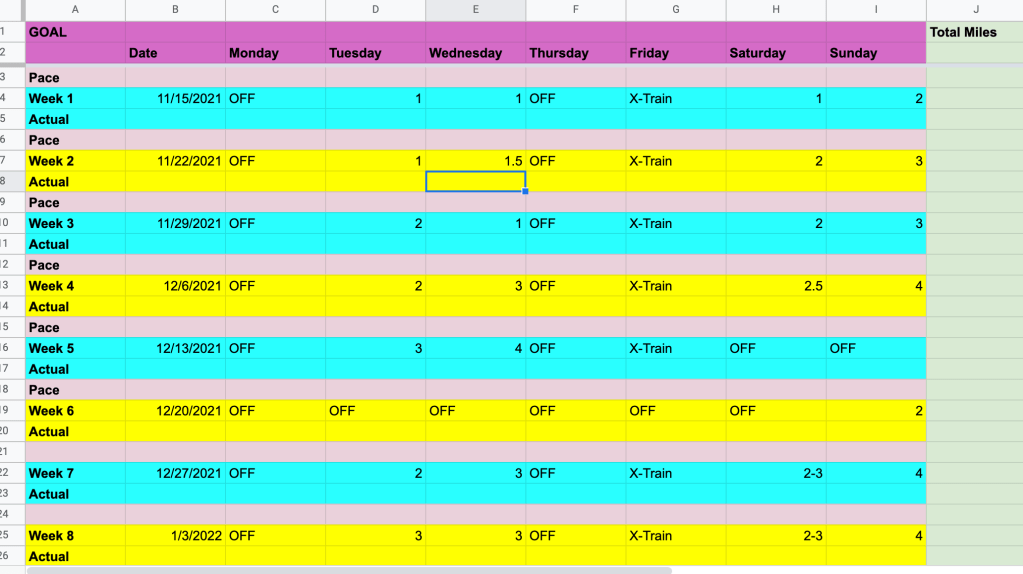
However, one of the most productive things I’ve done is create a training guide to complete a half marathon.

when to use google sheets

That method worked for me! At that time, I was already pretty in shape so I was able to start my first week with 2-3 miles.

Since it has been 5 years since I ran that race and I let running go, despite it being an excellent stress reliever, I have decided to do another one! I am planning to run the Bergen City Half Marathon at the end of April 2022.

So, of course, what did I do? I created a 20-week training plan with Google Sheets for myself! I will be on a European adventure trip for 8 days in December, so I just went ahead and blocked that week off so I don’t have to worry about being “disappointed” if I don’t meet my goals for that week. I will probably be walking a ton anyway. And since I am starting way more out of shape than last time, I’m giving myself a few slower weeks to ease back into running.

when to use google sheets

When to use google sheets for budgeting

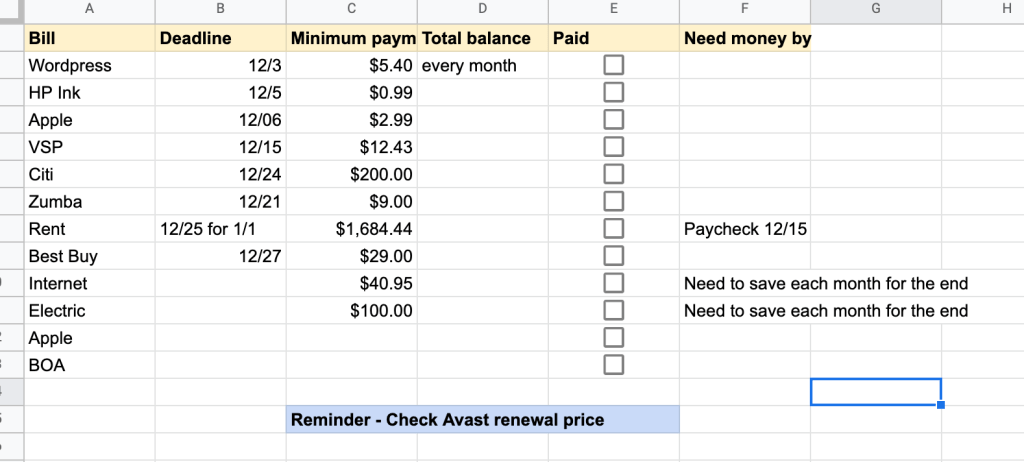
I do not have a fancy or detailed budgeting system. I mainly use Google Sheets just to make sure that all my bills are paid on time each month. It also helps remind me to have enough money in my account for automatic withdrawals.

when to use google sheets

I should probably call this a bill system and not a budget system because you can see that I don’t account for food or miscellaneous expenses. This is my checklist for December. Some of the amounts change depending on renewals and you see I also put reminders when I know annual subscriptions are coming up. You don’t see car insurance on my December bills list because I am only paying about $40 every 6 months while I am in Norway and my car is just sitting in the U.S.

I am a licensed Zumba instructor, but I just don’t have the time right now to continue classes. And most of the people that attended my virtual classes previously were in a different time zone. So, I am paying a monthly hold fee so I don’t have to redo the whole licensing process when I get back to the U.S.

when to use google sheets for Daily and Weekly Tasks

I have tried all sorts of methods of tracking daily to do lists. Now, I just simply type my tasks out in the day I would like to complete it during the week it needs to be done. I can work several weeks ahead so that reminders go in and I don’t forget about important things. Then, when the week has passed, I just hide the sheet so the current week is first. If I don’t get it done, I just cut and paste it into the next day. I go through my action items for the week every Sunday night.

when to use google sheets

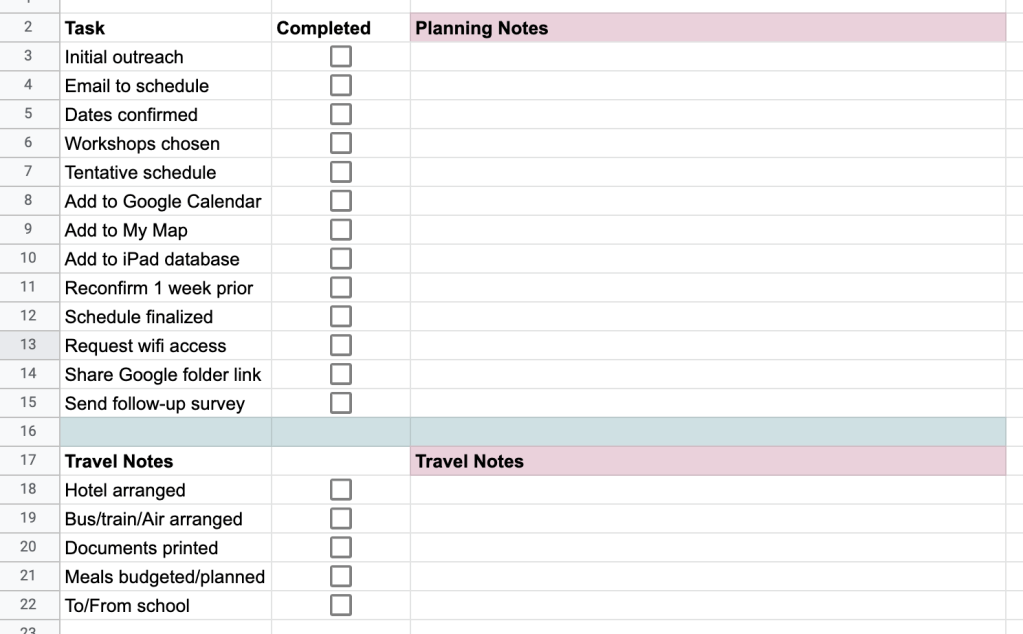
For my current job in Norway I have a lot of details to manage. I have to create a schedule for the year of places that I’m going to give workshops. Then, I have to make sure I do a bunch of things during that communication. So I created one giant Google Sheet that has the weeks of the school year listed. I put the main details in that sheet and then link to a checklist for each school visit. All the checklists are on individual tabs in a separate Google Sheet document.

when to use google sheets

when to use google sheets as a Habit Tracker

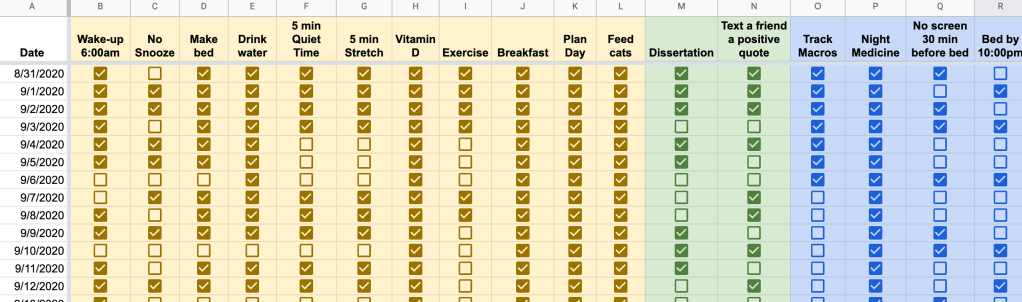
Another way I use Google Sheets to organize my life is a habit tracker. Again, I’ve tried different forms of this, and I even have a PDF habit tracker for free here on my site. Here is a screenshot of how I used it in the past. Obviously, I was still in the process of building the habits then. Now, I don’t have to think about all of them quite so much. I used this when I was trying to build a solid morning routine.

when to use google sheets

Final Thoughts for Today

There are many different ways you can use Google Sheets to organize your life. These are just some of the examples that I use to keep myself focused and organized. I’m sure if I went back through my whole Google Drive I would find even more examples. Share in the comments how you use Google Sheets for organization!

Posted in Goal, Manifestation

5 Things to Focus on in the New Year: Self Love

Self love – This is part 2 in a 5 part series. Well, part 1 focused on time management and part 2 is focusing on self-love. As I looked back through my blog posts for the year, I realized I talked about self-care and building confidence, but I’m not sure I touched on self love and acceptance. Perhaps it’s because it’s still an area of improvement in my life. Something that doesn’t quite feel like I fully made it there yet.

But isn’t the journey more important than the destination?

So what if I never get to 100% self love and acceptance? That would be amazing and maybe I will, but figuring it out is just as important. Because if I’m always focusing on how I’m going to feel when I fully love and accept every piece of myself, then I can’t focus on fully loving who I am in this particular moment.

I always want to improve and become a better version of myself. We should strive to improve and grow as individuals to better for ourselves and the people around us. Ironically, putting myself out here into the digital world is helping me reach a more accepting and loving view of myself. My confidence is growing and I am realizing more and more each day that there is only one me in this world.

Self Love Goals for the New Year

  1. Start each day by looking in the mirror and saying one thing I love about myself
  2. Continue to say and write affirmations on a daily basis
  3. Reduce automatic negative thought patterns
  4. If someone gives me a compliment, accept it and do NOT downplay it
  5. Continuing aligning physical health and mental health

This is not a linear process, but it is a process that needs to happen. I encourage you to embark on your own self love and acceptance journey!

Posted in Goal

4 Tips to Master the Power of Effective Scheduling

Effective scheduling is key. Some people say that I’m a planner. Others say I’m calendar-oriented. Really, I just like to make sure that my time, tasks, and priorities are all reflected in my schedule. When someone asks me to do something and I agree (also power in saying no), I immediately add it to my Google Calendar, which can be accessed on my phone, iPad, and laptop. No matter where I am I have access to it.

If it is a work or professional meeting, I copy the Zoom or webinar link from the email and paste it directly into the calendar event that I create so that I do not have to search for the email when it’s time to log in.

effective scheduling
Photo by RODNAE Productions on Pexels.com

Effective scheduling: Clarify your goals

It is important to know what you want to accomplish with your time. You cannot create an effective schedule if you don’t know what you are aiming for. I wrote a post on mini-goals here. Get specific on the main areas of your life and figure out the chunks of time that need to be spent on each.

Effective scheduling: Prioritize your tasks

When you sit down to work, or even at the beginning of every day, take a look at everything that needs to be accomplished. What is that one thing that can’t be put off? Do that first, in the morning if you can. For longer term projects, break it down into smaller deadlines and place those on your calendar. If you’re not sure how to prioritize, consider using a strategy like the Eisenhower Matrix.


Effective scheduling: Utilize a digital calendar like Google Calendar

Keep a calendar that can be accessed from all of your digital devices: laptop, phone, iPad, etc. That way, you always have access to what you need in the moment if someone asks to schedule something. Personally, because I work several part time jobs and manage my own schedule, I keep one Google Calendar for everything and color code by activity, including my personal commitments. For example, if a friend texts me and says, “hey, we should catch up on the phone Thursday around 8pm.” If I’m free, I actually confirm and add that to my calendar so I don’t forget to call or accidentally make plans to do something else because I forgot we were going to chat.

At work, I utilize my email kind of like a to-do list. I try to check my email at certain points throughout the day, but if something comes on that I need to take care of that day or later in the week, I also add it to my calendar and include the reference email.

Effective scheduling: Learn to Say “Let Me Get Back to You”

If you’re a kind-hearted person who wants to follow through with helping people or do a good job, you’ll be tempted to say yes to everyone and everything. That is not a realistic way to manage a schedule because you will quickly become overwhelmed. However, instead of saying no right away, give yourself some think time when someone asks you to do something or for another meeting or a favor. Evaluate if it fits with your goals and priorities or fits in any extra time you have available for leisure. If not, perhaps you may have to decline or ask the person to check in with you at a later date.

These are just some of the strategies that I use on a regular basis to maintain my schedule. Please leave a comment if you’d like to hear more about any of them!

Posted in Goal, Manifestation

What is the difference between dreams and visions- 3 Important distinctions?

What is the difference between dreams and visions you ask? Dreams and visions are often confused as the same thing, but they are in fact very different. Knowing the difference between a dream and a vision is important for your personal development as well as your business. Dreams will never come true until they become a vision. Luckily, there are ways on how to turn dreams into visions. In this article, I will show you the differences between dreams and visions including the elements that differentiate them.

A dream is a strong fantasy whereas vision gives a clear direction

A dream is a strong fantasy, which may or may not come true. A vision is a clear direction for the future and it is backed by action.

A dream is a strong fantasy: You can always imagine something wonderful happening to you. For example, if you had a bad day at work, you might imagine that your boss comes to you and says, “You have done an excellent job and we are so happy with your performance. We want to give you a promotion!” Unfortunately, it doesn’t always happen that way. It is just imagination and there has been no real effort on your part to make it happen in reality.

Vision gives a clear direction: Your vision for your life should be something bigger than yourself. It should also be something that gives meaning to your life as well as purpose – something that will help others as well as yourself.

Again, what is the difference between dreams and visions?

Dreams are based on wishes, desires, and emotions whereas visions are based on reality and specific goals

The main difference between dreams and visions is that dreams are based on wishes, desires, and emotions whereas visions are based on reality and specific goals.

Dreams are generally what we would like to happen, while visions are what we believe will happen.

When you dream, you let your mind wander through all the things that might happen if everything went right. You think about how great it would be if you had a new job or home, or even just went on vacation.

A dream can be a wishful thought or something that’s as simple as “I wish I could go to the Bahamas.” It’s an idea that seems impossible, but it’s still something that you hope for deep inside.

What is the difference between dreams and visions?

A vision is something that you have clear ideas about and specific steps toward achieving it. It involves setting goals and planning out how to achieve them. For example, if you had a vision for going to the Bahamas next year, you’d probably make plans for saving money throughout the year so that you could take time off work without having financial worries holding you back from going on vacation.

what is the difference between dreams and visions
Photo by Ylanite Koppens on Pexels.com

Dreamers spend their entire life trying to achieve their dreams whereas people with a vision don’t spend time achieving their vision because they are already living it

A dreamer is someone who dreams of a better life, but doesn’t do anything to make it happen. A dreamer is someone who has a vision of what they want to be and where they want to go, but they don’t have the will or drive to make it happen.

A dreamer spends their entire life trying to achieve their dreams whereas people with a vision don’t spend time achieving their vision because they are already living it.

People with a vision understand that you must take action in order for your dreams to become reality. They don’t wait for things to happen, they make things happen. They know what they want in life and they’re willing to work hard until they get it!

So, what is the difference between dreams and visions?

The difference between dreams and visions is action. When you dream, you are looking inward; when you have a vision, you are expressing it outward. Some people only see the world around them through their supposed limitations, but others look for opportunities to reach their full potential. To accomplish anything you need to take action.

Posted in Goal, Manifestation

Setting Realistic Goals Is The Key To Getting Important Things Done

Setting realistic goals: When most people think about goals, they think about vision boards and long-term objectives. It’s not a bad idea to have those things, but you also want to be realistic and set goals which are measurable. And often times, this means breaking it down into smaller goals and shorter timelines.

Focus on how you can connect with goals that are meaningful to you

The best way to set goals is to focus on the process of reaching them, not just the end result.

Most people set goals like this: “I want to lose weight.” But that’s a goal that may only ever be partially achieved. You’ll lose some weight, but it may not be all you want it to be. And once you’re at your desired weight, what will you do then?

Instead, it’s better to focus on how you can connect with your goal. For example, here are two different ways of thinking about losing weight:

I want to feel more energetic and healthy.” This is a goal that can be achieved by eating well and exercising regularly — no matter what size or shape you are. It’s something that will sustain itself over time because it’s not dependent on a certain number on the scale or an outfit fitting better in the closet (which are both external factors).

In order to go about setting realistic goals that matter and are achievable, it’s important to focus on what you can realistically achieve in the next three to six months. Here are some examples:

  • Ask for a raise at work
  • Improve your health by exercising more and eating better
  • Travel somewhere new with your friends and family

End with a plan for how you’ll get from where you are now to where you want to be

The process of goal-setting looks easy, but it’s not always easy to know how to develop a plan for setting realistic goals and achieving them. Here are some tips for developing your plan:

  • Break down each step into smaller tasks. For example, if one of your goals is to run a marathon by the end of 2022, what steps do you need to take? You might break this down into weekly training sessions and then monthly long runs so that there are milestones along the way.
  • Figure out how much time you need for each task on the path toward achieving your goal. If it takes two hours per week (and let’s say we’re talking about studying) then twelve weeks before test day equals twenty-four hours total—that’s enough time!

    It may seem like a lot at first glance but once you’ve broken down everything else into smaller chunks and scheduled them out throughout the year (or even just over three months), suddenly committing twenty-four hours isn’t so daunting anymore! In fact it may actually be easier than breaking open a new book now would feel like because those twenty four hours are already accounted for in advance thanks to our earlier planning efforts.
setting realistic goals
Photo by RUN 4 FFWPU on Pexels.com

Remember your goals and find ways to achieve them

Now that you know how to set goals, let’s take a look at some of the many ways that goal setting can help you achieve your dreams.

  • It helps us to remember our goals and find ways to achieve them.
  • It helps us visualize our goals.
  • It helps us set priorities for achieving each goal.
  • It measures our progress toward achieving each goal using tangible measurements like numbers or percentages instead of just feelings alone!

Look at your situation honestly, not naively or selectively

Every year I set goals for myself. I am pretty good at it too, but what I learned is that if you don’t set the right goals, or if you set a goal that’s not in line with your values and the things that mean most to you in life, then there is no real motivation to do anything about them.

I tend to make lists of things I would like to achieve during the year and then break them down into smaller steps so they are more manageable. And then when I look at these steps, they should all be aligned with my values and what matters most to me.

For example, if one of my main values is family time and spending quality time together as a family unit, then any goal that supports this would be considered a higher priority than something else (like booking flights for holidays).

The same goes for other areas of life such as health or finances – if there’s something on your list that doesn’t support your health or financial goals then it’s probably not worth doing anyway!

setting realistic goals
Photo by picjumbo.com on Pexels.com

Setting realistic goals allows you to consider the realities of your life while still dreaming big

For example, going back to running a marathon, it’s realistic to also set goals around training and diet. You may decide to run five miles every day for three months, or eat healthier foods at every meal.

You can also be realistic about the amount of time it will take for your goal to be realized. If you plan on running a marathon in three months, it’s more realistic to set intermediate goals along the way—for example, running two miles per day for one week—and then celebrate even small successes along the way!

Setting realistic goals allows you to see how far away your dream feels when compared with where you are now and how much work needs to be done before it becomes reality.

Setting realistic goals for yourself

At the end of the day, regardless of whether your goal is big or small, it’s important to remain realistic in your expectations and to ensure that you are meeting that goal. Reaching your ultimate goal can be a tough challenge, which is why you should always set smaller goals along the way. Smaller goals may not always seem as impressive as some larger goals, but they help you with achieving the big-picture vision.