
Posted in Mindset

Why you should stop saying “I Can’t Afford It”

Have you ever found yourself saying, “I can’t afford it”? It’s a common phrase many of us use when faced with something we want but believe we can’t have. However, did you know that this negative money affirmation may be holding you back from financial success? In this article, we’ll explore the power of affirmations and how reframing your mindset can attract abundance and wealth into your life. You’ll also learn practical tips for attracting wealth and achieving financial freedom. So, let’s dive in and discover how changing the way we talk about money can make all the difference.

dirty pattern texture wall with the phrase happy to be me instead of something negative like "I can't afford it"
Photo by Eva Bronzini on Pexels.com

The Power of Money Affirmations

Saying “I can’t afford it” can have a detrimental impact on your financial well-being. This negative affirmation reinforces a scarcity mindset and limits your ability to see potential opportunities for abundance. On the other hand, positive affirmations can help to shift your mindset towards wealth and prosperity. By repeating affirmations such as “I am financially abundant” or “Money flows easily and freely to me,” you can reprogram your subconscious mind to attract wealth and abundance into your life. 

Research has shown that affirmations can have a powerful impact on our thoughts and behaviors (Johnson & Chang, 2019). The researchers found that money beliefs were significantly associated with financial behaviors, including spending, saving, and investing. By consistently repeating positive affirmations, you can begin to internalize these beliefs and see them manifest in your life. However, it’s important to note that affirmations alone are not enough to achieve financial success. You still need to take action towards your goals and make smart financial decisions. 

How Negative Affirmations Can Affect Your Finances

By saying, “I can’t afford it” or “I’ll never be rich”, negative affirmations can create limiting beliefs that prevent us from achieving financial success. These thoughts can become deeply ingrained in our subconscious and affect how we approach our finances.

Stop saying “I can’t afford it”

For example, suppose you consistently tell yourself that you’ll never be able to save enough money to buy a house. In that case, you may become resigned to renting and miss out on the opportunity to build equity and wealth through homeownership. Similarly, suppose you believe you’re inherently bad with money. In that case, you may need more motivation to learn financial skills or seek help from experts who can guide you towards better financial habits.

Changing how you think and talk about money can shift your mindset towards one of financial abundance and openness to new opportunities. 

Reframing Your Mindset for Financial Abundance

To truly break free from limiting beliefs that keep you stuck in a cycle of financial struggle, it’s important to reframe your mindset for abundance. This involves recognizing negative self-talk and consciously replacing it with positive affirmations. Instead of using phrases like “I can’t afford it,” try rephrasing as “I choose not to spend my money on that right now.” This slight shift takes you from feeling helpless to being in control of your choices.

low section of man against sky with broken handcuffs to symbolize breaking free from saying, "I can't afford it"
Photo by Pixabay on Pexels.com

With a mindset of openness and abundance towards money, you’ll be more receptive to opportunities for wealth-building.

Practical Tips for Attracting Wealth

The next step is to focus on the opportunities that surround you. Keep an open mind and stay alert to potential wealth-building prospects. This might include networking with successful people in your field, exploring side hustles or freelance work, or investing in stocks or real estate.

It’s also important to invest in yourself. Take courses or workshops that will increase your knowledge and skill set. This can lead to higher-paying job opportunities, promotions, or successful ventures as an entrepreneur.

Lastly, don’t be afraid to ask for help. Seek financial advisors or mentors who can provide guidance and support as you navigate your path to financial success.

With a mindset of openness and abundance towards money, you’ll be more receptive to opportunities for wealth-building. By implementing these practical tips, you’ll be on your way to attracting more wealth into your life.,

The way we talk about money can have a significant impact on our financial success. Negative affirmations, such as “I can’t afford it,” can keep us stuck in a poverty mindset. Reframing our language and focusing on abundance and wealth can attract positive financial opportunities into our lives. We can shift our financial reality by making small changes in our mindset and using positive affirmations. So remember, choose your words carefully regarding money, and watch the abundance flow. 

As Mahatma Gandhi said,

“Your beliefs become your thoughts, your thoughts become your words, your words become your actions, your actions become your habits, your habits become your values, your values become your destiny.”

-Mahatma Gandhi

22 Money Affirmations to Repeat Daily

  1. Money flows effortlessly into my life.
  2. It is my right to enjoy financial abundance and prosperity.
  3. I have the power to create wealth and financial freedom.
  4. I trust that the universe will always provide for me financially.
  5. I am grateful for the abundance of money in my life.
  6. Unexpected financial blessings are welcome to me.
  7. I am financially secure and stable.
  8. Every day, in every way, I am becoming more financially successful.
  9. I am worthy of being paid generously for my work.
  10. I am a magnet for financial prosperity and abundance.
  11. I am comfortable with money and love to see it grow.
  12. I am financially free to live the life of my dreams.
  13. I am always in the right place at the right time to attract money.
  14. My wealth and abundance are constantly increasing.
  15. I have a positive relationship with money.
  16. I am financially successful and fulfilled.
  17. I attract wealth and abundance effortlessly.
  18. Money is my friend and ally.
  19. I am capable of earning, saving, and investing money wisely.
  20. I am worthy of receiving financial blessings beyond my wildest dreams.
  21. Money comes to me easily and abundantly.
  22. I am grateful for the financial abundance that surrounds me.

Works Cited:

Johnson, M. K., & Chang, E. C. (2019). Money beliefs and financial behaviors: Development of the Money Beliefs and Behavior Scale (MBBS). Journal of Financial Counseling and Planning, 30(1), 18-33.


Posted in Mindset

Why Failure is Necessary to Succeed

Part 2 of the entrepreneurship series

Let’s talk about why failure is necessary to succeed.

Entrepreneurship has become the “it” career path for many, with success stories of Silicon Valley giants and overnight unicorns fueling the dream of creating something big out of nothing. Yet, most people don’t realize that behind every successful entrepreneur, there are likely countless failures and setbacks they had to overcome to get there. Failure is unavoidable in any entrepreneurial journey, whether it’s a failed product, a missed opportunity, or a bad decision. However, learning to embrace and learn from failure is often a critical component of success. 

photo of coworkers throwing pieces of paper to show why failure is a necessary part of success
Photo by Alena Darmel on Pexels.com

In this post, we’ll explore why failure is not only okay but also necessary for entrepreneurial success. We’ll delve into how it helps build resilience, gain valuable experience, cultivate a growth mindset, and overcome the fear of failure. So, get ready to learn why failure is the secret ingredient to entrepreneurial success.

Building Resilience

One of the key benefits of experiencing failure is gaining valuable experience. Every failure provides a unique opportunity to learn from mistakes and identify areas for improvement. By analyzing what went wrong and why, entrepreneurs can refine their strategies, processes, and products to increase their chances of success in the future. Moreover, these experiences can help entrepreneurs develop a deeper understanding of their industry, customers, and market trends, which can be invaluable in making informed decisions and staying ahead of the competition.

For example, Mark Cuban, the billionaire entrepreneur and Shark Tank investor, has famously said,

“I’ve learned that it doesn’t matter how many times you failed. You only have to be right once. I tried to sell powdered milk. I was an idiot lots of times, and I learned from them all.”

– Mark Cuban

Similarly, Sara Blakely, the founder of Spanx, has been open about her failures and how they helped her achieve success. In fact, she credits her early failures with giving her the skills and resilience she needed to launch her now billion-dollar business.

Ultimately, gaining valuable experience from failure is about turning setbacks into opportunities for growth and learning. Rather than being discouraged by failure, entrepreneurs should embrace it and use it as a catalyst for continuous improvement. By doing so, they can build the resilience and expertise they need to thrive in the ever-changing landscape of entrepreneurship.

Gaining Valuable Experience

As Mark Cuban and Sara Blakely have demonstrated, failure can be a valuable teacher for entrepreneurs. By recognizing their mistakes, analyzing what went wrong, and learning from those experiences, entrepreneurs can gain invaluable knowledge and skills that can be applied to future endeavors. This process of continuous improvement is fundamental to building a successful business.

black smartphone displaying error
Photo by Polina Zimmerman on Pexels.com

Ultimately, failure allows entrepreneurs to become better at what they do. Through trial and error, entrepreneurs can hone their skills, refine their strategies, and develop the resilience necessary to overcome obstacles and succeed. Entrepreneurs can cultivate the mindset necessary to thrive in today’s competitive marketplace by accepting failure as part of their entrepreneurial journey.

Cultivating a Growth Mindset

Having the right mindset is vital to achieving success as an entrepreneur. The best way to overcome failure is to cultivate a growth mindset, which sees failure as an opportunity for learning and growth. This mindset encourages entrepreneurs to take risks, try new things, and embrace the unknown confidently and optimistically.

To cultivate a growth mindset, entrepreneurs need to adopt several essential practices:

  1. They must be open to feedback and willing to learn from their mistakes.
  2. They need to have a strong sense of purpose that motivates them to persist in the face of adversity.
  3. They must be willing to take calculated risks and step outside their comfort zones.

By embracing failure as an opportunity for growth and cultivating a growth mindset, entrepreneurs can overcome setbacks and achieve tremendous success in their entrepreneurial endeavors.

Overcoming Fear of Failure

While failure may be a necessary part of entrepreneurship, it can also be incredibly scary. Entrepreneurs often fear failure, which keeps them from taking risks and pursuing their dreams. To overcome this fear, it’s important to remember that failure does not reflect your worth as a person or your ability as an entrepreneur. Instead, it’s an opportunity to learn and grow.

One strategy for overcoming the fear of failure is to focus on the process rather than the outcome. Instead of fixating on the possibility of failure and what it might mean for your business, focus on the steps you need to take to achieve your goals. Break your goals down into smaller, more manageable tasks and focus on completing each one to the best of your ability. Focusing on the process can take the pressure off the outcome and reduce your fear of failure.

Another strategy is to reframe your mindset around failure. Instead of seeing failure as something to be avoided at all costs, see it as an opportunity to learn and grow. Every failure is a chance to gather feedback, identify areas for improvement, and adjust your approach. By reframing failure in this way, you can reduce the fear associated with it and embrace it as a necessary part of the learning process.

In conclusion, failure is not the enemy of success in the entrepreneurial journey. It is a necessary component. As we’ve discussed, by embracing failure, we can develop resilience, acquire valuable experience, and cultivate a growth mindset. Failure can be the fuel that ignites our success. So, take risks, learn from mistakes, and keep moving forward.

Remember, as Winston Churchill famously said,

“Success is not final, failure is not fatal: it is the courage to continue that counts.”

-Winston Churchill
Posted in Mindset

Unlearn Unhelpful Behaviors: 7 Incredible Strategies

Do you have unhelpful behaviors that you want to shed quickly? You’re not alone. Unhelpful behaviors can be part of our daily lives, and sometimes they can be difficult to get rid of. Fortunately, there are incredible strategies available to help us unlearn unhelpful behaviors. However, it does take dedication and commitment to change.

Personally, I find it challenging to change long-standing behaviors and I have to actively work on it to continue to make the choices I want in my life. It’s a process everyday!

Here are 7 incredible strategies to help you on your journey to unlearn unhelpful behaviors!

Disclaimer: I am not a psychologist or therapist. I’m just sharing some things I find helpful that could help you too. Please use the advice at your discretion.

Identifying Unhelpful Behaviors

Identifying unhelpful behaviors is a critical step towards personal growth and development. Whether it’s procrastination, negative self-talk, or avoiding conflicts, these actions can hold us back from reaching our full potential. By recognizing the behaviors that keep us from success, we can start taking action to replace them with healthier habits.

It’s important to approach this process with self-awareness and empathy rather than judgment. Once we understand the root causes of our unhelpful behaviors, we can start to develop strategies to overcome them and create positive change in our lives. By the way, I’m a huge advocate of counseling and therapy and I’ve done my fair share of it. It’s helped me identify these behaviors so I know what to work on.

Connecting With Your Why

Connecting with your “why” is a key step in unlearning unhelpful behaviors. Understanding your motivations and the reasons behind your actions can help you to identify patterns of thought and behavior that may be holding you back. You can set clear and meaningful goals to drive you towards positive change when you know your why.

This process of self-reflection can also help you to develop a deeper understanding of your values and what is truly important to you, allowing you to prioritize your time and energy in a way that aligns with your goals and aspirations. By connecting with your why, you can cultivate a strong sense of purpose that will inspire and sustain you as you work to unlearn unhelpful behaviors and replace them with positive habits.

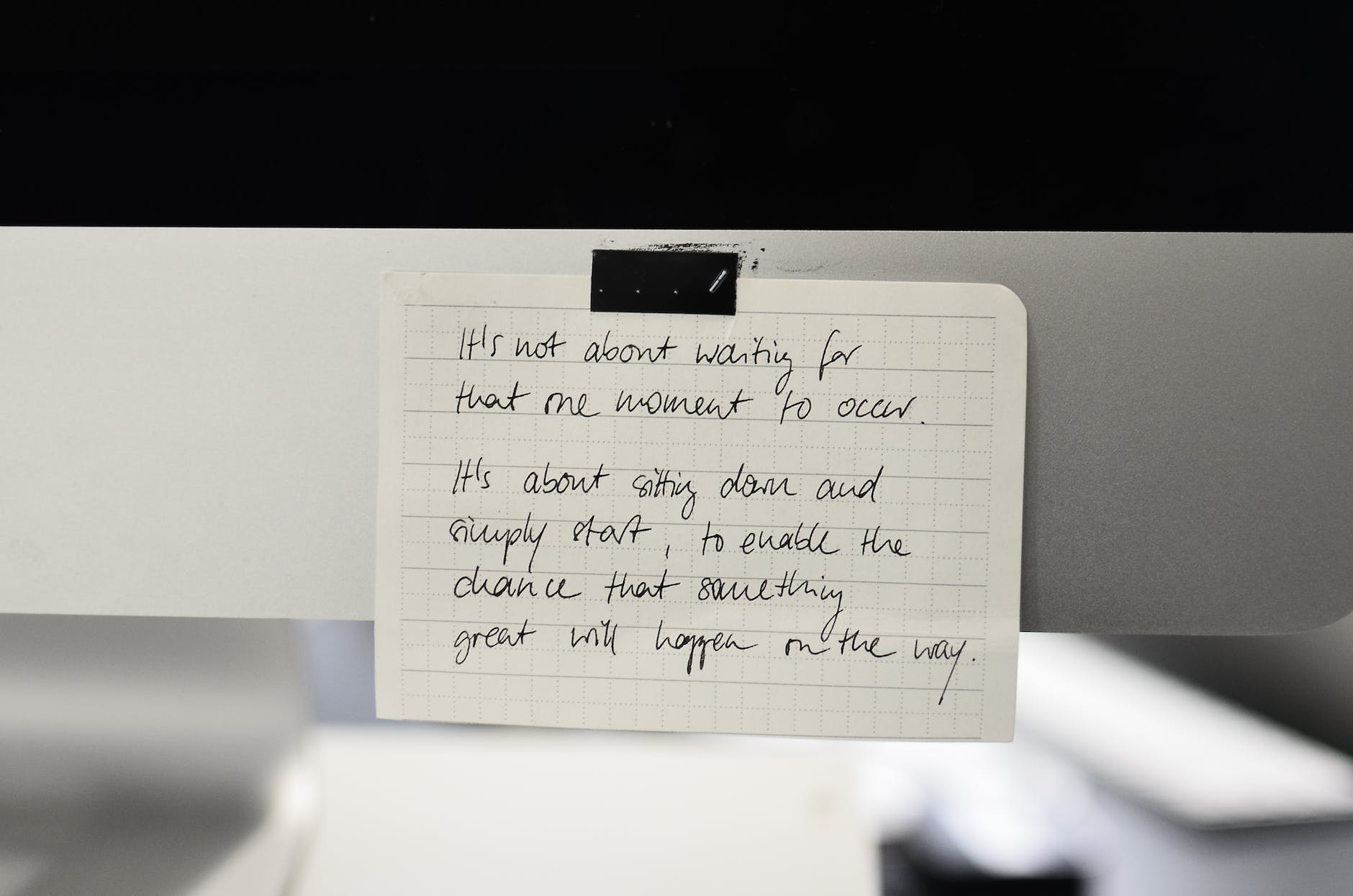
message on paper sheet on light surface. Positive afirmations can help you unlearn unhealthy behaviors.
Photo by Skylar Kang on Pexels.com

Use Positive Affirmations

Using positive affirmations is a powerful tool for unlearning unhelpful behaviors. Affirmations are positive and short statements that you repeat to yourself regularly. When you repeat these affirmations, you are effectively rewiring your brain to think more positively and empower you. This can help you to counteract negative self-talk and self-doubt and to replace unhelpful behaviors with more supportive and healthy habits. To get the most out of affirmations, making them specific, meaningful, and relevant to your goals and aspirations is important.

For example, instead of simply repeating, “I am confident,” you might say, “I am confident in my ability to overcome obstacles and achieve my goals.” Repeat your affirmations regularly, and try to integrate them into your daily routines and practices. With time and persistence, you’ll find that affirmations can help you to transform your thoughts and behaviors, and to unleash your full potential.

Model Successful People

Modeling successful people can be an effective way to unlearn unhelpful behaviors and adopt more positive habits. By observing and studying individuals who have achieved success in areas you’re interested in (this is key!!), you can gain valuable insights and strategies for overcoming your own challenges and reaching your goals. When you model successful people, it’s essential to focus on their habits, mindset, and behaviors rather than just their external accomplishments.

Look for patterns and principles that you can incorporate into your own life, and try to adopt the habits and practices that have helped others to succeed. Additionally, try to find role models who align with your values and goals and inspire you to be your best self. By modeling successful people, you can gain a roadmap for success and build the confidence and motivation you need to unlearn unhelpful behaviors and achieve your full potential.

Reframe Your Mindset

Reframing your mindset is an important step in unlearning unhelpful behaviors. Our thoughts and beliefs profoundly impact our actions and habits and can either support or hinder our progress. By reframing your mindset, you can shift your perspective and view challenges and setbacks as opportunities for growth and development. When you encounter obstacles, try to reframe them as lessons or stepping stones towards success.

Additionally, cultivate a growth mindset by embracing change and viewing failures as opportunities to learn and improve. When you reframe your mindset, you’ll be better equipped to overcome obstacles and unlearn unhelpful behaviors and cultivate a more positive and empowering outlook on life. Adopting a growth mindset will make you more resilient in the face of adversity and more likely to achieve your goals and live a fulfilling life.

Take action

Taking action is crucial in unlearning unhelpful behaviors and adopting new, positive habits. Merely thinking and talking about change is not enough; you must actively work to replace unhelpful behaviors with healthier and more supportive habits. This means setting clear and measurable goals, developing a plan of action, and taking consistent and persistent steps towards your desired outcome. Much easier said than done!

It’s important to start small and build momentum over time rather than trying to make too many changes too quickly. Celebrate your successes and stay focused on your goals, even when you encounter setbacks or challenges. Remember, progress is a journey, not a destination, and every step you take, no matter how small, is a step towards a better and more fulfilling life. So, take action today and start unlearning unhelpful behaviors, one step at a time.

Remain Focused

Remaining focused is essential to successfully unlearning unhelpful behaviors and adopting new, positive habits. The process of change can be challenging and requires patience, persistence, and discipline. It’s easy to become distracted or discouraged when slow progress or setbacks occur.

Still, staying focused on your goals and remaining committed to the process is important. Use visualization techniques to keep your desired outcome in mind and remind yourself why you started this journey in the first place. When you encounter obstacles, remain focused and determined.

Remember that every step you take is a step towards a better future.

Additionally, seek support and resources, such as a coach, mentor, or support group, to help you stay motivated and on track. By remaining focused, you’ll be more likely to successfully unlearn unhelpful behaviors and cultivate a more positive and fulfilling life.

Posted in Mindset

2023: 5 Guidelines to Live By

Guest Post by Lauryn Woodman

Instructional Designer, Educator, Accessibility Advocate


The Inspiration

I watched this video a few days before the New Year. I recommend you watch it, too.

To summarize for those of you who aren’t link clickers, it’s basically Rob Dyrdek saying that he never wants to get to a “reactive” place in 2023, and explaining that doing so will require a high level of discipline. My podcast preferences tend to lean more towards True Crime than privileged men spouting “motivational” buzzwords, but this one spoke to me. Scrolling through the comments, I saw many who interpreted Rob’s message as needing to work harder, grind harder, and go bigger. What I got out of it was so different. And it’s shaped my goal for 2023:

The Goal

In 2023, I never want to get to that low, terrible, reactive place. 

The Guidelines

And to do so, will require discipline. Here are 5 guidelines I’ve set for how I plan to live my life in 2023.

5 in a vase
Photo by Nataliya Vaitkevich on Pexels.com
  1. In 2023, I will be respectful of my own boundaries. I will not stretch myself beyond my capacity to accommodate the desires of others. I’ll give myself the grace to say no and not feel guilty. I will indulge in rest when rest is needed. 
  2. In 2023, I will not allow others’ energy to influence my own. I tend to take on other people’s stress, their drama, and even their emotions. This year, I will hold space for my own energy, and no one else’s.
  3. In 2023, I will live freely. With no strings, no bonds, and without allowing outside forces to shape the direction of my life. I will go with the flow.
  4. In 2023, I will enjoy the journey. Whether I feel I am “on track” or not, I will know that each twist and turn in my life is leading me to exactly where I need to be, when I need to be there. 
  5. In 2023, I will enjoy the small moments, I will find joy in quiet moments with friends. See the value in the quiet nights in as much as the once-in-a-lifetime moments I will inevitably experience. I will live each day fully in the moment, no matter where the day takes me, realizing that each experience, no matter how mundane, is a gift.

selective focus photo of green plant seedling on tree trunk
Photo by David Alberto Carmona Coto on Pexels.com

I know that some of these guidelines might seem hokey or even unattainable. Or maybe to you, they sound obvious. But I know how I feel and how I act when I allow myself to get caught up in what I “think” I should be doing, or how I “think” I should be living. I know that I’ve allowed myself to get caught up in unnecessary drama from outside forces that has actually shaped the direction of my life and how I live. And I know that when I am that person, living that life, I am unhappy, unsettled, and unmotivated. I deserve a chance to live my best life, and I plan to do that in 2023.

I hope that all of you can find guidelines important to you and refocus your life in 2023 so that you can live the best life that you are capable of this year.

Posted in Goal, Manifestation, Mindset

10 Simple Ways to Increase Your Gratitude Practice in the New Year

New years are a great time to examine your gratitude practice. As we look ahead, many of us may be thinking about ways to improve our lives and cultivate positive habits. One practice that can have a significant impact on our well-being is gratitude. Studies have shown that cultivating gratitude can lead to increased feelings of happiness and well-being, improved sleep and physical health, and stronger relationships.

photo of person holding cup and reading a journal for gratitude practice.

So, how can we increase our gratitude practice in the new year?

10 ways to increase your gratitude practice

  1. Keep a gratitude journal. One of the easiest and most effective ways to practice gratitude is to keep a journal. Start or end each day by writing down three things you are grateful for. They can be big or small, but actively thinking about and recording what you are thankful for can help shift your focus to the positive aspects of your life.
  2. Practice mindfulness. Paying attention to the present moment can help us appreciate the little things we might otherwise overlook. Take time to savor your meals, notice the beauty in nature, and appreciate the people around you. Develop a sense of gratitude by incorporating mindfulness practices like meditation and yoga into your daily routine.
  3. Express gratitude to others. Saying “thank you” can go a long way in strengthening relationships and making others feel appreciated. Consider writing thank-you notes to those in your life who have made a positive impact or simply taking a moment to express your appreciation to someone in person.
  4. Perform acts of kindness. Helping others can make a difference in their lives and bring us a sense of purpose and fulfillment. Consider volunteering your time or doing small acts of kindness for those around you. These acts of generosity can help us feel grateful for our lives abundance.
  5. Reflect on the things you have. Getting caught up in wanting more is easy, but taking time to reflect on the things you already have can help you appreciate what you have. Consider making a list of the things you are grateful for and refer back to it when you are feeling down or stressed.
  6. Practice gratitude in difficult times. It can be tough to feel grateful when things aren’t going well but finding even small things to be thankful for can help us find hope and perspective. For example, if you are going through a tough time, you might be grateful for the support of friends and family or the fact that you have a roof over your head.
  7. Find the silver lining. When faced with a challenge or difficult situation, try to find something positive. For example, if you get stuck in traffic, you might be grateful for the opportunity to listen to a new podcast or enjoy the scenery.
  8. Gratitude practice should be part of your daily routine. Try incorporating it into your daily routine to make your gratitude practice more sustainable. For example, start your day with a gratitude meditation or end your day by writing down three things you are grateful for.
  9. Share your gratitude with others. Sharing your gratitude with others can help you feel more connected and inspire those around you to practice gratitude. Consider sharing your gratitude with a friend or family member or posting about it on social media.
  10. Don’t be too hard on yourself. Cultivating gratitude is a practice, and it takes time and effort. Don’t get too caught up in “doing it right” or feeling guilty if you don’t feel grateful all the time. Remember that it’s a journey, and allow yourself to have ups and downs. 
man facing road thinking about gratitude practice ideas.
Photo by Sharefaith on Pexels.com

Why should we include gratitude practice in our lives?

Gratitude is a powerful practice that can significantly impact our well-being and relationships. It is possible to shift our focus from the negative aspects of our lives to the positive aspects, cultivate feelings of contentment and happiness, and strengthen our relationships through gratitude. While cultivating gratitude takes effort and practice, the benefits are well worth it. Consider incorporating some tips and suggestions above into your daily routine. See how gratitude can transform your perspective and bring more joy into your life.

Posted in Goal, Manifestation, Mindset

10 Positive Ways to End the Year

Just some food for thought

pancake with sliced strawberry
Photo by Ash on Pexels.com
  1. Reflect on the year’s accomplishments and challenges. This can help you identify areas where you made progress and areas where you can improve.
  2. Set new goals for the coming year. This can give you something to work towards and help you stay motivated and focused.
  3. Spend time with loved ones. Whether a family dinner or a virtual hangout with friends, connecting with the people you care about can bring joy and positivity.
  4. Practice gratitude. Take some time to think about the things you are grateful for. Write them down or share them with someone else.
  5. Give back to your community. Whether volunteering your time or making a charitable donation, helping others can bring a sense of purpose and fulfillment.
  6. Take care of yourself. Ensure you get enough sleep, eat well, and engage in activities that bring you joy and relaxation.
  7. Get organized. Start the new year on the right foot by decluttering and getting your home and workspaces in order.
  8. Reflect on your personal and professional growth. Take stock of the skills and knowledge you have gained over the past year and consider what you want to learn or achieve in the future.
  9. Practice self-care. Treat yourself to a massage, a bubble bath, or a fun activity that allows you to relax and recharge.
  10. Plan a special activity or trip for the coming year. Having something to look forward to can bring excitement and positivity to the present moment.
Posted in Goal, Manifestation, Mindset

100 Interesting Things To Add To Your Life Goals List If You’re Out Of Ideas

Has your life goals list lost some of its steam? Here are 100 ideas that can help you get started again.

And if you still need to start a life goals list, you’re missing out on something big. Your future self will thank you for writing them down and setting them in motion.

In high school, one of my teachers had us write down 100 goals, no matter how outlandish. It can be fun to come up with new ideas!

parachuters on air - skydiving is something you can put on your life goals list
Photo by Pixabay on Pexels.com

Why Should You Make a Life Goals List?

If you’re anything like me, you always search for new goals to add to your life. It’s not that I’m not happy with my life, but I like to keep things fresh and exciting.

And there are several reasons why you should make a life goals list. Here are some of the best ones:

  1. Get clarity about what you want out of life.
  2. Be inspired and motivated to achieve your dreams and goals.
  3. Set yourself up for success by making time for work, play and self-care in your schedule.
  4. Create a plan for what needs to be done before achieving each goal (step-by-step approach).
  5. Practice gratitude daily for what you already have (positive mindset).
  6. Make sure you’re living a balanced lifestyle by adding things that make you happy, healthy, wealthy and wise (balance is key!).

Now let’s get started!

person slicing vegetables. A cooking class is something you can add to your life goals list.
Photo by Maarten van den Heuvel on Pexels.com
  1.  Be more active
  2.  Learn how to cook healthy and delicious meals
  3.  Start a business
  4.  Read more books and blog posts each week
  5.  Write every day (even if it’s just one sentence)
  6.  Do one thing for yourself every day
  7.  Stop procrastinating 
  8.  Make a vision board with pictures of your dreams and goals for the future
  9.  Be more grateful for all you have in life now
  10.  Learn something new. This could be anything from learning a foreign language to mastering a musical instrument
  11. Take up a hobby you’ve always wanted to try but didn’t have the time or money for yet
  12. Travel somewhere new and exciting (preferably somewhere off the beaten track).
  13.  Go on holiday with your friends or family – as long as it’s not just another weekend break!
  14.  Read a book every month
  15.  Cook dinner at least three times a week
  16. Take up a new sport or hobby
  17. Run a marathon or other race
  18. Visit another country (or several!)
  19. Learn how to speak another language fluently
  20. Learn how to code or program computers
  21. Teach yourself how to play an instrument (or several)
  22. Read 100 books in one year (or whatever number feels achievable!)
  23. Volunteer at an animal shelter or rescue organization for a week or more
  24. Go to yoga classes more often than once a month
  25. Try a new restaurant every month (or week!)
  26. Find time for reading every day (even if it’s just 15 minutes)
  27. Get better at using chopsticks (or learn how to use them)
  28. Take up knitting or crocheting (or both)
  29. Watch an old movie from your childhood that you’ve never seen before (and watch it with someone else who hasn’t seen it before either)
  30. Join an improv theater group, or start one at your school or workplace! Improv is great fun and helps with communication skills, creativity and teamwork — not to mention confidence and self-esteem!
  31. Make friends with someone new
  32. Completely redecorate your apartment/home office
  33. Spend a weekend without any electronics — no TV, computer, or phone — just time with people and nature (or whatever else brings you joy)
  34. Have one day per week when you don’t check email or social media during the day; be present with whatever needs attention at the moment (and then catch up later)
  35. Save money each month
  36. Travel to all 50 states in America
  37. Buy a high-end camera and learn how to use it well enough that you could make money with it someday (I want to make videos for my blog!)
  38. Start writing fiction stories and finish at least one novel before you die (maybe even publish it!)
  39. Learn to play the guitar
  40. Take a salsa class
  41. Get a pet fish
  42. Bake a cake from scratch
  43. Write a song and record it
  44. Learn how to do your nails with nail art designs (I have always wanted this skill!)
  45. Draw and paint with watercolors
  46. Learn how to ride horseback
  47. Learn to make soap and candles, or do it yourself at home!
  48. Get better at public speaking or storytelling.
  49. Skydive over the Grand Canyon, then hike and spend the night in it
  50. Take a class in something you’ve always wanted to learn — woodworking, cooking, sewing — anything!
  51. Go bungee jumping
  52. Create a bucket list of places you want to visit in your lifetime
  53. Learn how to juggle
  54. Go camping in the woods for the weekend (or longer).
  55. Watch all your favorite movies with someone who’s never seen them, and then talk about them afterwards!
  56. Write down all of your fears, then ask someone else what their biggest fears are (and see if there’s any overlap between yours!). Then try coming up with solutions for how you might overcome those fears!
  57. Learn to play the piano
  58. Stop drinking soda once and for all
  59. Go on an adventure every year (whether it’s hiking through Europe or just taking the train somewhere)
  60. Learn how to use Adobe Illustrator and Photoshop
  61. Get your finances in order (budgeting, debt payoff, savings, etc.)
  62. Write letters to people you love and send them by snail mail instead of email
  63. Organize your home office so that it’s more functional for you working from home (if that’s what you do)
  64. Donate money to charities at least once per month (even if it’s just $5)
  65. See a Broadway show in New York City
  66. See the Grand Canyon and Hoover Dam on a road trip through Arizona and Nevada (or any other state you can think of)
  67. Make it a priority to learn more about your family history by talking with relatives or looking through old photos and documents
  68. Get published in a magazine or newspaper
  69. Write a book of poetry or short stories (even if you don’t want it published)
  70. Get a library card
  71. Learn to cook at least one new recipe every week
  72. Watch every movie Quentin Tarantino has ever directed, written or produced
  73. Learn how to fly a plane
  74. Learn how to drive a stick shift (and do it!)
  75. Don’t buy anything for a year (except maybe food and necessities)
  76. Go on a cruise ship vacation
  77. Take a road trip with friends or family members who don’t live near you now — or who you haven’t seen much lately
  78. Build something from scratch (a cabinet or chair, for example)
  79. Organize an event at your local library, school or community center (like a book club or movie screening)
  80. Learn how to surf, skateboard, or snowboard
  81. Wear something outrageous in public just because it makes you happy!
  82. Make a budget and stick to it for three months straight – who knows? Maybe you’ll keep with it!
  83. Become a better listener
  84. Take more walks
  85. Make a bucket list of all the places you want to go before you die, and start crossing them off as you go along!
  86. Try something new that scares you every day for 30 days straight (e.g., public speaking)
  87. Write a letter to your future self and put it in a time capsule (or post it on social media)
  88. Sleep under the stars by a body of water or wherever there’s no light pollution so you can see constellations clearly
  89. Write yourself notes and put them somewhere where you’ll find them later when you need the reminder
  90. Go outside every day (or week)
  91. Get a tattoo of a word or phrase that inspires you – I have one that says enough!
  92. Host an evening at home with friends where everyone brings food they’ve cooked themselves and teaches others how to make it as well
  93. Get rid of stuff cluttering up your life and making it harder for you to focus on what’s important — clothes, furniture, knick-knacks etc
  94. Learn how to make homemade pasta from scratch
  95. Take an art class like painting or drawing or sculpting or pottery 
  96. Go on a silent retreat for peace and reflection
  97. Make a collage with pictures from magazines
  98. Get certified in CPR/First Aid/AED training
  99. Create your own board game or card game (and play it with friends)
  100. Write down something you are thankful for every night before bed

How do you know if your life goals list is complete?

The simple answer is that it’s never complete. The more complicated answer is that it’s never complete.

Life is a journey that requires constant updating, and we’re always adding new things to our life goals list as we go along.

One of the best ways to keep your life goals list growing and moving is to take advantage of the ideas that you’ve found. Look at your goals list each month and see if there’s an item or two you want to add. Grab those ideas for inspiration and use them to add new and exciting items to your life goals list.

Posted in Goal, Manifestation, Mindset

Why Gratitude Is The Most Powerful Tool In The World

Gratitude is the most powerful tool

Gratitude is the most powerful tool: What it is

The word gratitude can be defined as the feeling of appreciation or thankfulness. It’s a powerful emotion that can help you manifest your dreams. Gratitude is what you feel when you realize how far you have come and how much you have to be thankful for.

But what exactly is gratitude?

Gratitude is the appreciation of something, often expressed as an acknowledgement of the benefits received. It is a feeling of thankfulness and appreciation for what one has and/or what one does not yet have but deserves.

photo of women hugging each other because gratitude is the most powerful tool.
Photo by Anna Shvets on Pexels.com

Gratitude is the most powerful tool: How to use it

According to some research, gratitude makes people happier and healthier. In fact, one study found that people who practice gratitude are more likely to sleep better and have lower levels of stress and depression.

To help you get started on this powerful journey towards happiness and fulfilment, here are three ways to use gratitude:

1. Write down three things you’re grateful for each day. This technique is called “Three good things” or “Three blessings.” It’s simple, easy to do, and has been proven effective over time.

2. Keep a gratitude journal where you write down all the things that make you happy on a daily basis — whether they’re big or small, material or spiritual — so that you can reread them whenever needed during your day-to-day life.

3. Send a thank-you note or email to someone who has impacted your life in a positive way — because they influenced who you are today and made you who you are now (even if it wasn’t intentional).

Gratitude is the most powerful tool: Why it works so well

Gratitude is a powerful tool. We all know this. But why?

It’s not just because it makes us feel good, although that’s part of it. It’s because gratitude changes the way we see ourselves and the world around us.

Gratitude changes our perspective and makes us more optimistic about our future. It can lead to greater happiness and satisfaction with life in general.

But perhaps most importantly, gratitude is what helps us connect with others and build strong relationships with them — which is key for happiness and well-being in life.

Takeaway: Gratitude can be a tool that changes your life.

Posted in Manifestation, Mindset

11 Powerful Daily Confidence Affirmations

Are you in need of daily confidence affirmations?

I think we all experience times when we feel down on ourselves or unmotivated. Sometimes this happens because of something that happened that day, but other times it could be something more serious like depression or anxiety.

If you find yourself spending more time thinking negative thoughts than positive ones—and dwelling on them instead of letting them go—then it might be time to try out some daily confidence affirmations!

I am beautiful.

Beauty is a state of mind. It’s not just skin deep. It is not just a physical trait, or even a facade or an outfit. Beauty is a reflection of who you are on the inside and out, and when you feel beautiful inside and out, your confidence will shine through!

When you wake up every morning, look in the mirror and say: “I am beautiful.”

I love myself.

You are worthy of love. You are a good person and you have a good heart. You are a good friend, listener, and partner to others. You care about them and their well-being, even when they may not see it or want it for themselves at the time.

You deserve to be happy with yourself first before you can expect others to love you for who you truly are!

photo of woman looking at the mirror. daily confidence affirmations.
Photo by Andrea Piacquadio on Pexels.com

I am enough.

This is one of my favorite daily confidence affirmations. In fact, I even have this tattooed on myself. You are enough. You have a lot to offer the world, and you have hidden strengths and talents that will soon be discovered. Your radiance shines from within you, no matter who is around you.

You are worthy of love, respect, and appreciation by others. No one can take away your self-worth unless you allow them to do so!

I am worthy of being loved.

You are worthy of being loved. You are worthy of a good life. You are worthy of being happy, healthy, successful, and safe. Repeat this as one of your daily confidence affirmations.

I have a good heart.

I have a good heart.

I am a good person.

I am compassionate.

I am kind.

I am loving, and I can be generous with my love and kindness toward others when they need it most in their life’s journey.

I am a good person.

Be kind to others. Empathy and compassion are two of the most important traits of a good person. By being kind, you’re showing that you care about other people’s well-being and can put yourself in someone else’s shoes easily.
Be generous with money or time when possible! The more generous we are with our resources; the more likely we’ll be able to build strong relationships with lots of different kinds of people.

I have a lot to offer the world.

One of the amazing daily confidence affirmations. You have an important role to play in your community. You make the world a better place just by being yourself, and you are needed. You are valued. You are loved, and you love others deeply as well. Your life is important and valuable because you give it meaning through your contributions to others’ lives.

I have hidden strengths and talents that will soon be discovered.

You are not alone. We all struggle with these feelings at one point or another, and we all want to believe that there is something special about us that will make us different from all the rest. You are not alone, and you are not the only one who has been through this.

It’s easy to feel overwhelmed by a sense of isolation when we’re going through hard times in life because it’s so easy for us to isolate ourselves from others during those times. But it’s important to remember that other people have been there before, whether they’ve gone through the exact same thing or something similar that you can relate to on some level. And if someone else can do it, then so can you!

I have a radiance that shines from within me, no matter who is around me.

Radiance is a glow that comes from within you. It is the radiance of your inner self, spirit, and light. It’s a reflection of your inner beauty, and it shines through no matter who is around you or what situation you are in. The more you believe in this quality of yourself, the more radiant you will become — both on the outside and on the inside.

Radiance comes from within each one of us — we just have to turn up our lights (or dim them down when we want to hide). Radiance means there is no need to hide anything about ourselves because our inner radiance reveals everything we need to share with others: love, courage, warmth, generosity, and compassion for all beings.

My opinion matters and my thoughts are valid.

My opinion matters and my thoughts are valid.

I have the right to speak up for myself.

It’s okay to disagree with someone else’s ideas or opinions, as long as I do it in a respectful way and don’t try to force my own onto them.

People enjoy being around me because of all my positive energy.

This daily confidence affirmation is a great way to start your day. It helps you remember that people are attracted to positive energy and that it makes for a better experience for everyone involved. The next time you feel nervous about an upcoming conversation or social event, remind yourself that your positivity will improve everything!

Concluding thoughts for daily confidence affirmations

You can motivate yourself without being mean to yourself, and it’s important to recognize your positive traits to keep them in mind when you need some inspiration or encouragement!

It’s easy for our minds to fall into a rut of negative self-talk. In fact, research has shown that when we talk down on ourselves, we tend to give up more easily than if we were talking positively. However, if you want to be successful at anything—let alone life in general—you must learn how to stay motivated throughout the journey. This is an incredibly important skill that will help you succeed long-term and reach all of your goals!

I hope these daily confidence affirmations have helped you start off your day on the right foot. Remember, it’s not about being perfect or always being positive—it’s about making a change for yourself and working toward a happier, more fulfilling life. Now get out there and live it up! Thanks for reading!

Posted in Mindset

Do you want to change your money mindset? 5 tips to get started today

In this post, we share 5 simple tips for you to apply today that will help you change your money mindset. Your own money mindset can affect your relationship with money. It can also affect your quality of life. But it is possible to change your money mindset.

Review your money history

Your financial past can be a great tool in helping you understand your current financial situation and help you set goals for the future. If you’re struggling to pay off debt or save for retirement, it’s likely because of habits formed over time — maybe even decades ago!

Write down all the positive things about your past spending habits and how you handled money. Think about what you did right and how those things worked out for you — or didn’t work out for you if something was wrong with the way you handled finances at that time.

Define your ideal money mindset

When you think about money, what do you feel? Excited, energized, happy? Or maybe stressed, anxious or depressed. Your feelings about money are determined by your money mindset, which is made up of the beliefs and habits that influence how you think and feel about money.

Your money mindset can be positive or negative, but it’s not permanent: You can change your money mindset if it’s not serving you well. In fact, many people who have experienced financial setbacks have been able to use their experiences to redefine what they value most in life — and this has helped them rebuild their financial lives in a way that’s better suited to their new priorities.

change your money mindset
Photo by Karolina Grabowska on Pexels.com

Create a one-sentence statement that encapsulates your desired money mindset & repeat it frequently

“I am a powerful, successful woman who deserves the best.”

You may think this is too simple, but it’s not. If you say it enough times, it will become your reality. I have been saying this to myself for the last year and it has helped me to grow into a confident woman with a healthy relationship with money and keeps bring me more and more opportunities. The key is consistency and repetition.

If you want to create a healthy money mindset, repeat these statements often. Write them down on sticky notes and post them around your house or bedroom so you see them every day. Post them on social media or share them with friends so they can support you in achieving your goals.

Don’t worry if at first you feel like these statements are false — that’s normal! But if you keep repeating them, eventually they will become true for you because they reflect your inner belief system about money and success. This is how you change your money mindset!

Build a self-care routine around finances

The first step to building a self-care routine is to know what you’re working with.

The first thing you need to know is how much money you have coming in every month. The second thing is how much money is going out. If you don’t know where your money is going, start keeping track of it by creating a budget and tracking your spending for at least one month.

Once you’ve got that information, it’s time to start building a self-care routine around finances. Here are some things you can do:

Set up automatic savings accounts with an amount that feels comfortable for you every month and make sure they go into separate accounts so you can’t accidentally spend them on something else. Set up automatic contributions to retirement accounts like Roth IRA or SEP IRA if those are options for you — or just contribute as much as possible each month directly from your paycheck into one of those accounts.

Track your spending and look for areas where money can be saved so that it goes toward something fun instead of paying off debt or adding to a savings account (or both!).

Learn the language of money and learn to speak, write, and read it fluently

If you want to be able to talk about money, learn what it means, and make good decisions with your money, then learning basic financial terms is a great place to start.

Here is an example of one of the most common financial terms that is used in everyday conversation:

Annual percentage rate (APR): The APR is the cost of borrowing money, expressed as a yearly rate. It includes all costs associated with borrowing the money plus any additional fees or interest rates charged by the lender or credit card company. APR can vary depending on whether it’s a cash advance or balance transfer card, as well as other factors such as whether you make purchases with your credit card and how long you carry a balance on your card. If the APR seems high when compared to other cards issued by the same bank, try another issuer before applying for one with a higher rate than what is advertised by other banks.

Final Thoughts on Your Path to Change YouR Money Mindset

If you’re looking to change your money mindset, I want to encourage you to just start small. Don’t try to tackle everything at once; pick one or two areas that you think may be the easiest for you, or least daunting. The point is, take time to look at yourself honestly and ask some honest questions. Is there an area in which you need improvement? What do you believe about money? What do your actions say about those beliefs? And most importantly, what needs to change for the better? You can change your money mindset!