Posted in Goal, Manifestation

6 Ways To Find Peace Of Mind Right Now

​Peace of mind can sometimes be an elusive pursuit that seems impossible.

For many people, they strive to achieve high goals or great accomplishments. While there is nothing wrong with this, achieving your goals can come at a cost. You may sacrifice other areas of your life in order to achieve these goals. It’s easy to get lost in our daily routine where we feel as though we are constantly working hard towards something instead of enjoying the present moment.

So much in our world is uncertain. The future is uncertain, and the past can seem like an eternity ago with all the regrets we have. I’m challenging you to take six steps over the next several weeks to find peace of mind in an often chaotic and uncertain world.

Do not worry about what you cannot control

When we worry, we tend to focus on things we have no control over. And while it’s a natural human reaction, it is also a very unhealthy one that can lead to stress and anxiety.

If you’ve ever found yourself worrying about something unimportant or out of your control, take a step back and ask yourself if there’s anything you can do about it. If not, let go and move on with your life.

Take care of your body and mind

Finding peace of mind is easier when your body is healthy and your mind is clear. If you’re feeling stressed out or anxious, it might be time for a break from work or school. Take a few deep breaths and meditate for a few minutes each day. Exercise can also help relieve stress, improve your mood and boost energy levels.

peace of mind
Photo by Lucas Pezeta on Pexels.com

Don’t feel guilty about doing things for yourself

We’re all so busy. We have to work, we have to make dinner, we have to take care of the kids. And then we have to find time to do something for ourselves.

Sometimes that means making time in the middle of the day, or sneaking away at night. Sometimes it means asking friends and family members to help out so that you can take a break or go on a date with your significant other.

Even if it’s just taking a walk around the block, it’s important that you remember that you’re allowed to do things for yourself.

Practice mindfulness and meditation, even just for a couple of minutes at a time

Meditation is about learning to be present in the moment and accepting what’s happening around you, rather than constantly trying to change everything around you. That’s an important skill in today’s world where so many people are constantly multitasking and trying to control everything around them.

If you’re dealing with stress or anxiety, meditation can help reduce symptoms by teaching your brain that there’s no need to panic because everything will be okay. This can help create peace of mind. And if your stress is caused by something going on in your life right now (like a big project), then meditation can help you deal with that situation better by helping you focus on what needs doing right now instead of worrying about everything else happening later down the road.

Set healthy boundaries when engaged in conflict with others

Healthy boundaries are those we set for ourselves based on our values and beliefs, not the needs or opinions of others. They help us establish our own sense of self-worth and identity apart from what others think about us. Set boundaries with people who don’t respect them, and you’ll feel better about yourself.

peace of mind
Photo by Eva Elijas on Pexels.com

Give up negative self-talk and replace it with positive affirmations

Negative self-talk is often characterized by words such as “never,” “always” and “should.” For example, you might say to yourself, “I never have enough money” or “I always have problems at work.” When we constantly tell ourselves these kinds of things, they can become an ingrained habit that leads us to expect bad things to happen again and again in our lives! Positive affirmations are statements that communicate clearly what we want to achieve and how we plan to get there. Saying positive affirmations can help even more develop a positive peace of mind.

Takeaway: People can find peace of mind if they are willing to do things that support it

Posted in Goal, Manifestation, Mindset

12 Simple And Totally Weird Confidence Building Exercises

Do you really need confidence building exercises?

Some people seem to be born with a high level of confidence, but for the rest of us, it’s something that must be earned and constantly developed. When you start thinking negatively about yourself, it’s hard to convince yourself otherwise.

You need to go beyond positive thinking and really believe that what you’re saying is true. If you aren’t sure how to get started with this, consider working through these 12 simple activities.

Compliment a stranger

It might feel awkward, but it will make you feel good. When people hear compliments, it makes them feel good about themselves and about the world around them. You never know where your compliment may go; it could end up back in your lap! This is one of the most fun confidence building exercises.

confidence building exercises
Photo by Diego Ramirez on Pexels.com

Stand up straight

Stand up straight and tall with your shoulders back. Hold this position for a few seconds. Let go, relax and repeat. Of the confidence building exercises, this one will help you feel more confident because it makes you feel like you’re on top of things.

Talk to yourself

When we’re alone, it’s easy to talk to ourselves. We may think that talking to ourselves is a sign of being crazy, but there are many benefits of talking to yourself. This may sound like one of the weirder confidence building exercises.

When you talk about your problems and concerns with yourself, you can find solutions for them easily. You can’t solve a problem until you know what it is and have identified the root cause. When we talk about our problems with others, they give us suggestions or advice that doesn’t always help us solve our problems.

Talking to yourself gives you an opportunity to analyze your situation from different perspectives and come up with unique solutions that would never occur to anyone else.

Make eye contact with people you make purchases from or talk to throughout the day (barista, cashier, etc)

It’s an easy way to start small and build up your confidence. The first time I did this I was surprised at how many people looked away as soon as they saw me looking at them! It was kind of embarrassing but also helped me realize that people aren’t always looking at you because they hate you — it’s just human nature.

Call a business and ask to speak to someone you admire

This one is totally easy and one of the most surprisingly effective confidence building exercises. Find someone who inspires you and call their office. Tell them who you are, what you do, and ask if they would be willing to meet up over coffee or drinks sometime soon. Even if they say no, this exercise is great for building confidence because it teaches us that rejection isn’t scary — it’s just part of life. This exercise makes the top of the list of confidence building exercises.

confidence building exercises
Photo by Pavel Danilyuk on Pexels.com

Smile at everyone you see for an entire day

Smiling is one of the most powerful ways to boost your self-esteem and happiness. It also helps other people feel good, too! So when you smile at someone as they walk by on the street or in an elevator, they’re more likely to smile back at you and it creates a positive feedback loop. This positive feedback loop is an excellent addition to your confidence building exercises.

Listen to music that makes you happy and energetic

Music has an amazing power to influence moods and emotions. So crank up the tunes and dance around like nobody’s watching! This can be a great way to get yourself in the mood for an upcoming event where you want to feel confident and energized. Right before I defended my dissertation, I had a mini-dance party on Zoom with some friends!

Unfollow people on social media who make you feel bad about yourself

Social media can be a great way to stay connected with friends, but it also has the potential to make us feel like crap about ourselves. If you’re feeling down on yourself, take some time to unfollow people who post things that make you feel bad or insecure.

Wear a super confident outfit

Dress up in something that makes you feel good about yourself. The more comfortable you are, the more confident you’ll be.

Make a list of all your accomplishments

Write down all the things you’ve accomplished in life, whether it’s getting good grades or achieving a certain goal at work or school. Be sure to include big wins as well as small ones, because even if you don’t feel confident about yourself right now, there’s no doubt that you have some amazing qualities and abilities!

Do something small and silly to embarrass yourself on purpose

You’re going to do something small and silly to embarrass yourself on purpose.

You’re going to do it in front of a mirror, so you can see exactly how you look as you do it.

You’re going to make a fool of yourself and then laugh at yourself for doing so.

Why? Because we all want to be confident in our own skin. Sometimes, we get caught up in thinking about how others see us, instead of just being ourselves.

This exercise is designed to help you overcome that fear, and remind yourself that there’s nothing wrong with being who you are — even if it means making a fool of yourself every now and then!

Compliment yourself every day for a week

Start by looking in the mirror and saying something positive about yourself out loud. Then make a habit of doing this every morning and evening, no matter how hard it feels at first. It’s best if you begin with one-word compliments, such as “I’m smart” or “I’m funny”. Once you’ve gotten used to this exercise it’s time to go bigger! Try complimenting yourself on more than just one aspect of yourself each day until eventually, you’re confident enough to say nice things about all aspects of your personality.

Final thoughts on confidence building exercises

By consistently striving to improve yourself, or just small bits at a time, you will begin to feel better about yourself in the long run. You’ll have a better sense of who you are, and that is the first step toward becoming a better person. So what’s the next step? Start trying out some of these weird exercises to learn more about yourself and remember that no one else can do them for you.

Posted in Goal

Evergreen Content: 5 Reasons Why You Need To Create Today

You’ve probably heard of evergreen content before, but you might not know what it is or why it’s so important. I’m going to clear that up for you and give you five reasons why you should be creating your own evergreen content today.

What Is Evergreen Content?

It is content that’s suitable for and relevant at any time or in any situation, which means it will always be clicked on and shared.

According to Wikipedia, “Evergreen content is any piece of information that remains relevant over time and across different web pages.” Evergreen content is also known as timeless content or long-form SEO copywriting.

Evergreen content will help you get organic search traffic

Evergreen content helps your site rank higher in search engines like Google and Bing by providing value to your readers. Google has said that it considers the length of time each page has been on the web when calculating search results — so if someone searches for a keyword related to your product or service, they will see your page more often if it has been around longer than other sites offering similar products or services.

Evergreen content can last for months and even years

Evergreen content is a type of article that can be read by readers at any time during the year without losing any value or becoming outdated. It’s not seasonal or tied to a holiday or event. It’s always relevant and never becomes obsolete because it provides information that people want to know about their businesses and their lives in general. The best part about evergreen content is that once you publish it on your website it will continue to bring in traffic for months or even years after it was first published!

evergreen content
Photo by Julia M Cameron on Pexels.com

Evergreen content will build your brand

This type of content helps build trust with potential customers. If consumers see that you’re sharing valuable information on a regular basis, they’ll feel more confident visiting your site or buying from you in the future. In fact, 80 percent of consumers trust recommendations from friends and family over any other form of advertising — including paid ads.

It can help you build your brand by:

Creating trust

Informing customers

Increasing traffic

Building authority

Generating leads

Serves as a point of reference from which you can develop other forms of content

For example, if you have written a blog post about how to get rid of weeds in your garden, this article would be considered evergreen because it will continue to generate traffic long after the gardening season ends. You could also write a similar article about how to get rid of pests in the garden, but this article would not be considered evergreen because it would only generate traffic during the summer months when pests are prevalent.

Evergreen content brings in the big bucks

Evergreen content brings in the big bucks because people will find your page whenever they search for the topic you’ve covered. The best part? You don’t need to create new pages every time someone wants new information on the subject — just update your old page with new information as needed!

Evergreen content is a great investment because it will keep working for you long after you’ve written it. You can create one piece of content and have it generate income for years, even decades.

Final Thoughts

There is no question that to build your brand, you must publish content on a regular basis. It doesn’t matter if you are a blogger, writer, or small business owner – publishing new content that your audience will love is crucial for your brand’s success. I have found through my journey that evergreen content does wonders for my brand and whether you know it or not (or want to admit it), there are many benefits to creating evergreen content.

Posted in Mindset

Writer’s Block? 9 Ways To Find Inspiration Now

As a writer, procrastination can be a killer. Getting stuck in the dreaded writer’s block can make you lose confidence, and feel demotivated. To get inspiration and kickstart your creative process, try one of these 9 ways to find inspiration when you feel like you’ve hit a block.

Practice writing even when you don’t feel inspired

Practice writing even when you don’t feel inspired. You might think that practice makes perfect, but research shows that it also helps with skill acquisition, in part by increasing dopamine levels in the brain. Some writers say that they have to write through the bad stuff in order to get to the good stuff later on, and while this may not be true for everyone, it’s worth giving it a try if it seems like something that would work for you.

Write someplace new

If you’ve been writing in your favorite coffee shop for the past six months and suddenly it doesn’t seem as inspiring anymore, try another location. If you usually write at home, head out into nature or go somewhere with lots of people around. If you usually write at work, go somewhere quiet or even bring your laptop into the bathroom.

writer's block
Photo by RF._.studio on Pexels.com

Draw/doodle your thoughts and feelings as they come to you

I find that drawing can be really helpful when I’m stuck on something. If I’m having trouble coming up with an idea, I’ll grab my sketchbook and start doodling whatever comes to mind. This helps me get in touch with my creative side and lets me explore different options without feeling pressured or overwhelmed by what might happen if I mess up. I also love to use Procreate on my iPad.

Try reading out loud as a way to hear what you’ve written in a different way

You might find some words or phrases that sound awkward when read out loud, but look fine on the page. This can also help you gauge how others will respond to what you’ve written, which is often useful when deciding whether or not to keep something in your story.

Get away from the computer screen when you have writer’s block

Writer’s block usually happens when you’re sitting at your keyboard staring at a blank page. It might help to take a break for an hour or two and do something else entirely — anything that is not related to writing. Go for a walk outside if it’s nice out, or just browse the internet randomly for fun things that catch your eye. If nothing else, this will give your brain time to rest while still letting you have some sense of productivity without having to sit still staring at your computer screen all day long!

Be open to new experiences and new ideas

Find something exciting in everyday situations. Whether it’s seeing the sunrise or walking through the park, there are many things we take for granted every day that could inspire us if we look at them differently. This can help alleviate writer’s block. If you take time out of your day to appreciate these little moments, they’ll help keep your mind fresh and engaged so that when it comes time for writing again, it won’t feel like work!

Listen to music

Listen to music to gain writing inspiration. Music is such a powerful tool and can inspire so much creativity. If you’re having trouble getting started with a piece of writing, put on some good music and let it wash over you. It will help you find the right words and ideas for your piece.

writer's block
Photo by Marcelo Chagas on Pexels.com

Break the project down into tiny pieces and pick one part of it to work on at a time

If you’re having trouble starting or finishing an essay or blog post, try breaking down your topic into smaller chunks — say, five sentences each — and writing those sentences in order. Once they’re done, move on to the next step until you’ve completed your project.

Try stream of consciousness

When you have writer’s block, try stream of consciousness. Write whatever comes into your head. Don’t worry about how it sounds or how it looks on the page; just let your writing flow freely from your brain onto the paper or screen. You might be surprised at what comes out!

Final Thoughts

Writer’s block is temporary, so don’t stress too much when you hit a wall, just grab a cup of coffee and some headphones and you’ll think of something soon enough!

Posted in productivity

How To Increase Productivity By Eliminating Distractions Today

Eliminating distractions is important and difficult. One of the hardest parts of starting a new project is getting in the zone. We all have distractions that prevent us from focusing on the task at hand. This makes it hard to get anything done. We’re going to show you how to increase productivity by eliminating distractions and staying focused.

Eliminating distractions: Turn off notifications on your devices

Turn off notifications on your devices. You don’t need to know every time someone likes your Instagram post or retweets your tweet.

Turn off the ringer on your phone so you’re not interrupted by incoming calls or messages. When people call or text, they assume you’re free to talk to them at any time. When they don’t hear back from you right away, they’ll be more likely to leave a voicemail or text message than call again. And you’ll save battery life!

Eliminating distractions: Block distracting websites with a website blocker app or browser extension

Use a website blocker app or browser extension. You can block distracting websites with a website blocker app or browser extensions such as Freedom (for Macs) or SelfControl for Macs or PCs. These apps and extensions will prevent you from visiting specific websites for as long as you choose — up to 24 hours. If you try to visit the site while it’s blocked, you’ll be greeted with an error message that prevents further access until the time period is over.

Eliminating distractions: Don’t open multiple tabs at once

Don’t open multiple tabs at once. When you open several tabs in your browser, it’s easy to lose track of what you were doing or what page you were on. Keep track of what you have open by using one tab at a time. Close all other tabs except for the one where you are working. It will help keep you focused on what needs to get done right now and prevent distractions from popping up while you’re trying to work on something else.

Or, utilize the tab grouping feature in Chrome or Safari:

eliminating distractions

Eliminating distractions: Don’t multitask and get organized

Don’t multitask: Multitasking is a myth. When you try to do two things at once, you actually focus on neither. Instead, take the time to complete one task before moving on to the next.

Get organized: This can mean different things for different people, but if you aren’t sure where to start, try creating an inbox of all your emails and tasks. Create folders or labels for each project, then file away any emails that don’t need immediate attention away into those folders or labels so they don’t clutter up your inbox anymore. Make sure you have a notebook or planner where you can write down ideas or tasks as they come up throughout the day so they don’t get lost in the shuffle either!

Eliminating distractions: Use a writing system to take notes and make to-do lists

Use a writing system to take notes and make to-do lists. In Paperless Way, I recommend using a writing system like Bullet Journaling or Getting Things Done (GTD). These systems help organize your thoughts and ideas so that you can focus on the task at hand.

Eliminating distractions: Take breaks regularly and reward yourself for staying focused

Take breaks regularly and reward yourself for staying focused. Breaks are important because they give your brain time to rest and recharge. Taking a break will help you avoid burnout and increase your overall productivity throughout the day.

For example, if you have a meeting scheduled for 2 p.m., take a 15-minute walk around the office or do something fun that helps you relax before returning to work. Reward yourself with a treat or special activity after you’ve worked for two hours straight.

Takeaway: Stay focused on the task at hand by using these tips to eliminate distractions.

Posted in Mindset

Do you want to change your money mindset? 5 tips to get started today

In this post, we share 5 simple tips for you to apply today that will help you change your money mindset. Your own money mindset can affect your relationship with money. It can also affect your quality of life. But it is possible to change your money mindset.

Review your money history

Your financial past can be a great tool in helping you understand your current financial situation and help you set goals for the future. If you’re struggling to pay off debt or save for retirement, it’s likely because of habits formed over time — maybe even decades ago!

Write down all the positive things about your past spending habits and how you handled money. Think about what you did right and how those things worked out for you — or didn’t work out for you if something was wrong with the way you handled finances at that time.

Define your ideal money mindset

When you think about money, what do you feel? Excited, energized, happy? Or maybe stressed, anxious or depressed. Your feelings about money are determined by your money mindset, which is made up of the beliefs and habits that influence how you think and feel about money.

Your money mindset can be positive or negative, but it’s not permanent: You can change your money mindset if it’s not serving you well. In fact, many people who have experienced financial setbacks have been able to use their experiences to redefine what they value most in life — and this has helped them rebuild their financial lives in a way that’s better suited to their new priorities.

change your money mindset
Photo by Karolina Grabowska on Pexels.com

Create a one-sentence statement that encapsulates your desired money mindset & repeat it frequently

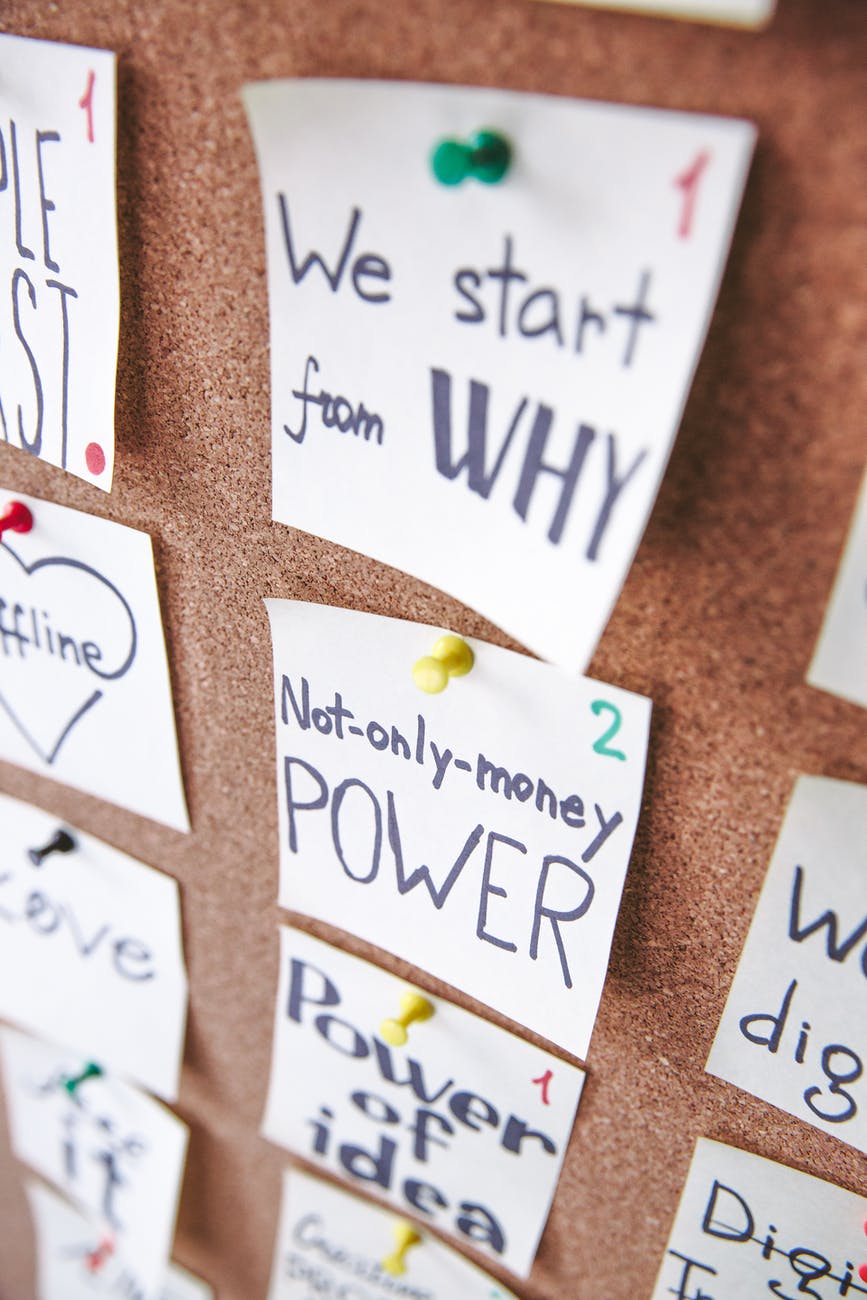
“I am a powerful, successful woman who deserves the best.”

You may think this is too simple, but it’s not. If you say it enough times, it will become your reality. I have been saying this to myself for the last year and it has helped me to grow into a confident woman with a healthy relationship with money and keeps bring me more and more opportunities. The key is consistency and repetition.

If you want to create a healthy money mindset, repeat these statements often. Write them down on sticky notes and post them around your house or bedroom so you see them every day. Post them on social media or share them with friends so they can support you in achieving your goals.

Don’t worry if at first you feel like these statements are false — that’s normal! But if you keep repeating them, eventually they will become true for you because they reflect your inner belief system about money and success. This is how you change your money mindset!

Build a self-care routine around finances

The first step to building a self-care routine is to know what you’re working with.

The first thing you need to know is how much money you have coming in every month. The second thing is how much money is going out. If you don’t know where your money is going, start keeping track of it by creating a budget and tracking your spending for at least one month.

Once you’ve got that information, it’s time to start building a self-care routine around finances. Here are some things you can do:

Set up automatic savings accounts with an amount that feels comfortable for you every month and make sure they go into separate accounts so you can’t accidentally spend them on something else. Set up automatic contributions to retirement accounts like Roth IRA or SEP IRA if those are options for you — or just contribute as much as possible each month directly from your paycheck into one of those accounts.

Track your spending and look for areas where money can be saved so that it goes toward something fun instead of paying off debt or adding to a savings account (or both!).

Learn the language of money and learn to speak, write, and read it fluently

If you want to be able to talk about money, learn what it means, and make good decisions with your money, then learning basic financial terms is a great place to start.

Here is an example of one of the most common financial terms that is used in everyday conversation:

Annual percentage rate (APR): The APR is the cost of borrowing money, expressed as a yearly rate. It includes all costs associated with borrowing the money plus any additional fees or interest rates charged by the lender or credit card company. APR can vary depending on whether it’s a cash advance or balance transfer card, as well as other factors such as whether you make purchases with your credit card and how long you carry a balance on your card. If the APR seems high when compared to other cards issued by the same bank, try another issuer before applying for one with a higher rate than what is advertised by other banks.

Final Thoughts on Your Path to Change YouR Money Mindset

If you’re looking to change your money mindset, I want to encourage you to just start small. Don’t try to tackle everything at once; pick one or two areas that you think may be the easiest for you, or least daunting. The point is, take time to look at yourself honestly and ask some honest questions. Is there an area in which you need improvement? What do you believe about money? What do your actions say about those beliefs? And most importantly, what needs to change for the better? You can change your money mindset!

Posted in Goal

How can setting goals help you in the long term? 5 things to consider now

You may have wondered, how can setting goals help you in the long term? I use goal-setting methods for my own life in every setting. It allows me to have my goals in front of me throughout the year, so I can see what steps I need to take next, and provides an outline to follow if I change my goals.  

Goal setting also allows me to reexamine what I am doing and make changes if something isn’t working.  The year is long enough to get a lot of things done, so let’s look at some ways you can use goal setting throughout the year and beyond!

Clarifying what you want brings clarity to your life

How can setting goals help you in the long term when it comes to gaining clarity?

This is the first step in setting goals. It is a process of defining, refining and prioritizing what you want. This clarification process can be done alone or with a friend or coach. It is important that you are honest and objective with yourself during this process, as it will help you achieve the results that you desire.

The second step is setting specific, measurable, achievable and timely goals. These goals should be tied to your vision statement and be SMART: Specific, Measurable, Attainable, Realistic (and) Time-bound.

The third step is creating an action plan that includes steps to achieve each goal with dates/time frames for completion. For example: “By March 1st I will have successfully completed my first fitness test at boot camp (specific).”

How can setting goals help you in the long term?
Photo by Polina Zimmerman on Pexels.com

Goals help you to find purpose and meaning in your work and life

How can setting goals help you in the long term when it comes to finding purpose and meaning?

When people talk about goals, they often think of them in terms of productivity and achievement. But there’s another way to think about them: as a way to find direction and purpose in life. This is especially true for people who feel that their work is meaningless or unfulfilling.

Goals can help you find purpose and meaning in your work and life because they make it easier for you to understand what success means to you. Once you know what success looks like, then it becomes easier to make decisions about how you spend your time and effort.

This doesn’t mean that everyone should set goals — sometimes it’s better not to have any particular destination in mind when doing something. But if it works for you, then setting goals can be an important tool for finding fulfillment in your work

You’ll challenge yourself to grow as you pursue goals

How can setting goals help you in the long term and help you grow?

Setting goals is one of the most powerful tools we have to shape our lives and make them more meaningful. They can help us reach our full potential, achieve greater success, and feel more fulfilled in our lives.

When you set goals, you’re telling yourself that “this is what I want.” And by doing so, you’re giving yourself permission to move towards it. You’re giving yourself permission to take action on what matters most to you in life.

But if you don’t know where you’re going, how will anyone else?

Setting goals leads to more success

Have you ever wondered why some people seem to accomplish more than others? It’s not because they’re smarter, have more money or are better at hiding their flaws.

The answer lies in their approach to life. They have a habit of setting goals and achieving them.

Setting goals is one of the most important habits you can develop if you want to succeed in any area of life, whether it’s career, health or finances.

Having a specific goal helps you focus on what matters most, instead of getting overwhelmed by all the things that you could be doing.

black and white dartboard. how can setting goals help you in the long term
Photo by Engin Akyurt on Pexels.com

Goals can keep you motivated

How can setting goals help you in the long term when it comes to motivation?

Setting goals is a great way to stay motivated. Progressing towards a goal provides a sense of accomplishment, and it shows you what areas of your life need improvement. If you set a goal that is too big and hard to reach, it can actually be counterproductive because it will just cause you to feel overwhelmed. It’s important to set realistic goals that you can achieve with time and effort. You should also set short-term goals so that you have something to work towards in the short run as well as long-term ones for the future.

So, how can setting goals help you in the long term?

If you want to achieve something in life, setting goals and working towards them is the first step. If you really want something bad enough, go after it. Don’t give up easily. Be hard-working and diligent, but most of all, do the research and don’t be afraid to ask for help. And maintain this mindset because your goals will change over time.

Setting reasonable goals and working towards them can help you stay motivated and see your long-term vision in a clearer, more structured light. Setting goals forces you to be organized, systematic, and analytical in a way that isn’t always natural—but it’s also worth the effort.

Posted in Goal, productivity

Creative Ways To Increase Your Productivity Working From Home

If you want to increase productivity working from home, and find more ways to earn income working from home, there are a lot of things that you need to know.

Being able to work from home can be a dream for some and a nightmare for others. While working from home can promote increased productivity, many struggle to stay focused and on task.

Use the 50-10 Rule

When you’re working from home, it’s easy to get distracted by all the things that are going on around you: The television is on in the other room, there’s a dog barking outside, or someone is knocking at the door. To help stay focused on your work, use the 50-10 rule. Set an alarm for 50 minutes. When it goes off, take a ten-minute break before starting another 50-minute stint of work. This will keep you on track without feeling like you’re being regimented by an employer who expects you to sit at your desk all day long.

The Power Hour

The idea behind The Power Hour is to set aside a specific time period each day where you do nothing but work on one project. This can be very helpful if you have multiple projects that need to be completed, or if you feel like you never seem to get anything done because there are so many distractions.

The Power Hour should be scheduled at the same time every day (e.g., 9am-10am). You can use this time however you wish; it could be for one project only or for multiple projects. Just make sure that you stick with the same time slot every day so that it becomes part of your routine! This can help productivity working from home.

productivity working from home
Photo by cottonbro on Pexels.com

Know When to Stop Working

If you’re going to work from home, it’s important to set boundaries. You might not want to get up at 6 a.m., but if that’s what your job requires, then do it! Learn how to say no when necessary and don’t feel guilty about it either! If your boss is asking for something unreasonable, then explain why it isn’t possible for you at this time and ask if there’s anything else that could be done instead.

Designate a Workspace

One of the biggest challenges of increasing productivity working from home is keeping yourself away from distractions. If there are too many distractions around, it can be very difficult to get anything done.

To help with this problem, I recommend that you designate a workspace where you will spend most of your time working. This may be an office or another room where there isn’t much going on besides work—or it could be as simple as setting up a desk in a quiet corner of your house.

Make To-Do Lists and Prioritize

To-do lists are great for keeping track of everything that needs to get done. The key is to make sure you’re prioritizing them so the most important stuff gets done first.

If you have several tasks that need to be completed by the end of the day, break them down into smaller chunks and prioritize each one based on how much time it will take or how important it is in relation to other projects. This way, when things go wrong or you get distracted by something else, you’ll know exactly where to go back to pick up where you left off.

Reward Yourself for Accomplishments

If you have a hard time staying motivated while working from home, try rewarding yourself for accomplishments instead of setting goals for how much work you want to accomplish each day or week. For example, if you finish writing an article or book chapter without procrastinating too much, reward yourself with a nice dinner out or a trip to the movies with friends. Don’t wait until the end of the month or year either — reward yourself as soon as possible after accomplishing something important!

Takeaway
These are a few techniques that can increase your productivity working from home.

Posted in Goal, productivity

17 Inspiring Productivity Quotes To Kick You Into Gear

Many productivity quotes exist that give you the motivation to get work done. These quotes can serve as a good reminder of why you’re doing what you’re doing, and that you’re not alone. Here are 17 motivational productivity quotes that will keep you focused and determined.

Productivity Quotes

“The way to get started is to quit talking and begin doing.” -Walt Disney

Time is what we want most, but what we use worst.” William Penn

“You don’t have to be great to start, but you have to start to be great.” —Zig Ziglar

“Don’t wait. The time will never be just right.” – Napoleon Hill

“No matter what the scale of your dream is, the way you get there is the same—one day at a time of focused activity.” – Greg Reid

“Your mind is for having ideas, not holding them.” ― David Allen, Getting Things Done: The Art of Stress-Free Productivity

“The key is not to prioritize what’s on your schedule, but to schedule your priorities.” – Stephen Covey

productivity quotes
Photo by Julien Bachelet on Pexels.com

“Never confuse motion with action.” – Ernest Hemingway

“Focus on being productive instead of busy.” – Tim Ferriss

“The tragedy in life doesn’t lie in not reaching your goal. The tragedy lies in having no goal to reach.” – Benjamin Mays

“Go as far as you can see; when you get there, you’ll be able to see further.” – Thomas Carlyle

“We all have 24-hour days. It’s just that some people use their 24 hours more productively than others.” – Rick Warren

“You may delay, but time will not.” – Benjamin Franklin

“Amateurs sit and wait for inspiration, the rest of us just get up and go to work.” – Stephen King

“Most of us spend too much time on what is urgent and not enough time on what is important.” – Stephen Covey

“The secret of getting ahead is getting started. The secret of getting started is breaking your complex overwhelming tasks into smaller manageable tasks, and then starting on the first one.” — Mark Twain

“The best time to plant a tree was 20 years ago. The second best time is now.” – Chinese proverb


A lot of people get caught up in their busy schedules, but don’t have time for the things that matter. Sure, it can be tough to strike a balance between work and play, but there are ways to help you do just that—like using these productivity quotes.

Posted in Goal

When to use Google Sheets? Important ways to organize your life

When to use Google Sheets you ask? Over the years, I have tried so many techniques and apps to mange my time, tasks, and productivity. There are some pretty great digital apps, but lately my fall back solution is to use Google Sheets. And I’m loving it!

Sometimes simpler truly is better. Some of the features I love about Google Sheets is that I can create checkboxes, color code different categories, easily copy and paste from one area to the other, and create links between sheets to further organize a goal or task. So let’s break it down into the ways I use Google Sheets to organize my life and keep me motivated.

when to use google sheets for Health and Fitness Goals

First, let’s talk about health and fitness. Right now I don’t have access to a scale, which honestly is probably a good thing. I am walking a ton in Norway where I call home at the moment. So before that, I tracked my weight every week in a Google Sheet.

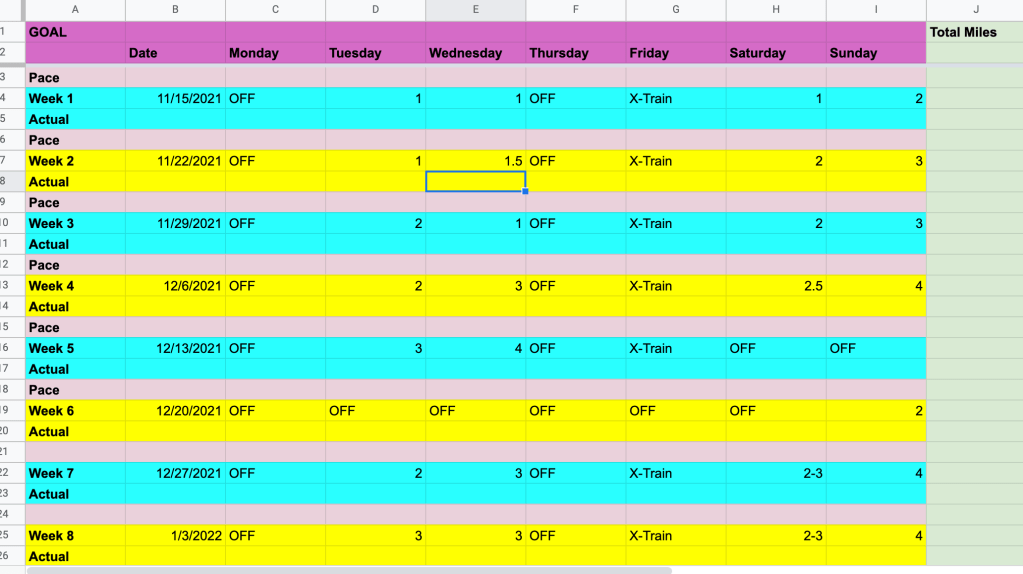
However, one of the most productive things I’ve done is create a training guide to complete a half marathon.

when to use google sheets

That method worked for me! At that time, I was already pretty in shape so I was able to start my first week with 2-3 miles.

Since it has been 5 years since I ran that race and I let running go, despite it being an excellent stress reliever, I have decided to do another one! I am planning to run the Bergen City Half Marathon at the end of April 2022.

So, of course, what did I do? I created a 20-week training plan with Google Sheets for myself! I will be on a European adventure trip for 8 days in December, so I just went ahead and blocked that week off so I don’t have to worry about being “disappointed” if I don’t meet my goals for that week. I will probably be walking a ton anyway. And since I am starting way more out of shape than last time, I’m giving myself a few slower weeks to ease back into running.

when to use google sheets

When to use google sheets for budgeting

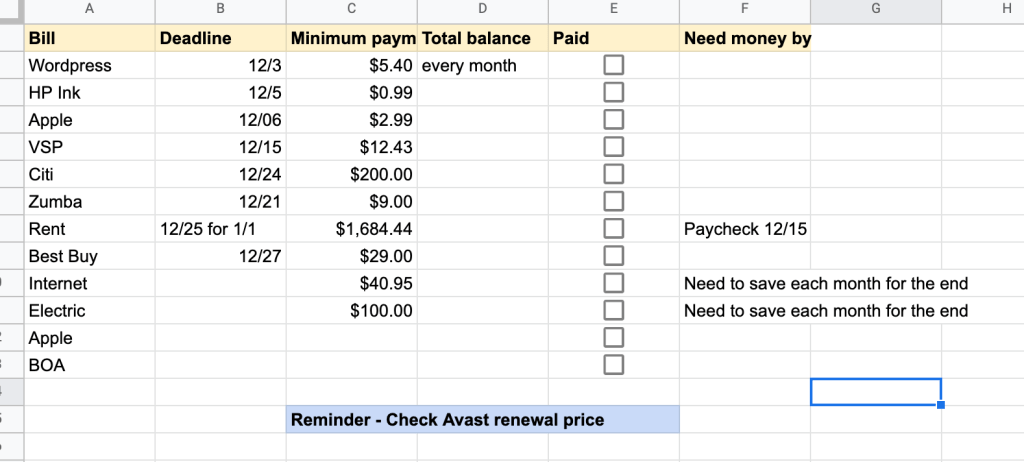
I do not have a fancy or detailed budgeting system. I mainly use Google Sheets just to make sure that all my bills are paid on time each month. It also helps remind me to have enough money in my account for automatic withdrawals.

when to use google sheets

I should probably call this a bill system and not a budget system because you can see that I don’t account for food or miscellaneous expenses. This is my checklist for December. Some of the amounts change depending on renewals and you see I also put reminders when I know annual subscriptions are coming up. You don’t see car insurance on my December bills list because I am only paying about $40 every 6 months while I am in Norway and my car is just sitting in the U.S.

I am a licensed Zumba instructor, but I just don’t have the time right now to continue classes. And most of the people that attended my virtual classes previously were in a different time zone. So, I am paying a monthly hold fee so I don’t have to redo the whole licensing process when I get back to the U.S.

when to use google sheets for Daily and Weekly Tasks

I have tried all sorts of methods of tracking daily to do lists. Now, I just simply type my tasks out in the day I would like to complete it during the week it needs to be done. I can work several weeks ahead so that reminders go in and I don’t forget about important things. Then, when the week has passed, I just hide the sheet so the current week is first. If I don’t get it done, I just cut and paste it into the next day. I go through my action items for the week every Sunday night.

when to use google sheets

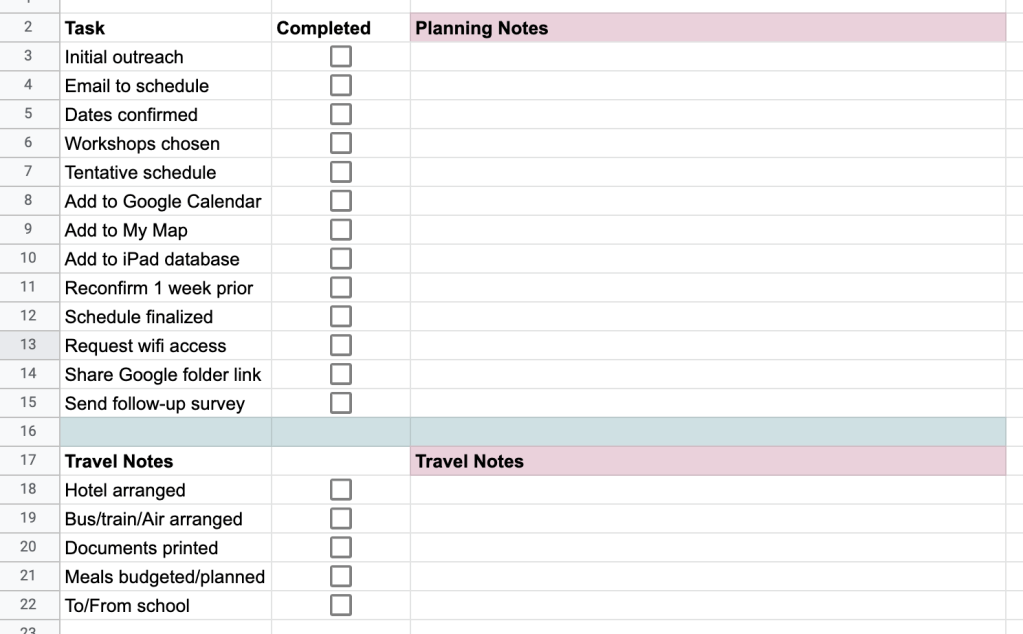
For my current job in Norway I have a lot of details to manage. I have to create a schedule for the year of places that I’m going to give workshops. Then, I have to make sure I do a bunch of things during that communication. So I created one giant Google Sheet that has the weeks of the school year listed. I put the main details in that sheet and then link to a checklist for each school visit. All the checklists are on individual tabs in a separate Google Sheet document.

when to use google sheets

when to use google sheets as a Habit Tracker

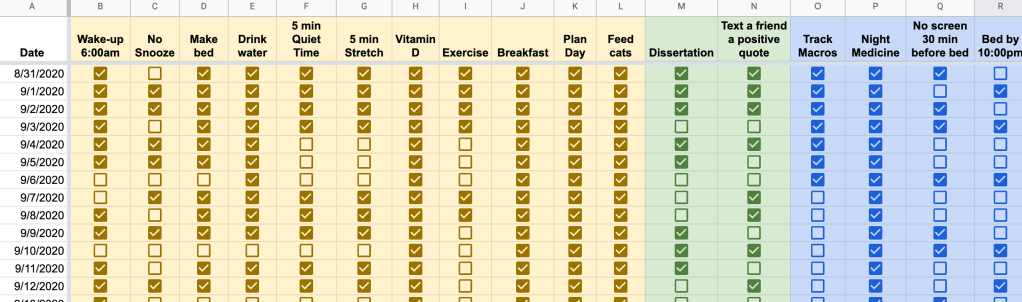
Another way I use Google Sheets to organize my life is a habit tracker. Again, I’ve tried different forms of this, and I even have a PDF habit tracker for free here on my site. Here is a screenshot of how I used it in the past. Obviously, I was still in the process of building the habits then. Now, I don’t have to think about all of them quite so much. I used this when I was trying to build a solid morning routine.

when to use google sheets

Final Thoughts for Today

There are many different ways you can use Google Sheets to organize your life. These are just some of the examples that I use to keep myself focused and organized. I’m sure if I went back through my whole Google Drive I would find even more examples. Share in the comments how you use Google Sheets for organization!