Posted in Uncategorized

Insanely Useful SEO Based Content Writing Tips

Have you ever thought about learning SEO based content writing?

Search Engine Optimization (SEO) is the process of improving traffic to a website from search engines via un-paid (“organic”) search results. SEO aims to get your website to rank higher in search engine results pages (SERPs). Search engines use automated ranking algorithms to index websites based on relevance and popularity. This formula is known as the “search engine algorithm”.

If you’ve ever thought about blogging or marketing, then it’s good to know some SEO based content writing tips. Trust me, I’ve been learning this as a I go and having to go back to old articles to make revisions. Now, I use RankMath to help me out!

I would have done much better if I had learned this from the beginning!

Conduct Keyword research

Keyword research is the process of finding out what people are searching for online so that you can write about those topics. The primary purpose of keyword research is to ensure that you’re targeting the right audience and using SEO based content writing that speaks to their needs.

Once you have your keywords (or key phrases), it’s time to consider how they should be incorporated into your article or blog post. You want to keep things natural, so readers don’t feel like they’re reading an infomercial!

To avoid keyword stuffing, try using synonyms instead of repeating the same phrase repeatedly in your copy. This will help ensure that each instance serves a purpose instead of just being included because “it sounds good”.

There are lots of free and paid resources. But I mainly use keyword plan from Google Ads and Answer the Public.

Optimize your blog post titles to get more clicks

Optimize your blog post titles to get more clicks for SEO based content writing.

  • Use keywords in the title of your blog post (see my title!). This will help search engines find it and direct readers to the content they’re looking for.
  • Use a question in your title. This can help people click the link and make readers think about their answers.
  • Do keyword research first, then repeat that keyword in your article with a good ratio of keywords to total words for maximum effectiveness. For example, one of my keyword phrases in this article is SEO based content writing.

Write short paragraphs

Using short paragraphs is an excellent way to make your content more readable, making it more likely that people will read the entire post. It also helps with SEO based content writing since search engines can better understand what each paragraph is about and index them accordingly. Finally, short paragraphs help people share your content on social media. It makes it easy for them to click on the title of each paragraph and copy/paste it into their feeds.

person holding blue ballpoint pen writing in notebook. Making a list for SEO based content writing.

Use Bullets and Numbering in the Blog post

  • Using bullets and numbering in blog posts can help make your post more readable, organized and scannable.
  • The readers will find it easy to read the blog post’s contents if they are listed in bullet points or numbers.
  • Bullets and numbering make your blog post more organized. This is important as it will help you organize the content better to look more attractive than before when they were not organized by using bullets or numbers.
  • Using bullets and numbers makes your content scannable for readers who may need more time to read long paragraphs. They may need bits of information from each paragraph. These items should be made easily accessible by using them as headings (in other words, put them near each other)and subheadings.

Use Proper Alt Attributes for Images

An alt attribute is the text alternative for an image. It describes what you see in the image and helps screen readers identify each image on your page. It is an important part of SEO based content writing.

For example, suppose you have a company logo as an image. In that case, you should include an alt attribute with the company name so that users who are visually impaired or use screen readers can read what it is. Or, if you have images of products in your blog post, write descriptive alt attributes for each. That way, search engine bots can also read and understand what they represent.

Write Meta Descriptions for Blog Posts

A meta description is a short description that shows up in search results. It plays a vital role in helping readers understand the content of a blog post and decide whether to click on it.

For this reason, meta descriptions should be unique, compelling and relevant to the post’s topic. They should be at most 160 characters to not overwhelm users with too much text in one place. A good rule of thumb is to write them so that they can help readers understand what your content is all about. This is helpful even without prior knowledge about your product or service offering.

Someone typing on a laptop into Google. There is a coffee and an iphone on the table. This article is for SEO based content writing.
Photo by Pixabay on Pexels.com

Write a Catchy Blog Post Introduction

The introduction is the most crucial part of your blog post and should be catchy, informative and short. The introduction should grab the attention of your reader so that they want to read further. It should also provide a brief overview of what you will discuss in your blog post.

The following are some valuable tips for writing a great introductory paragraph:

  • Begin with an engaging anecdote or question that makes readers want to know more about what you have to say (e.g., “Have you ever wondered why we love dogs?”)
  • Use numbers to illustrate facts or conclusions (e.g., “Did you know that there are more than 600 million dogs worldwide?”)
  • Ensure the sentence structure is straightforward by breaking long sentences into shorter ones. Or using subheadings when appropriate (e.g., “Let’s look at this issue one question at a time…”).

Keep your URL as short as possible

Keep your URL as short as possible. It would help if you also used hyphens to separate words and avoid underscores because they are not search engine-friendly.

It’s also essential to keep any descriptive words out of your URLs, as bots can use them when they crawl through websites’ backlinks (links pointing back at them). For example: If someone links back to your site using an anchor text like “Learn more about SEO, ” it will become clear what exactly you’re talking about if you have yourwebsite.com/learnSEO.

Link Internally with other blog posts on your blog

Linking internally on your blog is one of the best ways to increase the SEO value of your content and improve user experience. It’s also an excellent way to help create new content ideas and keep your writing fresh.

In addition, internal links are an essential aspect of search engine optimization (SEO). By linking to a blog post you’ve written, you can boost its ranking in Google. That will get more people to read it and increase its authority — or how much trust Google has in your site.

If there are other posts on your website that relate directly or indirectly to what you’re writing about now, link back! Anchor text doesn’t matter as much as having a relevant link within the article itself. However, if possible, use terms that pertain specifically to this section or topic rather than generic ones like “click here”.

Do keep the above points in mind for SEO based content writing for a website.

  • Remember to optimize your content. You can easily optimize your title, heading tags and content by following the guidelines above.
  • Remember to optimize your title. The title should be descriptive enough to attract readers. Also, try using keywords relevant to the topic of discussion for search engines like Google, Yahoo! Search and Bing crawl through it and rank better on SERPs (Search Engine Result Pages).
  • Remember to optimize your heading tags. Headings are significant in SEO because they help crawlers understand what your webpage is about, thereby helping them rank higher on SERPs. Titles of articles/pages should be preceded by H2-H6 headings according to their importance on the page’s structure, so search engines can see them and users can easily find them as they navigate through pages or blog posts related to the topic under discussion – SEO based content writing tips!
Posted in Uncategorized

RankMath: The Powerful Tool That Helped Me More Than Double My Blog Traffic

Imagine if you could double or even quadruple your blog’s traffic. You’re probably thinking, “That’s so much traffic! How do I do that?” The answer to that question is simple: RankMath.

Note: links going to the RankMath website are affiliate links. I only post affiliate links to services or products that I absolutely believe in because this is not an affiliate website.

If you’re serious about blogging or running a business site, then it’s likely that you want to boost your traffic. Good for you! It’s a smart step towards creating an online business empire. However, there are so many different ways to go about doing this that it can be difficult to know where should you begin. Well, look no further, because this article is going to walk you through my experience using RankMath.

What is RankMath?

RankMath is a WordPress plugin I’ve recently started using, which has helped me more than double my blog traffic. It shows you how to write long-tail/head keywords for any given keyword. In essence, it helps you make your website as SEO-friendly as possible. For instance, if I wanted to rank for the keyword “make money blogging,” this plugin would tell me exactly what phrases to use in my content and on other relevant pages. It also walks you through all the steps to make your post more Google-friendly.

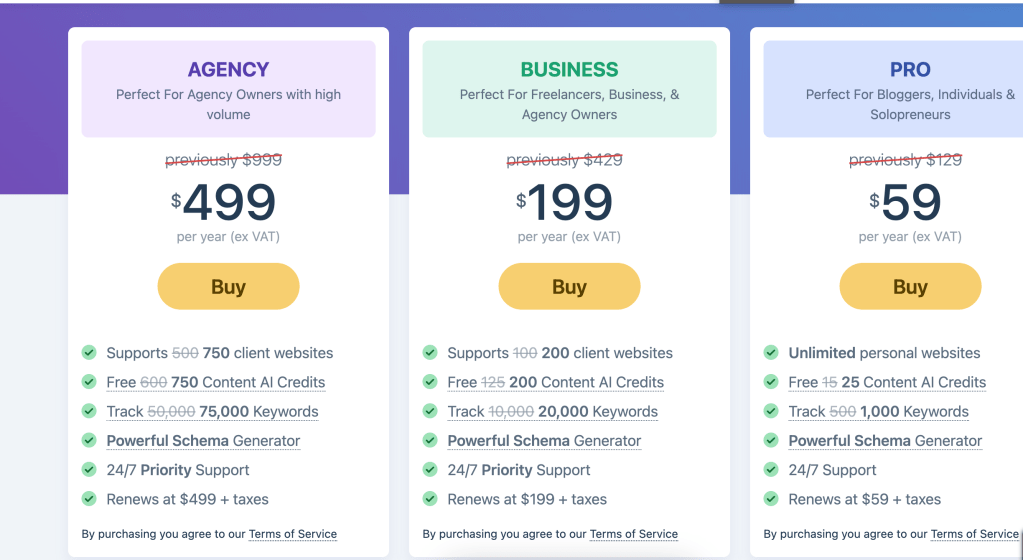
Over 1.5 million people use RankMath and I know why! It’s so user-friendly and has helped my blog traffic grow a lot even when I haven’t been posting as much. But is it free? Yes, there is a free version, but I didn’t think I could get everything I needed from the free version. So I upgraded to the PRO version, which is very affordable at only $129/year! And as you can see from the screenshot below, they are running a sale for the next 7 days (today is October 30th, 2022) for only $59. As my business grows, I will likely upgrade to the Business account.

Screenshot from the RankMath website showing the prices for each plan.

What does it do for you?

RankMath provides webmasters and content writers with powerful tools for improving their search engine optimization (SEO). Since it was first released, it has become the leading SEO plugin on the market. If you look at the ratings, it is excellent at 4.9.

Screenshot of the tools RankMath has to help you optimize your post.

It offers an easy to follow guide that lets you customize and optimize your post for maximum searchability. It’s so user friendly and colorful and I enjoy watching everything change from red to yellow to green. You enter in your keyword, keyword phrase, or multiple keywords. Here you can see that the current post is optimized at 62/100. The goal is to get as close to 100 as possible.

Once you optimize over 80, then it turns green. As you can see, there are several steps I still have to take to get myself closer to green.

As I’m typing now, the content is getting longer and the keyword density is decreasing. The last thing I do on all my posts is create my links to other content on my blog or external links.

At the end, if I think I don’t have enough media, then I’ll add another image or two and definitely make sure to have one as my thumbnail.

Content AI is super cool because it allows you to see how your post ranks compared to others using the keyword. When I use this feature, I often see a jump in my posts score through RankMath.

Another great feature is to analyze the title. For example, my original title was How I More Than Doubled my Blog Traffic Since Using RankMath. I was able to see that my title didn’t contain any strong words and didn’t have my keyword (RankMath) at the beginning.

I also used RankMath to edit and optimize my 100 old blog posts that were currently on my site. Truthfully, I still haven’t optimized everything yet, so I think I would have even more growth if I did. Here is the full transparency that you can see through the easy to use analytics dashboard. Just imagine how much traffic I would have if I optimized everything to good!

Screenshot of the Analytics dashboard showing that overall optimization is at 58.

Why I chose RankMath

Sometimes the best decisions are based on instinct. That was the case when I first encountered RankMath. I was feeling frustrated from an overall lack of growth in my site’s traffic, as well as some disappointment. I had tried using Monster Insights, but it wasn’t working so well for me.

I did some research and decided to give RankMath a try and I haven’t been disappointed. It seemed to be the easiest to use out of the different plug-ins available. And for someone who is still learning SEO, easy was what I was looking for.

Not to mention, any time I have had a question or problem, they are so quick to respond and solve the issue. They are constantly making updates to enhance user experience and make the tool even better.

My traffic since using RankMath

Since I started using RankMath in May 2022, you can see I’ve been able to consistently maintain views much higher than previous months. And if you compare that to my posting activity, that’s pretty good. I was not nearly as consistent in August – October, yet I still had higher views. Now, I feel more motivated than ever to add relevant content to continue to boost the traffic. After all, if this is a business, I have to treat it like one to see the fruits of my labor.

Chart showing my posting and traffic from February 2021 to October 2022. You can see a big increase when I started using RankMath in May 2022.

Changing my SEO strategy

I’m a fairly new blogger and only started my blog in February 2021 with relative inconsistency. The first couple of months I was struggling to get much traffic at all. I was trying to follow the normal blog marketing tips such as social networking and writing on a regular schedule. But it wasn’t really getting me anywhere until I started using RankMath.

Once I started focusing on keywords and using this tool to help me optimize my posts, I started to see growth! And it is something I want to continue. My goal is to bring all of my posts to a “green” level of optimization so they will start to rank more on Google search.

And I know a lot more now about keywords and keyword phrases so I can continue to make new content that is green from the start.

What I’ve learned from RankMath

If you’re a blogger and want to grow your traffic, I highly recommend you work with RankMath. Now I know so much more about keywords, URLs, links, titles, and so on to make my post as searchable as possible.

I still have more to learn, but I’m on a great path now to reach my ultimate goal of financial freedom!

Concluding thoughts

There is no one size fits all approach to SEO and if something doesn’t work for you, try switching it up. There are some best practices, but different ways of getting your information out into the Google universe.

Setting up your site using RankMath can boost traffic to your site and you can use a blogging calendar to boost traffic even more.

Best of luck on your blogging journey!

Posted in Goal, Mindset

3 Steps to Reach your Personal Growth Goals

So you want to improve your personal growth goals?

Set your mind to it and achieve it! What will you achieve with the right set of tools, strategies, and tactics?

I’ve been on this journey explicitly for several years now and I’m constantly looking for ways to grow and evolve as a person.

Whether you call it personal growth goals, career or life goals, or some other variation of the phrase here are a few steps to help you reach your goal.

Define what you mean by “Personal Growth”

“Personal growth” is a broad term that encompasses many things. It can mean learning new skills, developing new habits and improving your relationships. The first step to achieving your own personal growth goals is to understand what you mean by “personal growth.” Personal growth means different things to different people, so it’s important to set some parameters for yourself.

Defining what you mean by “personal growth goals” will help you decide on the right steps to take in order to achieve your goals.

person arranging pot plant. Possible way to reach personal growth goals.
Photo by Valeria Ushakova on Pexels.com

Personal growth goals are the best way to ensure that you are always moving forward in life. The secret to success is to set goals that can be achieved and then reach them.

First, identify your values. Why do you want to grow? What do you value? What are the most important things in life? Once you’ve identified these values, then ask yourself how those values impact your behavior or actions. For example, if one of your values is honesty but you’re always lying about something or someone then maybe it’s time for some self-reflection or improvement!

What do you want to achieve? This may seem obvious, but it’s important to really think about why you’re doing this. Do you want more friends? More confidence? To feel more fulfilled at work? Or maybe all of those things combined?

Why do you want this? What’s driving it for you? Is it something that’s been on your mind for a long time, or something that came up recently? How does achieving this goal fit into the bigger picture of your life?

How will achieving this goal change your life? Once you know what you want and why, try to envision how achieving your goal will change things for the better. For example, will making new friends give me more fun opportunities outside of work? Will being more confident at work help me advance faster with my career goals?

Identify the steps that are necessary to reach those goals

In order to reach your goals, you need to have a plan of action that will help you achieve what you want. This plan of action should include the following:

Identify the steps that are necessary to reach those goals.

Break down each step into smaller tasks or sub-goals that can be achieved within a certain time frame. This way, your goal will be more manageable and less intimidating.

Set deadlines for each task or sub-goal so that you know when something needs to get done by in order to keep moving forward on your plan of action.

Use the SMARTER goal-setting model to create your personal growth goals

If you’re trying to reach a goal of any kind including personal growth goals, you’ll want to make sure it’s a good one. That means it should be Specific, Measurable, Attainable, Realistic, Time-bound (SMART), and then be able to Evaluate and Reward/Revise (ER).
The SMARTER goal-setting model is a great tool to help you create effective goals. It stands for:

Specific – Be clear and focused on the outcome of your goal.

Measurable – Have a way to track success.

Attainable – Make sure it’s something that can be achieved within a reasonable time frame.

Relevant – Make sure it aligns with your values and interests.

Time-bound – Set a deadline for when you want to achieve your goal.

Evaluate – Choose how you will know if you met your goal.

Reward/revise – What will you get at the end or how will you change it?

Review your progress and make adjustments as needed

man looking through documents at workplace. Step in reaching your personal growth goals.
Photo by Michael Burrows on Pexels.com

Review and adjust as needed: Review what has worked so far and make adjustments as needed based on new information or feedback from others who support this goal with you (such as friends or family).

If you’re feeling frustrated or discouraged, it’s important to recognize that these feelings are normal. You can’t expect to reach your goal overnight — or in a week or month. Change takes time!

You may need to make adjustments along the way, such as changing your plan if something doesn’t work out well or finding new ways to reach your goal if your old ones aren’t working. Don’t be afraid to experiment and revise your plan as needed!

The best way to grow is to intentionally make changes in your life

Setting personal growth goals is one of the most direct and effective ways to help you reach your potential. They provide direction for your future and motivation for your present and give you a way to measure your progress. There is no one-size-fits-all template for accomplishing a goal, but it’s reasonable to assume that almost anything will be difficult at first. This difficulty is what helps push you to improve; what helps make you genuinely grow as a person.

Hopefully, I’ve given you three simple steps to get you started on one of your first personal growth goals. If you’re already in the practice of setting goals, you may want to try some new techniques. And if a lack of confidence has made it harder for you to achieve your goals over the past year, then I hope that this list of techniques will help remind you how important your goals are.

Posted in Goal, Manifestation, Mindset

Why Gratitude Is The Most Powerful Tool In The World

Gratitude is the most powerful tool

Gratitude is the most powerful tool: What it is

The word gratitude can be defined as the feeling of appreciation or thankfulness. It’s a powerful emotion that can help you manifest your dreams. Gratitude is what you feel when you realize how far you have come and how much you have to be thankful for.

But what exactly is gratitude?

Gratitude is the appreciation of something, often expressed as an acknowledgement of the benefits received. It is a feeling of thankfulness and appreciation for what one has and/or what one does not yet have but deserves.

photo of women hugging each other because gratitude is the most powerful tool.
Photo by Anna Shvets on Pexels.com

Gratitude is the most powerful tool: How to use it

According to some research, gratitude makes people happier and healthier. In fact, one study found that people who practice gratitude are more likely to sleep better and have lower levels of stress and depression.

To help you get started on this powerful journey towards happiness and fulfilment, here are three ways to use gratitude:

1. Write down three things you’re grateful for each day. This technique is called “Three good things” or “Three blessings.” It’s simple, easy to do, and has been proven effective over time.

2. Keep a gratitude journal where you write down all the things that make you happy on a daily basis — whether they’re big or small, material or spiritual — so that you can reread them whenever needed during your day-to-day life.

3. Send a thank-you note or email to someone who has impacted your life in a positive way — because they influenced who you are today and made you who you are now (even if it wasn’t intentional).

Gratitude is the most powerful tool: Why it works so well

Gratitude is a powerful tool. We all know this. But why?

It’s not just because it makes us feel good, although that’s part of it. It’s because gratitude changes the way we see ourselves and the world around us.

Gratitude changes our perspective and makes us more optimistic about our future. It can lead to greater happiness and satisfaction with life in general.

But perhaps most importantly, gratitude is what helps us connect with others and build strong relationships with them — which is key for happiness and well-being in life.

Takeaway: Gratitude can be a tool that changes your life.

Posted in Uncategorized

5 helpful ways to practice writing as a content writer

It is important to practice writing skills. I come from a strong academic background, but content writing for blogs is a whole new ballgame.

Because of that, I’m used to writing long academic research papers. However, that’s not the ideal style for a content writer to capture their audience.

Retraining your brain to be a content writer doesn’t happen overnight, but with practice and lots of motivation, you will eventually get better (I’ve been practicing for years and still have a long way to go).

These days, most writing jobs revolve around content. Whether we’re talking about blog writing, editorial writing or even social media posts. Content capturing a user’s attention is no easy task. Especially in noisy environments like Facebook and news sites where the average Internet user has already developed a practiced filter to ignore what they perceive as noise.

So, I’m retraining my brain to think like a content writer.

Here are five things I started doing and I encourage you to try them out:

Reading more blogs

Reading more blogs is one of the best ways to improve your writing skills.

There are many reasons for this, but the main one is that you get to see how other people write and communicate. You can learn from their mistakes, but also from their successes.

After a while, you’ll find that you’re not just reading blogs for the content; you’re also reading them for the writing style — and this is where things really get interesting. When you start noticing how someone else writes, it becomes much easier to spot good writing when you see it again in your own work.

It’s a bit like learning a new language: at first it’s hard work, but after a while things start to click into place and it all makes sense.

woman reading notes from notebook during radio broadcast. practice writing
Photo by George Milton on Pexels.com

Practice writing in different styles, voices, and on different topics

Practice writing in different styles, voices, and on different topics.

Learning to write is a process of learning to write again and again. I can’t tell you how many times I had to rewrite drafts of my dissertation.

Writing is a skill that can be learned, practiced, and honed. When you write something, you’re not just creating something new — you’re also learning how to do it better next time.

That’s why it’s important to write as often as possible. The more you write, the more you’ll learn about your own style and preferences, which will help you become an even better writer.

You don’t need to be writing a novel or even an essay in order to get better at writing. Try writing down your thoughts on anything that comes to mind, whether it’s something personal or professional in nature. You can use any type of writing app (like Evernote) or grab some paper and a pen so that you can feel free to get creative with your style and voice.

The key is to practice as much as possible so that when it comes time for a big project, you’ll be ready!

Write to a prompt

A prompt is a question or topic that you write about. If you’re stuck for ideas, try looking up prompts on the internet. For example, you could search for “writing prompts” or “writing exercises.”

Here are some prompts for deeper reflection to practice writing:

  • Write about a time when you felt like you were misunderstood.
  • Write about a time when you misunderstood someone else.
  • Write about something that happened in your life that changed everything forever.
  • Write about the last time you cried for longer than five minutes.
  • Write about the last time you laughed until it hurt your cheeks, stomach and ribs.
  • Write about a moment when you felt powerful or powerless.
  • Write about a moment when you felt insecure or self-assured.

Learn to embrace bullet points in blogs

Bullet points can help you improve your blog post readability, but only if they’re implemented correctly.

If you want to learn how to use bullet points successfully, read on!

Bullet points are an easy way to break up text into smaller chunks that are easier for readers to digest. This is especially useful in long blog posts where readers may get tired of reading large blocks of text.

There’s a lot of debate about whether or not bullet points should be used in blogs. Some people argue that they make the text look unprofessional and encourage skimming instead of reading carefully. Others say that bullet points make it easier for readers to find what they’re looking for within a longer post — especially when there’s a lot of information being presented in one place.

Bullet points are a great way to highlight key points in an article or blog post. They can be used to emphasize important ideas or make your writing easier to read.

person holding blue ballpoint pen writing in notebook. practice writing.
Photo by picjumbo.com on Pexels.com

Ditch the perfection and get it out there!

If you want to improve your writing, then you need to stop trying to perfect everything and just get it out there. You need to practice writing as much as possible!

When I wrote research papers, I had to make sure everything was exactly right for my professors or for a conference presentation.

You see, perfectionism is a self-defeating attitude that doesn’t serve the purpose of producing good work. It’s not about producing good work — it’s about producing great work. And there’s no such thing as great work when you’re still in the editing process.

Perfectionism leads to procrastination, which means that you’re constantly trying to tweak that one perfect sentence or paragraph until it’s just right. But there will always be another perfect sentence or paragraph to tweak after that one! So every time you think about writing something new, suddenly your mind goes blank because all you can think about is how much better this other thing could be if only you had more time and energy to devote to it.

The solution is simple: Ditch the perfection and get something out there! Once your first draft is complete (which may not be perfect), then go back through and make changes as necessary.

Practice writing as much as you can!

Content writing is all about ideas, so it’s important to keep your mind as happy and free as possible. The best way to do this is by cultivating hobbies that make you happy. I recommend taking up new activities or seeking joy in the things you already enjoy doing. Inspiration comes in many forms!

Posted in Uncategorized

Is Search Engine Optimization Worth It? (If You Ask Me, The Answer Is A BIG Yes)

Many people starting out new blogs or businesses ask, is search engine optimization worth it?

My opinion: Search engine optimization (SEO for short) is worth it. At the end of the day, you’re in business to make money or provide a service or information to people. And if your business or marketing model relies on free traffic, search engine optimization can propel you ahead of your competitors.

Let’s dig in!

Organic search traffic can make your business

Organic search traffic can make your business. What do I mean by that?

When you’re ranking high in Google for relevant keywords, you’ll get more traffic from people who are actively looking for what you offer. This means that they’re more likely to buy from you than if they found you through a display ad or social media post.

You can also use organic search to direct users to specific pages on your website where they can convert into newsletter sign-ups, landing page sign-ups, or even sales. For example, I get a lot of search hits for my Digital Freebies page on this website.

coffee apple iphone smartphone. is search engine optimization worth it?
Photo by Pixabay on Pexels.com

SEO is the gift that keeps on giving

If you do it right, your website will be visible at the top of search results for years to come. That’s why I’m so passionate about SEO. I truly didn’t take it seriously when I first started blogging and now I’m having to backtrack on old articles.

SEO isn’t an overnight success story. It takes time and effort, but in my experience, it gets easier over time as you learn more about your audience, keywords, and conversion rates.

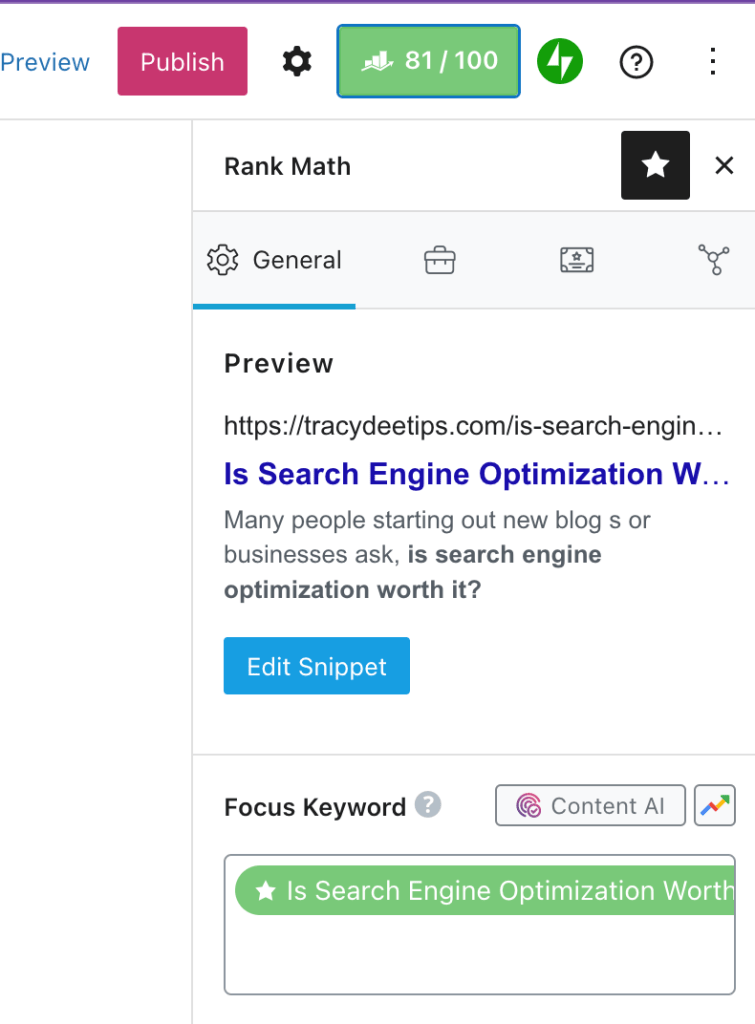
Since installing RankMath Pro, it’s much more automated and simple process for me. For example, use all the tips and strategies to try to make it as close to 100 as possible for each post. After going back and doing this for 100 old blog posts, I almost QUADRUPLED my blog traffic in one month.

screenshot of using RankMath Pro. Is search engine optimization worth it?

So, again, is search engine optimization worth it?

If you want to see results and growth over time, then yes, SEO can be worth it if you have the patience and persistence to see through it all.

SEO is a long-term strategy

Here’s the thing though: SEO is a long-term strategy. It can take months to see results, and even longer to become an authority in your niche. And sometimes years if you’re truly building up a brand and name for yourself.

But with that being said, it’s important to understand the difference between short-term and long-term results when it comes to SEO. There’s no point in spending hours on Google looking for new ways to optimize your site if you don’t have any traffic or sales coming in.

The best way to approach SEO is by taking small steps each day and building up over time. You can’t expect everything to happen overnight—that is simply not how SEO works.

SEO is about improving the overall quality of your site so Google sees it as a resource that deserves to rank in its search results. If you want to rank on Google’s first page, you need content that people will find valuable. That means writing articles that are informative and interesting, with headlines that attract attention and explain what the article is about in a few words.

For example, the keywords I chose for this post are: “Is search engine optimization worth it?” How did I find this question and why did I choose it? I went to a website called Answer the Public and typed in search engine optimization. Basically, this website tracks user searches for different words and phrases.

person working on black laptop. Is search engine optimization worth it?
Photo by EVG Kowalievska on Pexels.com

So, if you clicked on this post, then likely you were searching for something similar to: “Is search engine optimization worth it?”

You also need backlinks from other sites pointing to your content. The more quality backlinks you have, the better your chances of ranking higher in Google’s rankings (and Bing’s).

If this sounds like it requires a lot of work, it does! But like any marketing strategy, it pays off over time as long as you stay committed to improving your site and writing great content for readers.

SEO is “free” marketing (sort of)

The good news: SEO is free!

The bad news: It’s not “free.” Sure, there are some things you can do to get started with SEO that doesn’t cost anything at all… but you won’t get very far if you don’t invest some time and money into your website. At the end of the day, time is money, so if you choose to do it yourself, then it’s going to take some time.

So, is search engine optimization worth it?

Search engine optimization is worth it because it can vibrantly grow your business if done well.

And that’s why I think Search Engine Optimization is worth the trouble. It’s a strategy that has the potential to return ten times the effort you put into it. If you’re already a marketer, SEO might be right up your alley—but if you’re newer to it all, don’t be intimidated.

Now that we’ve taken care of SEO 101, it shouldn’t be too hard to get started; plenty of guides out there can help you improve your search rankings. Either way, I hope this article has helped shed some light on the hustle behind SEO, and maybe even encouraged you to get started with it today!

Posted in Goal

Are you a Hybrid Worker? 5 Powerful Tips For Making The Most Of Your Time

Hybrid workers are the current reality and immediate future of work. They are the bridge from the time when we had no choice but to work remotely, to the new era of blended work environments.

Time management can be one of the biggest challenges faced by digital nomads and hybrid workers, who may have a harder time than many at staying on top of business tasks and responsibilities. In this article I share five tips from my own experience, to help save you time and stay productive as a remote worker or location-independent business owner or worker.

Timebox your tasks

Timeboxing is a technique to limit the amount of time you spend on a task. When you work with a timebox, you set a timer for a specific amount of time. When the timer goes off, it’s time to move on to something else.

For example, if you have an hour block of time and have three tasks to do, set the timer for 20 minutes and then focus on one task until the timer goes off. Then set it for another 20 minutes and focus on another task until the timer goes off again. Then set it for another 10 minutes and focus on the last task until the timer goes off.

You’ll get more done in less time this way because your brain isn’t flooded with too many distractions at once or getting bored with one task before moving on to another one.

Set Up Your Workspace(s) as a Hybrid Worker

If you’re working from home or from an office space, set up your workspace so that you have everything you need within arm’s reach. This includes your laptop, files and other documents, headphones (if you need them), water bottle and more. If there are certain items that you use every day (like a stapler or scissors), put those closer to your desk than others that are used only occasionally (like paper clips). This will help keep everything in its place so that it’s easy for you to find when needed and avoid wasting time looking for misplaced items.

turned on gray laptop computer on table. hybrid worker
Photo by Flo Dahm on Pexels.com

Be Honest About Boundaries

As a hybrid worker, you might still have the same responsibilities at home as other people do. You might have a family who needs your attention and need to be home for certain events throughout the week. Don’t try to push yourself too hard. Take time off when you need it, and let your clients know what those times are so they can make adjustments accordingly.

If you know that you have trouble working without a break, make sure that you schedule one or two breaks during the day when you’ll get up and move around. If you find yourself going through periods where you can’t focus on work and need to get away from your desk, schedule them into your calendar so they don’t sneak up on you. If you need more than one break in a day, don’t feel bad about taking them!

Automate Where You Can

If there is something that you do regularly, like sending invoices or scheduling meetings, automate it wherever possible so that you don’t spend hours doing it manually each week. For example, if you use Slack for communication within your team then set up automatic reminders so that everyone knows when they should check their email or Slack for important messages. If you use Google Apps for Business then set up automatic reminders for upcoming meetings so that no one misses them!

Work Around Your Inflection Points

If you’re not familiar with inflection points, I’ll explain a bit here. Essentially, they refer to times in our day when we have more energy than usual — whether because we just woke up or because it’s lunchtime or because we just finished exercising. These moments are great opportunities to get things done during the day or even take on new projects.

five bulb lights. hybrid worker
Photo by Rodolfo Clix on Pexels.com

When You Have More Energy Than Usual, Use It To Get Things Done!

The key to making the most of your time as a hybrid worker is to work around your inflection points. There are times in your day when you need to be actively engaged with your work, such as when you are on calls or in meetings.

If you’re working from home, for example, try setting an alarm for 30 minutes before the start of each inflection point so that you can get ready for the call or meeting ahead of time. This way, when it comes time for the call or meeting, you won’t be scrambling around trying to find something to wear or rushing around looking for your notes or computer charger. You’ll be ready to go right away!

Another smart thing to do is schedule out your day so that some tasks are completed before others begin. For example, if there’s a big project due at noon but an important call at 10:00 AM, make sure that at least some of the steps required for completing the project are completed before 9:00 AM so that they don’t distract you during important calls later in the day.

Takeaway: Being a hybrid worker presents new challenges, but you can succeed.

If you have a hybrid role, consider tailoring your schedule to your specific needs. Work at odd hours if that’s the most convenient time for you to get things done. Remember that strong work-life balance is crucial if you want to succeed in both worlds, and don’t be afraid to ask for help if things are feeling too chaotic. Put your full focus on work when you’re on the clock, but also dedicate some time each day where you can recharge your batteries.

Your mind and body will thank you for it!

Posted in Manifestation, Mindset

11 Powerful Daily Confidence Affirmations

Are you in need of daily confidence affirmations?

I think we all experience times when we feel down on ourselves or unmotivated. Sometimes this happens because of something that happened that day, but other times it could be something more serious like depression or anxiety.

If you find yourself spending more time thinking negative thoughts than positive ones—and dwelling on them instead of letting them go—then it might be time to try out some daily confidence affirmations!

I am beautiful.

Beauty is a state of mind. It’s not just skin deep. It is not just a physical trait, or even a facade or an outfit. Beauty is a reflection of who you are on the inside and out, and when you feel beautiful inside and out, your confidence will shine through!

When you wake up every morning, look in the mirror and say: “I am beautiful.”

I love myself.

You are worthy of love. You are a good person and you have a good heart. You are a good friend, listener, and partner to others. You care about them and their well-being, even when they may not see it or want it for themselves at the time.

You deserve to be happy with yourself first before you can expect others to love you for who you truly are!

photo of woman looking at the mirror. daily confidence affirmations.
Photo by Andrea Piacquadio on Pexels.com

I am enough.

This is one of my favorite daily confidence affirmations. In fact, I even have this tattooed on myself. You are enough. You have a lot to offer the world, and you have hidden strengths and talents that will soon be discovered. Your radiance shines from within you, no matter who is around you.

You are worthy of love, respect, and appreciation by others. No one can take away your self-worth unless you allow them to do so!

I am worthy of being loved.

You are worthy of being loved. You are worthy of a good life. You are worthy of being happy, healthy, successful, and safe. Repeat this as one of your daily confidence affirmations.

I have a good heart.

I have a good heart.

I am a good person.

I am compassionate.

I am kind.

I am loving, and I can be generous with my love and kindness toward others when they need it most in their life’s journey.

I am a good person.

Be kind to others. Empathy and compassion are two of the most important traits of a good person. By being kind, you’re showing that you care about other people’s well-being and can put yourself in someone else’s shoes easily.
Be generous with money or time when possible! The more generous we are with our resources; the more likely we’ll be able to build strong relationships with lots of different kinds of people.

I have a lot to offer the world.

One of the amazing daily confidence affirmations. You have an important role to play in your community. You make the world a better place just by being yourself, and you are needed. You are valued. You are loved, and you love others deeply as well. Your life is important and valuable because you give it meaning through your contributions to others’ lives.

I have hidden strengths and talents that will soon be discovered.

You are not alone. We all struggle with these feelings at one point or another, and we all want to believe that there is something special about us that will make us different from all the rest. You are not alone, and you are not the only one who has been through this.

It’s easy to feel overwhelmed by a sense of isolation when we’re going through hard times in life because it’s so easy for us to isolate ourselves from others during those times. But it’s important to remember that other people have been there before, whether they’ve gone through the exact same thing or something similar that you can relate to on some level. And if someone else can do it, then so can you!

I have a radiance that shines from within me, no matter who is around me.

Radiance is a glow that comes from within you. It is the radiance of your inner self, spirit, and light. It’s a reflection of your inner beauty, and it shines through no matter who is around you or what situation you are in. The more you believe in this quality of yourself, the more radiant you will become — both on the outside and on the inside.

Radiance comes from within each one of us — we just have to turn up our lights (or dim them down when we want to hide). Radiance means there is no need to hide anything about ourselves because our inner radiance reveals everything we need to share with others: love, courage, warmth, generosity, and compassion for all beings.

My opinion matters and my thoughts are valid.

My opinion matters and my thoughts are valid.

I have the right to speak up for myself.

It’s okay to disagree with someone else’s ideas or opinions, as long as I do it in a respectful way and don’t try to force my own onto them.

People enjoy being around me because of all my positive energy.

This daily confidence affirmation is a great way to start your day. It helps you remember that people are attracted to positive energy and that it makes for a better experience for everyone involved. The next time you feel nervous about an upcoming conversation or social event, remind yourself that your positivity will improve everything!

Concluding thoughts for daily confidence affirmations

You can motivate yourself without being mean to yourself, and it’s important to recognize your positive traits to keep them in mind when you need some inspiration or encouragement!

It’s easy for our minds to fall into a rut of negative self-talk. In fact, research has shown that when we talk down on ourselves, we tend to give up more easily than if we were talking positively. However, if you want to be successful at anything—let alone life in general—you must learn how to stay motivated throughout the journey. This is an incredibly important skill that will help you succeed long-term and reach all of your goals!

I hope these daily confidence affirmations have helped you start off your day on the right foot. Remember, it’s not about being perfect or always being positive—it’s about making a change for yourself and working toward a happier, more fulfilling life. Now get out there and live it up! Thanks for reading!

Posted in Goal, productivity

How Many Emails Should I Have in my Inbox? Important Advice

“How many emails should I have in my inbox?” is difficult to answer, but I have some advice. You see, there isn’t a single answer—the answer depends on your business and how many emails you send and receive each day.

When I ask people what their email box quota should be, they say “zero.” I guess that makes sense, right? Well, it really depends on what kind of marketing you’re doing. So here’s my answer to “How Many Emails Should I Have in my Inbox?”

A clean inbox is a manageable inbox

A clean inbox is a manageable inbox.

If you’re not sure how many emails you should have in your inbox, the answer is “less than you have now.”

If you’re looking for an INITIAL number to shoot for, try aiming for less than 50 unread messages at any given time. That may seem like a lot of emails, but if you’re using software like Gmail with its search functionality and folders, it’s actually pretty easy to stay under that number.

If you’re like most people, your email inbox is probably a source of stress. You know it’s full, but you don’t know what to do about it.

You have hundreds of unread messages, some important and some not so important. Some emails are stuck in the “Drafts” folder because you don’t have time to respond now, but you don’t want to lose track of them either. Others are buried in subfolders because they were sent by someone who isn’t in your address book and can’t be found with a search query. And so you continue to ask yourself: How Many Emails Should I Have in my Inbox?

The first step toward curbing the chaos is to get rid of as many unnecessary emails as possible — both those that don’t require action and those that aren’t worth keeping in your inbox at all. Once that’s done, focus on processing messages one at a time until everything is done or read.

black and gray digital device. How Many Emails Should I Have in my Inbox?
Photo by Torsten Dettlaff on Pexels.com

Your email inbox should have as few emails in it as possible

How many emails should I have in my inbox?

That’s a question that has perplexed inbox zero enthusiasts for years.

The answer is: as few as possible.

If you have a lot of emails in your inbox, you’re wasting time. You need to be able to scan quickly through your inbox and identify the important stuff — the stuff that requires action from you — and get rid of everything else.

Your email inbox should have as few emails in it as possible. This means that you are either deleting the emails that you don’t need, or moving them somewhere else.

If you have a lot of emails in your inbox, it’s time to clean things up. When I started my business, I had over 20,000 emails in my Gmail account. It was overwhelming and made me feel like I was drowning. I needed to change this!!

The magic number is 0

The magic number is 0 – for me. And if you’re like me, you should have no emails in your inbox.

You might be thinking, “How can I get my inbox to zero?” It’s not easy, and it’s not realistic for most people. But it’s a great goal to work toward.

For some people, if their inbox is full of hundreds of emails, they feel like they’re drowning in work that needs to be done. But if you can get your inbox down to zero (or close to it), then you’ve reached a place where you have control over your email and you know everything that’s going on. You don’t have to worry about missing an important message because it’s buried under piles of clutter.

You don’t have to worry about making decisions without all the information because other messages haven’t been read yet. And you don’t have to feel guilty about not responding quickly enough because there aren’t any messages in your inbox!

A clean inbox helps reduce stress and anxiety

A clean inbox is a happy inbox. It helps reduce stress and anxiety, which can improve your productivity and focus. This is why you often have the question: How Many Emails Should I Have in my Inbox?

The truth is that we’re all busy, but we’re also human beings who need to take care of ourselves and our mental health. And a clean inbox helps reduce stress and anxiety by making it easier to focus on what’s important when you need to focus on it.

When you have a clean inbox, you don’t need to worry about missing something important because there won’t be anything important left for you to miss!

The trick to keeping an empty inbox is deciding what to do with each email when it arrives

It’s easy to get an empty inbox, but it takes a little more effort to keep it that way. The trick is deciding what to do with each email when it arrives so you don’t have to keep asking the question: How Many Emails Should I Have in my Inbox?

Some people choose to delete all emails that are not work-related or personal. Others file emails in folders and delete only those they are sure they will never need again. Still others use the “flag” function on their email programs to place messages in a “to be dealt with later” category.

No matter how you choose to handle your incoming messages, there are some general guidelines that can help you maintain an empty inbox:

1) Do not spend time deleting emails unless they are spam or unwanted solicitations. If you have a legitimate reason for deleting an email, but do not know what category it fits into, leave it in your inbox until you decide what action is needed on your part.

2) Use filters on your email program so that certain kinds of messages automatically go into a particular folder without making you look at them first every time they arrive.

3) Choose one day each week (or even one day each month) when you will sit down at your computer and deal with any outstanding items in your inbox by filing them or deleting them permanently. Perhaps even daily if you receive a lot!

person holding a smartphone. How Many Emails Should I Have in my Inbox?
Photo by Solen Feyissa on Pexels.com

The more you stick with this practice, the more natural it will become!

If you’re still wondering: How Many Emails Should I Have in my Inbox? Fear not!

The more you stick with this practice, the more natural it will become!

You’ll find that when you’re at work, you’re not thinking about what’s in your inbox or what’s coming next. Instead, you’re focused on the task at hand.

If you have an email account with a lot of messages in it, it can take some time to get through them all and respond to them. This is where tools like email scheduling and email reminders can help.

Conclusion: How Many Emails Should I have in my Inbox?

Truth: The number of emails in your inbox is only important if it’s impairing your ability to do your job. It probably won’t kill you to have an overflowing inbox full of emails, but you’d definitely benefit from trying to get back down to somewhere between 0-50 emails in any given inbox.

Ultimately, the key to maintaining a clean inbox is setting realistic expectations and revisiting your inbox at frequent intervals. If you can do this, you should be able to keep your inbox in tip-top shape. By no means is it a perfect system, but it’s the best way to ensure that your emails are never overwhelming.

Posted in Goal

No One Knows The Key To Success And I Didn’t Either Until Now

Want to know the key to success? Actually, there are many keys and ways. So, don’t think that you just have one way to live your life.

There is no such thing as “The Key To Success”

I am going to share with you the key to success and it’s not what you think.

There is no such thing as “The Key To Success“. There is no one key that will unlock your success.

There are many keys and there are many ways to open the door, but when you look at it from a distance, all you see is one door.

It’s like looking up at the sky at night and seeing all the stars in the sky. You can’t tell which ones are more important than others because they all look equally bright. But if you were to get out of your car and walk towards them, they wouldn’t look as bright anymore because they would be smaller compared to everything else around them.

silhouette of trees and mountain under blue starry sky. key to success
Photo by Sindre Strøm on Pexels.com

Similarly, when we talk about success and how we can achieve it there are so many different ways that we can describe it or define it, but when we actually start working towards achieving our goals and dreams we realize that there isn’t just one way of doing things or thinking about things or even feeling about them.

You can’t use the same thing that everyone else uses

If there’s one thing I’ve learned from starting my own business, it’s that there is no magic formula for success.

I’ve had people tell me a million different things about what it takes to be successful: “You need to be a morning person,” or “You need to be an early riser.” Those things can help, but not for everyone.

I’ve heard that you need to have a positive attitude, or that you need to be more outgoing. Some people told me that I needed to dress better, while others said I needed to dress more casual. There are so many different opinions out there on what it takes to succeed in business, but I’ve found that none of them are right.

I’m not ashamed to admit that I’ve spent much of my life searching for the key to success.

I’ve read countless books, attended seminars, and experimented with different methods.

But you know what? There’s no one secret to success. No one thing that will make you successful right off the bat.

It takes hard work and perhaps even a bit of luck sometimes. Consistency is the real key and you can use other people’s formulas, but you still have to be you.

a woman with eyeglasses posing with her arms crossed. key to success
Photo by RODNAE Productions on Pexels.com

Be willing to change your mind about anything and everything

Everyone has a great idea. They think they’re going to be the next big thing, the next entrepreneur who will make millions of dollars and retire at 30.

But do you know what separates the winners from the losers? It’s not your idea, it’s how you handle failure.

If you want to be successful as an entrepreneur, you have to understand that failure is part of the process. You have to embrace it and learn from it.

Here are five ways you can become more successful by becoming more comfortable with failure:

1. Be willing to change your mind about anything and everything.

2. Don’t focus on making money, focus on making something people love or solving a problem that annoys them in some way (they’ll pay for it).

3. Learn from other people’s mistakes so you don’t have to make them yourself — there are thousands of books written by entrepreneurs who’ve failed (and some who’ve succeeded) so learn from their experiences instead of making your own mistakes!

4. Take action now — if you’re thinking about starting a business but haven’t done anything yet then stop thinking about it! Just get started, even if it’s just writing down your first idea.

Accept that every successful person has many failures along the way

Everyone wants to know the key to success.

But I think that’s the wrong question to ask.

The real question is: What do successful people do differently?

I’ve spent years studying successful people, and here’s what I’ve found.

Successful people don’t just wake up one morning and decide they’re going to be successful. They make a habit of doing things that unsuccessful people never do — even if those habits seem pointless at first.

The smart ones realize that success isn’t a race; it’s a journey. And along that journey, there are plenty of detours, roadblocks and dead ends. You might have to take several steps backward before you can go forward again. That’s okay — it doesn’t mean you’re failing. It means you’re learning something new about yourself and what works best for you in life and business (and vice versa).

You’ll hit obstacles along the way — probably many more than most people would expect or anticipate — but that’s okay too because it means you’re pushing yourself outside your comfort zone and challenging yourself to become better than you were yesterday (or last week or last month).

The secret is not to give up when things get tough.

young troubled woman using laptop at home. key to success
Photo by Andrea Piacquadio on Pexels.com

There is no such thing as “The Key To Success”

There is no such thing as “The Key To Success.

I’ve heard about this so many times, that there is a “key to success”. That if I just knew the secret, then everything will be ok.

But you know what? There is no such thing as “The Key To Success”.

There are many keys. But none of them are THE key. They’re all just keys that work for some people in some situations at some times in their lives.

The real secret to success isn’t finding a key — it’s finding the right combination of keys that works for you at this point in your life.

It’s your life, it’s your path and it’s your journey. You have to figure out what it means for yourself and how to live it. You have to figure out what success means for yourself and how to achieve it. You have to figure out what failure means for yourself and how not to let it affect you too much.