Posted in productivity

5 Simple Steps To Zero Inbox Life

Zero inbox life is possible. But, it takes organization, effort, and consistency.

Are you looking for a way to reduce the amount of time you spend on email? In this post, I am going to list 5 actionable steps you can take in order to reach that elusive mythical “Zero Inbox Life”.

The most important thing to remember is that it’s a process. You can’t just set up a system and expect it to work perfectly from day one. It will take some time to get used to, but once you do, boy does it make all the difference.

black and gray digital device.
Photo by Torsten Dettlaff on Pexels.com

1. Create an Actionable Inbox

If your inbox is full of emails that are not actionable (or even ones that are), you will never get to zero inbox. Unsubscribe from newsletters and social media feeds that don’t provide value for you or your business. Delete any emails that aren’t important (such as notifications from apps). Delegate tasks and projects to other people in your company or team (if applicable) so they can handle them instead of you.

2. Create rules

Once you’ve organized your inbox, create rules for any automated messages coming in that need immediate attention, such as receipts from online purchases or updates from social media accounts.

For example, if you receive an email from Amazon about a recent purchase, you can create a rule that automatically adds it to a folder called “Amazon Receipts” so that it doesn’t clutter up your main inbox view and alerts you when new messages arrive without having to check each time.

3. Create a To-do Folder

Create a “To Review” folder for each account where you’ll put mail that requires action from you later on (this is where most people end up dumping their messages).

Or, leave emails that need to be answered or followed up on directly in the inbox. And make sure those are the only ones there so you can move them to the proper folder when it’s completed.

4. Schedule Time To Process Your Emails

It’s tempting to just open up your inbox and start checking emails right away, but this can cause stress and overwhelm if there are too many emails waiting for you at once. Instead, schedule 30 minutes each day when you know there will be no distractions so you can focus on processing your inbox.

This way, you won’t feel like it’s taking over your life and affecting productivity levels throughout the day because it won’t be constantly pulling at your attention while you’re working on other things

Young woman making serious face while trying to create a zero inbox on laptop.
Photo by Andrea Piacquadio on Pexels.com

5. Move all emails from one folder to another folder (or archive)

You can move all emails from one folder to another folder by either using the ‘Bulk Move’ feature in Gmail or ‘Move to Folder’ feature in Outlook. This will help you declutter your inbox and organize your emails into folders according to their subject matter so that you can easily find what you are looking for later on if needed.

So close to Zero Inbox Life

You now have a system to follow. You know what works. Once you get started, you’ll immediately notice how much simpler (and faster) your online routine is. Pretty soon, getting to zero inbox will just be part of your normal routine. And, once that happens, life is bound to get a lot simpler.

Posted in Goal

4 Tips to Master the Power of Effective Scheduling

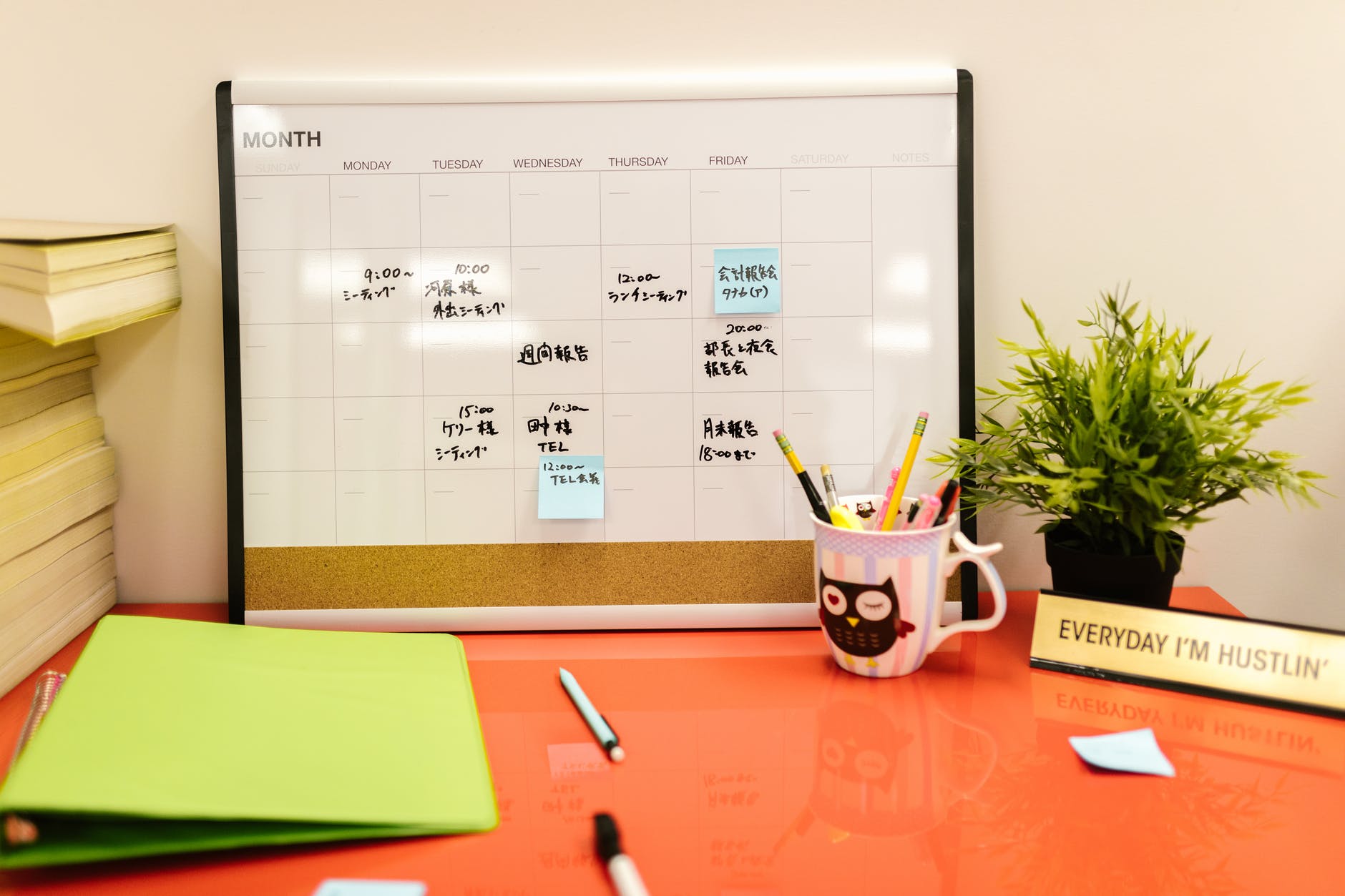
Effective scheduling is key. Some people say that I’m a planner. Others say I’m calendar-oriented. Really, I just like to make sure that my time, tasks, and priorities are all reflected in my schedule. When someone asks me to do something and I agree (also power in saying no), I immediately add it to my Google Calendar, which can be accessed on my phone, iPad, and laptop. No matter where I am I have access to it.

If it is a work or professional meeting, I copy the Zoom or webinar link from the email and paste it directly into the calendar event that I create so that I do not have to search for the email when it’s time to log in.

effective scheduling
Photo by RODNAE Productions on Pexels.com

Effective scheduling: Clarify your goals

It is important to know what you want to accomplish with your time. You cannot create an effective schedule if you don’t know what you are aiming for. I wrote a post on mini-goals here. Get specific on the main areas of your life and figure out the chunks of time that need to be spent on each.

Effective scheduling: Prioritize your tasks

When you sit down to work, or even at the beginning of every day, take a look at everything that needs to be accomplished. What is that one thing that can’t be put off? Do that first, in the morning if you can. For longer term projects, break it down into smaller deadlines and place those on your calendar. If you’re not sure how to prioritize, consider using a strategy like the Eisenhower Matrix.


Effective scheduling: Utilize a digital calendar like Google Calendar

Keep a calendar that can be accessed from all of your digital devices: laptop, phone, iPad, etc. That way, you always have access to what you need in the moment if someone asks to schedule something. Personally, because I work several part time jobs and manage my own schedule, I keep one Google Calendar for everything and color code by activity, including my personal commitments. For example, if a friend texts me and says, “hey, we should catch up on the phone Thursday around 8pm.” If I’m free, I actually confirm and add that to my calendar so I don’t forget to call or accidentally make plans to do something else because I forgot we were going to chat.

At work, I utilize my email kind of like a to-do list. I try to check my email at certain points throughout the day, but if something comes on that I need to take care of that day or later in the week, I also add it to my calendar and include the reference email.

Effective scheduling: Learn to Say “Let Me Get Back to You”

If you’re a kind-hearted person who wants to follow through with helping people or do a good job, you’ll be tempted to say yes to everyone and everything. That is not a realistic way to manage a schedule because you will quickly become overwhelmed. However, instead of saying no right away, give yourself some think time when someone asks you to do something or for another meeting or a favor. Evaluate if it fits with your goals and priorities or fits in any extra time you have available for leisure. If not, perhaps you may have to decline or ask the person to check in with you at a later date.

These are just some of the strategies that I use on a regular basis to maintain my schedule. Please leave a comment if you’d like to hear more about any of them!

Posted in Uncategorized

3 Helpful Strategies to Organize Your Email Inbox Today

Organize your email inbox: A little over three years ago I made the switch to a zero inbox and it was the best thing I ever did for my organizational skills. At that time I had had my personal Gmail account since about 2005 with thousands and thousands of emails. Instead of taking time putting everything into folders, I simply decided to archive it all and start from that day forward. Since I started a new job, I was able to keep my work email at zero inbox from day one.

Table of Contents

    Organize your email inbox: Here’s how I manage emails now to keep my inbox as close to zero as possible:

    1. Check email first thing each morning (after affirmations and to-do list) and before I close my computer from work for the day. By doing this, I can deal with any emails that came in before I started my workday for all the early birds who start before me, and then I can create a plan for everything left over at the end of the day.
    2. Check email at set times throughout the day. Now, I don’t always follow this rule perfectly because it depends on what I’m working on. If I need to focus on a project or task and I don’t want to be disturbed by emails, I close the tab and set my timer to check it once per hour or every 2 hours so as to still be responsive to the needs of coworkers, but not be interrupted by constant flows of incoming emails.
    3. I use the two-minute rule when dealing with emails as I go through them. This idea comes from the Getting Things Done method by David Allen. If it’s something I can respond to right away, I quickly send a reply and then file that email in a folder. If it doesn’t need a response, I file it right away. If it’s informational and a deadline is attached, but it’s not immediate, I use the snooze feature to send it back to me when it needs to be completed or responded to. If it is going to take a bit longer, I work on it during an email response period during the day.

    organize your email inbox
    Photo by Oleg Magni on Pexels.com

    Gmail tips

    So by the end of the day everything should either be snoozed, responded to, or filed in a folder. I rarely delete emails because I do frequently have to refer back to old emails for information and it’s very easy to find when they are in folders. I also use the search function in Gmail to find the emails that I need. For newsletters and subscriptions, I create filters that send the emails directly to folders so it doesn’t even have to come to my inbox. These are great ways to organize your email inbox.

    My personal favorite Gmail settings are to use the compact view with conversation view off. I like to see all my emails individually and conversation view confuses me a bit. Because I see all messages individually, I sometimes will only keep the most recent email in a thread and delete the rest because it’s not needed.

    And, to save me a little time, I have smart reply turned on so it auto-detects what I might want to say. It’s kind of scary how accurate it is. I also use Grammarly to check my spelling, tone, and grammar as I go.

    Organize your email inbox: Keeping my email organized and efficient has helped me to save time and communicate effectively!

    Posted in Goal, Manifestation

    Setting Realistic Goals Is The Key To Getting Important Things Done

    Setting realistic goals: When most people think about goals, they think about vision boards and long-term objectives. It’s not a bad idea to have those things, but you also want to be realistic and set goals which are measurable. And often times, this means breaking it down into smaller goals and shorter timelines.

    Focus on how you can connect with goals that are meaningful to you

    The best way to set goals is to focus on the process of reaching them, not just the end result.

    Most people set goals like this: “I want to lose weight.” But that’s a goal that may only ever be partially achieved. You’ll lose some weight, but it may not be all you want it to be. And once you’re at your desired weight, what will you do then?

    Instead, it’s better to focus on how you can connect with your goal. For example, here are two different ways of thinking about losing weight:

    I want to feel more energetic and healthy.” This is a goal that can be achieved by eating well and exercising regularly — no matter what size or shape you are. It’s something that will sustain itself over time because it’s not dependent on a certain number on the scale or an outfit fitting better in the closet (which are both external factors).

    In order to go about setting realistic goals that matter and are achievable, it’s important to focus on what you can realistically achieve in the next three to six months. Here are some examples:

    • Ask for a raise at work
    • Improve your health by exercising more and eating better
    • Travel somewhere new with your friends and family

    End with a plan for how you’ll get from where you are now to where you want to be

    The process of goal-setting looks easy, but it’s not always easy to know how to develop a plan for setting realistic goals and achieving them. Here are some tips for developing your plan:

    • Break down each step into smaller tasks. For example, if one of your goals is to run a marathon by the end of 2022, what steps do you need to take? You might break this down into weekly training sessions and then monthly long runs so that there are milestones along the way.
    • Figure out how much time you need for each task on the path toward achieving your goal. If it takes two hours per week (and let’s say we’re talking about studying) then twelve weeks before test day equals twenty-four hours total—that’s enough time!

      It may seem like a lot at first glance but once you’ve broken down everything else into smaller chunks and scheduled them out throughout the year (or even just over three months), suddenly committing twenty-four hours isn’t so daunting anymore! In fact it may actually be easier than breaking open a new book now would feel like because those twenty four hours are already accounted for in advance thanks to our earlier planning efforts.
    setting realistic goals
    Photo by RUN 4 FFWPU on Pexels.com

    Remember your goals and find ways to achieve them

    Now that you know how to set goals, let’s take a look at some of the many ways that goal setting can help you achieve your dreams.

    • It helps us to remember our goals and find ways to achieve them.
    • It helps us visualize our goals.
    • It helps us set priorities for achieving each goal.
    • It measures our progress toward achieving each goal using tangible measurements like numbers or percentages instead of just feelings alone!

    Look at your situation honestly, not naively or selectively

    Every year I set goals for myself. I am pretty good at it too, but what I learned is that if you don’t set the right goals, or if you set a goal that’s not in line with your values and the things that mean most to you in life, then there is no real motivation to do anything about them.

    I tend to make lists of things I would like to achieve during the year and then break them down into smaller steps so they are more manageable. And then when I look at these steps, they should all be aligned with my values and what matters most to me.

    For example, if one of my main values is family time and spending quality time together as a family unit, then any goal that supports this would be considered a higher priority than something else (like booking flights for holidays).

    The same goes for other areas of life such as health or finances – if there’s something on your list that doesn’t support your health or financial goals then it’s probably not worth doing anyway!

    setting realistic goals
    Photo by picjumbo.com on Pexels.com

    Setting realistic goals allows you to consider the realities of your life while still dreaming big

    For example, going back to running a marathon, it’s realistic to also set goals around training and diet. You may decide to run five miles every day for three months, or eat healthier foods at every meal.

    You can also be realistic about the amount of time it will take for your goal to be realized. If you plan on running a marathon in three months, it’s more realistic to set intermediate goals along the way—for example, running two miles per day for one week—and then celebrate even small successes along the way!

    Setting realistic goals allows you to see how far away your dream feels when compared with where you are now and how much work needs to be done before it becomes reality.

    Setting realistic goals for yourself

    At the end of the day, regardless of whether your goal is big or small, it’s important to remain realistic in your expectations and to ensure that you are meeting that goal. Reaching your ultimate goal can be a tough challenge, which is why you should always set smaller goals along the way. Smaller goals may not always seem as impressive as some larger goals, but they help you with achieving the big-picture vision.

    Posted in Manifestation

    What Is Passive Income? Explaining This Important Idea

    Have you ever heard of the phrase passive income? What is passive income anyway? Maybe you have. Perhaps you even know what it is. Most think of it as a pipe dream, though — something most bloggers, entrepreneurs, and business owners strive to achieve. However, it’s not reserved just for the few who hit it big in this world.

    Passive income is a type of income that does not require active work

    Passive income is a term that is thrown around a lot in the personal finance community. It’s not just a buzzword, though — it can be a very real way to make money online.

    Passive income is money that you earn without having to work for it. With passive income sources, you’re making money while you sleep or after your workday ends. The idea of passive income is that you build something up once and then it runs on autopilot. Your time, labor, and expertise are used once to install passive income streams that generate money over long periods of time.

    You could work for 40 hours a week or 50 weeks out of the year, and still end up with zero passive income. Passive income is all about building up the money you make without having to actually work for it.

    For example, this blog takes me a lot of effort to write. However, one day I could be making passive income from advertisements on popular posts or affiliate links strategically placed.

    Like this affiliate link here for TubeBuddy if you’re building a YouTube channel:

    https://www.tubebuddy.com/Tracydeetips

    There are many benefits to passive income

    There are many benefits to passive income. The most obvious benefit is the lack of labor involved in its generation. You don’t have to work at your job to make money from it; you simply invest your money into a passive income stream and let it do all the work for you!

    Another benefit is that you can spend more time with family or doing whatever else makes you happy. In fact, one of the biggest reasons people choose to invest in passive income streams is so they can spend more time with their loved ones while still making money!

    What is passive income and another benefit? Passive income is also great because it allows you to accumulate wealth over time without having to work at all! This is especially true if you’re using a long-term strategy (such as real estate investing) rather than short-term strategies (like trading stocks).

    what is passive income
    Photo by Alexander Mils on Pexels.com

    Passive income is often created by making an investment

    What is passive income and how do you create it? Passive income is often created by making an investment. When you make an investment, you’re hoping the value of that investment will increase over time. It could be an investment into a tangible thing or investment in your time at the start.

    Let’s say you buy some stock in a company that you think will grow over time. If it does, then when you sell that stock, you can pay off your original investment and then some — creating passive income for yourself.

    Or maybe you buy a rental property and rent it out to tenants every month. If the rent is more than what it costs to own and maintain the property, then that’s considered passive income.

    But passive income can also be earned in other ways — by selling your own products or services online, for example. The more time and effort you put into building passive income streams, the more money you’ll make from them over time.

    What is passive income and is it for me?

    In the end, passive income is still a bit of a niche subject. It’s not something that most people are going to be familiar with in the beginning, and it can be easily misunderstood as well.

    The best thing you can do is educate yourself on it, look for examples of it as you encounter them, and determine for yourself whether or not passive income is for you. You may find that it’s exactly what you’re looking for.

    Personally, I’m trying to learn as much as possible about ways to make money in my sleep! Even if it requires a bit of investment with my time up front.

    Posted in Goal

    Email Etiquette: 5 Simple Tips To Get Your Emails Opened

    When it comes to email etiquette there are 5 simple rules that you need to follow. If you don’t follow these rules then it will be hard to get your emails opened. It might even make the reader think about unsubscribing from your emails.

    Use a more professional name as your email address

    If your email address is something along the lines of ilovecupcakes@email.com, it’s time to consider changing it. Not only can a more professional-sounding address save you the embarrassment of having someone thinking you’re talking about your love of cupcakes when you’re really discussing an important workplace issue, but it can also help people take you more seriously. If you want to be taken seriously by your boss, a potential employer, or even just an acquaintance, it’s important that your email address doesn’t give off the wrong impression. You don’t have to go with something boring. Just make sure your name is part of the address so that people know who they’re hearing from.

    Be concise and clear in the subject line

    You need to get your subject line right. If you think of the subject line as a headline, you’ll get the idea. You want to make sure it gets attention, but it also needs to convey the right information. Keep it short and sweet. The average person has an attention span of 8 seconds, so you don’t have long to capture their interest. In just a few words, they should know what they’re looking at and whether they’re interested enough to open it.

    If there’s anything that seems like it could be imperative or urgent in the email, put that in the subject line. At the office, people are judging whether your email is worth opening based on how much time will be required of them when they do so. If your email looks like it could be a quick yes/no answer, it will most likely be put off for later.

    Avoid spam trigger words

    This is one of the most important tips for email marketing. Don’t use spam trigger words. Use clear copy and avoid words used in spam emails. Some examples include: ‘free’, ‘discount’, and ‘money’.

    email etiquette
    Photo by Torsten Dettlaff on Pexels.com

    Be specific about why you are reaching out

    If you want someone to respond to your email, then you need to give them a good reason. If all you do is write “Hi” and ask them to check out your blog, they will probably not click on the link. The more specific you are about why you are reaching out, the more likely that person is to respond. For instance, if you’re reaching out to someone from the same town or geographical area as yourself, let them know at the beginning of your email.

    Or mention that you read their blog and felt inspired by something they wrote. Always include a call-to-action at the end of your email. This could be anything from asking for feedback on your own blog post to inviting them to connect on social media.

    Email etiquette: Avoid text speak in your emails

    As a rule, it is considered unprofessional to use “text speak” in your emails—that is, the abbreviations and shorthand that you might use when texting or chatting with friends. You probably already know not to do this in the subject line of a business email. However, sometimes it can be tempting to slip into this mode when composing your message. This is especially easy if you’re working from home and feeling more casual.

    Resist the urge! Even if you’re writing an email to someone you know well, it’s important to maintain professional boundaries in what you write. For example, instead of saying “LOL,” say “That’s funny.” Instead of writing “2day” for today, write out the whole word. And so on. There are plenty of other places for you to use text speak—just not in your business emails.

    Takeaway: Your emails will get more people to open and read them if you follow these 5 tips.

    Posted in Goal

    How to Achieve Your Dreams Using The SMARTER Goal Method in 7 Steps

    It’s time to learn about using the SMARTER goal method. Have you been struggling to reach your goals? Do you often feel like a hamster on a wheel? It might be time to sit down and write down what it is you actually want to achieve.

    In fact, the simple act of just sitting down and writing it could help you get closer to making the goal a reality. According to psychology professor, Dr. Gail Matthews, if you write goals down on a daily basis, you are 42% more likely to achieve those goals. It’s a practice I put into place years ago that has helped me tremendously.

    image of a hand holding a pen writing 2021 goals at the top of a notepad. They are planning to use the SMARTER goal method.
    Photo by Marko Klaric on Pexels.com

    Creating a SMARTER Goal

    One strategy to write your goals down in an organized way is using the SMARTER goal method. Smart goals originated from George Duran in the 1980’s and were designed to help people in the workplace organize their goals.

    So how exactly do you create a SMARTER goal? Where do you even start? I tell my students to focus on what they want to achieve in 3-6 months. That’s a tangible timeline that makes achieving something much more realistic and likely.

    First, decide what it is you are trying to accomplish. Let’s take my 3-6 month goal for my online business. I want to continue building multiple income streams to help me on my debt-free journey. Now, if I stop there, I haven’t created a solid path to the finish line which is important.

    Using the SMARTER goal method – So, let’s take a look at George Duran’s method

    SMARTER Goals have these main components:

    S – Specific

    Be clear about your intentions and the outcome you wish to achieve. Think about little details.

    M – Measurable

    It is SOOOO important to have a way to measure whether or not you reach your goals. So, this part requires deciding how you will know if you are getting closer to your goal.

    A – Achievable or Attainable

    For this element, making sure your goal is possible is essential. Anything is possible, but not everything is possible in the timeframe you hope to achieve. For example, if I wanted to go and be an astronaut now, I would have a LOT of training and learning.

    R – Realistic

    On that same level, being realistic is necessary. Yes, go for your dreams, but make sure that the goal matches your personality and other important things in your life.

    T – Timebound

    When do you want to reach your goal? I have many goals, and I like to create short- and long-term goals with deadlines.

    E – Evaluate

    Ultimately, it is crucial to know whether you have reached your goal. Once the timeline approaches, ensure you have measured your progress and know if you will reach it. Then…

    R – Reward and/or Revise

    After evaluating your progress, this is the time to give yourself a reward for reaching your goal or revise it and make it more realistic.

    sticky notes on board - part of using the smarter goal method
    Photo by Polina Zimmerman on Pexels.com

    Making my goal SMARTER

    How can I take my goal of building my online business and becoming debt-free and make it SMARTER?

    Here is my goal statement:

    I will grow my personal brand and business by the end of 2023 to $10,000/month in income. I will achieve this by publishing 2-4 blog posts per month, 1-2 YouTube videos per month, and promoting my digital products on Tik Tok, Facebook, and Etsy. Furthermore, I will post my academic and goal setting consulting services in conjunction with at least one online time management course.

    Now, it’s your turn! Start writing, believing, and achieving!

    Posted in Goal, Manifestation

    Why I’m Teaching Myself How to Invest NOW

    For all of my life, my mindset approaching money has been from a lack mindset. Learning how to invest was never a priority. The common phrases I am used to are:

    “We can’t afford that.”

    “It’s too expensive.”

    “Don’t waste your money.”

    “Money doesn’t grow on trees.”

    Yet, at the same time charging things on credit cards was completely normal. Especially to have experiences. And for that, I am extremely grateful. I had the opportunity to do some amazing things in my childhood that instilled a love of travel in me even now.

    But…

    The decision to go to college and take out student loans is a huge part of my existence now even if I try to pretend they’re not there. I won’t be truly debt free until they are gone.

    I wish I would have learned about investing sooner. I remember in 7th grade, we played a stock market game that was really fun. However, much of what I heard about it was that it was risky. And it’s for the wealthy people.

    how to invest
    Photo by Alexander Mils on Pexels.com

    Now…

    With the invention of YouTube, TikTok, SkillShare, and Coursera, just to name a few, there are more places than ever to teach yourself what you want to know.

    And now, I want to know how to invest. I keep hearing about crypocurrencies, NFT’s, and just general bull and bear stock stuff. And I want to be able to understand it and make smart decisions that could set me up for a successful financial future.

    A few months ago, I joined Motley Fool. While they send out way too many emails trying to get you to buy other products, I find much of the information useful in learning how to invest.

    The reality is that it’s not a get rich quick scheme. It takes patience and long-term commitment to riding out the ups and downs of the market overall.

    So, what have I been doing?

    For the last year, I’ve been taking the stock recommendations from Motley Fool and other sources to build my portfolio. I follow money Tik Toker’s and YouTuber’s who share practical advice and tips for beginners.

    I am building my portfolio by using Dollar Cost Averaging (DCA). Some of my stocks I bought at high prices at the beginning of 2021. Ever since, I have been investing $10-$25 per stock as the prices fluctuate. Hopefully, in the long term this will result in gains as my central price point takes into account the highs and lows.

    Now, I still have so much to learn. And I’m eager to keep learning more about investing so that I can travel the world and work from anywhere. This is just one stream of passive income out of many that I plan to develop.

    Subscribe to follow my journey and I’ll be sure to share any tips I learn along the way!

    Posted in Uncategorized

    You Need to Add Legal Pages to Your Blog

    If you haven’t added legal pages to your blog, this is your sign to consider adding them today. I started my blog in February 2021 with no experience and no guidance. I found all of my resources through free sources on YouTube or just Google searching for things I needed to know.

    Going into 2022, I’m ready to buckle down and figure out how to make this a business that makes money. Little did I know that not having legal pages was something that had the potential to ruin my new business before it even started.

    Back on Track

    But now, I’m on track by purchasing The Legal Bundle from Amiri at A Self Guru. The bundle contained a template for the privacy policy, disclaimer, and terms and conditions.

    Reason 1: Protection

    Well, the first and biggest reason is that it protects you from potential lawsuits. By letting people know that you are simply sharing information or that you are an affiliate, it creates transparency about what you do as a blogger.

    The internet is a wonderful place to find information and connect with others. Unfortunately, it’s also a place where lawsuits can be filed.

    You may have heard about the legal issues surrounding bloggers and the law. Whether you’re just starting out or have been blogging for years, you need to know how to avoid getting sued.

    One of the best ways to protect yourself is by adding legal pages (affiliate link) to your blog’s website. This way, if someone goes after you for any reason, they will see that you’re serious about protecting yourself legally.

    Reason 2: Law

    Secondly, privacy pages are required by law in many countries around the world. So if you are planning to turn this blog into a business, then you need to add that in. You can create a page for each of the important legal pages and link to them in a toolbar, header, or footer.

    Purpose

    The purpose of this policy is to inform your users about what information you collect and how you use it. You should also inform them about the cookies or other tracking technologies that are used on your website. This way, your visitors know what information about them may be collected and how it will be used.

    Reason 3: Trust

    And third, having legal pages creates a sense of trust for your readers. You know that feeling when you’re on a blog or website and you see a page titled “About,” “Legal,” or “Privacy Policy?” It’s a good feeling. You trust the site more because you know that they care about their users.

    It means that you take what you do seriously and so should they. And of course, I want that! This might have started as a hobby blog or a way for me to express thoughts. But, I now wish to utilize this platform to continue sharing knowledge with others.

    Create that feeling

    You can create the same feeling for your users by adding legal pages to your blog. Not only will it make your blog feel more professional, but it will also help protect you from liability if anyone ever sues you.

    white ceramic mug between apple magic keyboard and two flat screen computer monitors - legal pages to your blog
    Photo by Picography on Pexels.com

    When you decide to add legal pages to your blog, you could spend hours, days, or weeks, researching free opportunities online and creating your own. But then, you run the risk of leaving out important details or overlooking something because you don’t have the expertise.

    Not to mention all of the time wasted that could have been spent developing posts or adding affiliate links to make money on your blog.

    Or, you could spend thousands of dollars hiring a lawyer or expert to write everything for you. Personally, I don’t have thousands of dollars lying around right now to spend on this purpose. I will though someday!

    Recommendation

    I decided that I wanted to go with a trusted source, someone who is a blogger and a lawyer. So I purchased the legal bundle from Amiri at A Self Guru. And now, as I think about incorporating my blog into a business, I’ll likely purchase the LLC template next.

    The price was fair and reasonable, and I look forward now to figuring out how to start managing my business expenses in 2022. So what are you waiting for? Add legal pages to your blog now!

    Get the Legal Bundle from Amiri at A Self Guru!

    Posted in Goal

    Helpful Tips for a Digital Decluttering

    Let’s do a digital decluttering! We often hear about the importance of decluttering our physical environment. But with the amount of time we spend online these days, the digital environment is just as important.

    So how much time do people spend looking at a screen anyway? One report showed that the average American spends just over 7 hours a day on screens. That’s a huge chunk of our day. So, it is important to make sure that the screen time is organized and not chaotic.

    Decluttering has many benefits, such as increased focus, a better lifestyle, and even a higher view of one’s self. I know when my physical environment is clear, I feel more at peace. This is often why I have to clean off my desk or table before even beginning to work.

    messy office desk space. They need a physical and digital decluttering.
    Photo by Sander on Pexels.com

    Tips for a Digital Decluttering

    Start with your offline digital space

    Desktop

    Think of the digital spaces as online and offline. So, starting with the desktop offline – Do you have documents saved on every inch of your desktop? Start by making folders and dragging relevant files into the folders. Then, you can group the folders or color-code them. I created a background on Canva that helps me group my folders.

    Screenshot of an organized desktop to show a digital decluttering

    Go through your applications folder

    You can either manually remove files and applications you no longer need or utilize a service. Personally, I subscribe to Avast Premium, which declutters the files on my computer and recognizes which ones are taking up a lot of space.

    Move to your online space

    Email!

    When you move to the online portion of your digital decluttering, make sure to spend some time on email. Some initial steps would be to archive all of your current messages. I wholeheartedly believe in inbox zero to the best extent possible. Unsubscribe from everything you don’t need.

    Group tabs

    Are you guilty of having a million tabs open on your desktop? Utilize resources to make it fewer tabs. One tip is to utilize a chrome extension called session buddy. Another option is to use the grouping feature in the Google Chrome browser.

    Online/Offline

    Another way I like to complete digital decluttering and organize is by creating multiple desktops. On a Macbook or PC, it is easy to separate your tasks into different desktops.

    Moral of the story: as with your home, car, or office, keeping an organized digital space is an essential part of maintaining a productive groove.