Posted in Mindset

Unlearn Unhelpful Behaviors: 7 Incredible Strategies

Do you have unhelpful behaviors that you want to shed quickly? You’re not alone. Unhelpful behaviors can be part of our daily lives, and sometimes they can be difficult to get rid of. Fortunately, there are incredible strategies available to help us unlearn unhelpful behaviors. However, it does take dedication and commitment to change.

Personally, I find it challenging to change long-standing behaviors and I have to actively work on it to continue to make the choices I want in my life. It’s a process everyday!

Here are 7 incredible strategies to help you on your journey to unlearn unhelpful behaviors!

Disclaimer: I am not a psychologist or therapist. I’m just sharing some things I find helpful that could help you too. Please use the advice at your discretion.

Identifying Unhelpful Behaviors

Identifying unhelpful behaviors is a critical step towards personal growth and development. Whether it’s procrastination, negative self-talk, or avoiding conflicts, these actions can hold us back from reaching our full potential. By recognizing the behaviors that keep us from success, we can start taking action to replace them with healthier habits.

It’s important to approach this process with self-awareness and empathy rather than judgment. Once we understand the root causes of our unhelpful behaviors, we can start to develop strategies to overcome them and create positive change in our lives. By the way, I’m a huge advocate of counseling and therapy and I’ve done my fair share of it. It’s helped me identify these behaviors so I know what to work on.

Connecting With Your Why

Connecting with your “why” is a key step in unlearning unhelpful behaviors. Understanding your motivations and the reasons behind your actions can help you to identify patterns of thought and behavior that may be holding you back. You can set clear and meaningful goals to drive you towards positive change when you know your why.

This process of self-reflection can also help you to develop a deeper understanding of your values and what is truly important to you, allowing you to prioritize your time and energy in a way that aligns with your goals and aspirations. By connecting with your why, you can cultivate a strong sense of purpose that will inspire and sustain you as you work to unlearn unhelpful behaviors and replace them with positive habits.
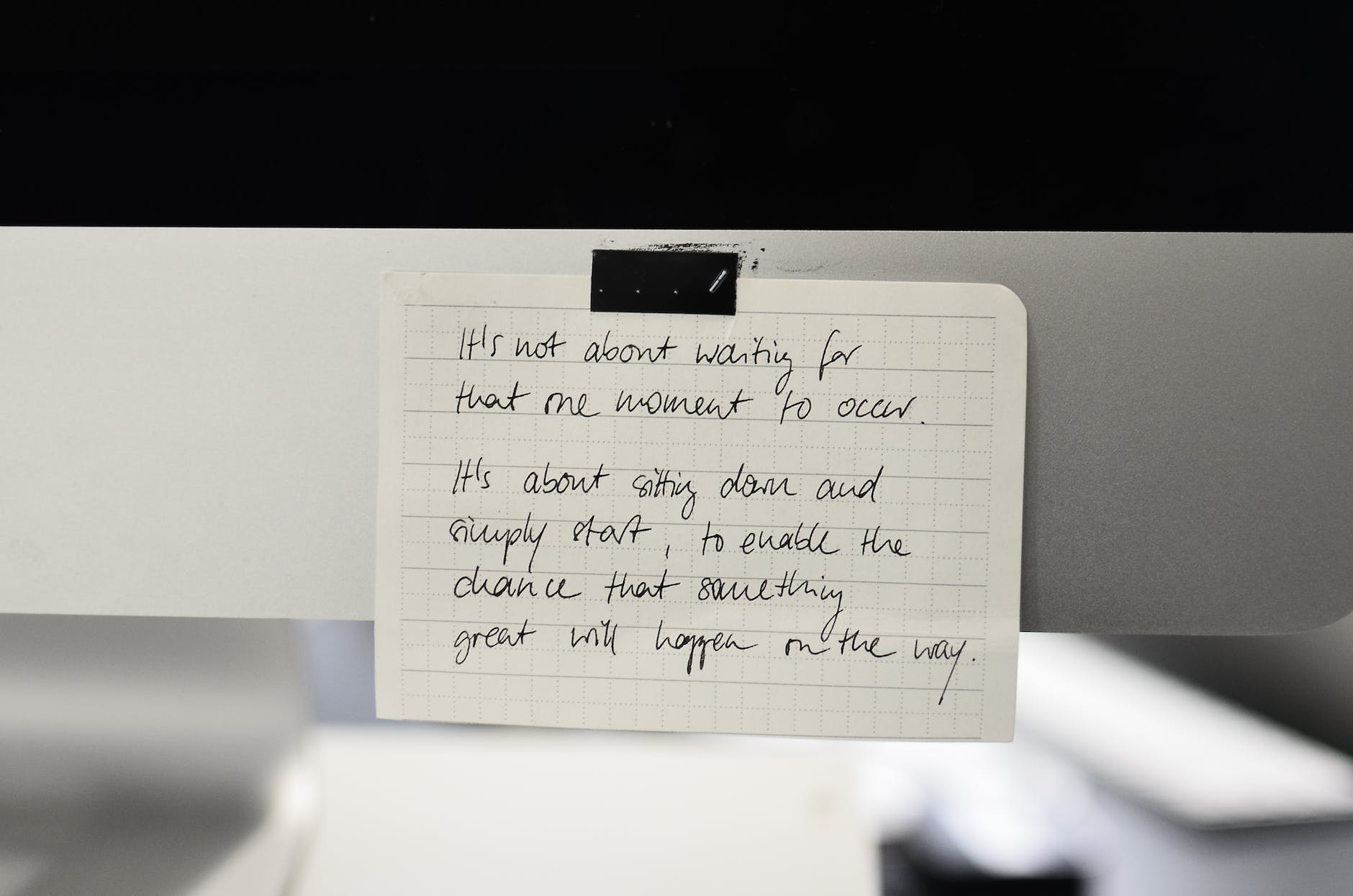
message on paper sheet on light surface. Positive afirmations can help you unlearn unhealthy behaviors.
Photo by Skylar Kang on Pexels.com

Use Positive Affirmations

Using positive affirmations is a powerful tool for unlearning unhelpful behaviors. Affirmations are positive and short statements that you repeat to yourself regularly. When you repeat these affirmations, you are effectively rewiring your brain to think more positively and empower you. This can help you to counteract negative self-talk and self-doubt and to replace unhelpful behaviors with more supportive and healthy habits. To get the most out of affirmations, making them specific, meaningful, and relevant to your goals and aspirations is important.

For example, instead of simply repeating, “I am confident,” you might say, “I am confident in my ability to overcome obstacles and achieve my goals.” Repeat your affirmations regularly, and try to integrate them into your daily routines and practices. With time and persistence, you’ll find that affirmations can help you to transform your thoughts and behaviors, and to unleash your full potential.

Model Successful People

Modeling successful people can be an effective way to unlearn unhelpful behaviors and adopt more positive habits. By observing and studying individuals who have achieved success in areas you’re interested in (this is key!!), you can gain valuable insights and strategies for overcoming your own challenges and reaching your goals. When you model successful people, it’s essential to focus on their habits, mindset, and behaviors rather than just their external accomplishments.

Look for patterns and principles that you can incorporate into your own life, and try to adopt the habits and practices that have helped others to succeed. Additionally, try to find role models who align with your values and goals and inspire you to be your best self. By modeling successful people, you can gain a roadmap for success and build the confidence and motivation you need to unlearn unhelpful behaviors and achieve your full potential.

Reframe Your Mindset

Reframing your mindset is an important step in unlearning unhelpful behaviors. Our thoughts and beliefs profoundly impact our actions and habits and can either support or hinder our progress. By reframing your mindset, you can shift your perspective and view challenges and setbacks as opportunities for growth and development. When you encounter obstacles, try to reframe them as lessons or stepping stones towards success.

Additionally, cultivate a growth mindset by embracing change and viewing failures as opportunities to learn and improve. When you reframe your mindset, you’ll be better equipped to overcome obstacles and unlearn unhelpful behaviors and cultivate a more positive and empowering outlook on life. Adopting a growth mindset will make you more resilient in the face of adversity and more likely to achieve your goals and live a fulfilling life.

Take action

Taking action is crucial in unlearning unhelpful behaviors and adopting new, positive habits. Merely thinking and talking about change is not enough; you must actively work to replace unhelpful behaviors with healthier and more supportive habits. This means setting clear and measurable goals, developing a plan of action, and taking consistent and persistent steps towards your desired outcome. Much easier said than done!

It’s important to start small and build momentum over time rather than trying to make too many changes too quickly. Celebrate your successes and stay focused on your goals, even when you encounter setbacks or challenges. Remember, progress is a journey, not a destination, and every step you take, no matter how small, is a step towards a better and more fulfilling life. So, take action today and start unlearning unhelpful behaviors, one step at a time.

Remain Focused

Remaining focused is essential to successfully unlearning unhelpful behaviors and adopting new, positive habits. The process of change can be challenging and requires patience, persistence, and discipline. It’s easy to become distracted or discouraged when slow progress or setbacks occur.

Still, staying focused on your goals and remaining committed to the process is important. Use visualization techniques to keep your desired outcome in mind and remind yourself why you started this journey in the first place. When you encounter obstacles, remain focused and determined.

Remember that every step you take is a step towards a better future.

Additionally, seek support and resources, such as a coach, mentor, or support group, to help you stay motivated and on track. By remaining focused, you’ll be more likely to successfully unlearn unhelpful behaviors and cultivate a more positive and fulfilling life.

Posted in Goal

5 Things to Focus on in the New Year: Time Management

This is part 1 of a 5 part series (time management). As 2022 stumbles upon us, many of us will reflect on what that means moving forward. For me, I like to pick several items of focus to organize my life and set goals for my future.

And one of my biggest life areas of improvement over the last several years has been time management. So what are some key things to focus on to improve time management in the upcoming year? For each of us, that might look a little different.

Why is time management important?

time management

Poor time management can cause all sorts of problems in our lives. We can feel more stressed and anxious. There can be disappointing times when we don’t accomplish all we set out to do or even need to do. So if procrastination is something you struggle with, then perhaps it’s time to start tackling the planning side.

What are my big tips for moving forward in the new year?

Effective time management is a skill that anyone can learn. It takes intentional practice and sometimes sticking to things over a longer period of time to make a habit.

  • Reflect – When you find something taking up a bit chunk of your time, ask yourself if this is how you want to spend it? For example, maybe you should check your screentime and find out if social media is taking up more time than you realize. Or, scrolling through Netflix for hours each night is preventing you from starting that business or taking a step into something new. Don’t get me wrong. We all need our downtime and our own ways of de-stressing. I just know for me, personally, time passes way faster when I’m doing those activities.
  • Plan – If time management is something you struggle with, start small. Wake up and plan your day. Then, move to planning a week. Then, a month. Then, start filling in your calendar for the year. To do lists, Google calendar, and time-saving strategies are your friends.
  • Follow simple time management tips to get started – This was one of my first posts on this blog earlier in 2021. I wrote about 5 quick time management tips here and it was a pretty popular post. Check it out!

So, whatever stage of the time management process you are in, there is always room for reflection, planning, and following some simple tips along the way. Best of luck in your journey!

Posted in Goal

Do you have a procrastination problem? 6 Things to Consider NOW

“It is easier to resist at the beginning than at the end.”

― Leonardo da Vinci

Do you have a procrastination problem? This quote speaks to me deeply because there are many times I put something off so long and once I finally get going, adrenaline kicks in. Or, if it’s related to health and wellness, I start to see the fruits of my labor and then don’t want to stop. For example, I’ve been wanting to get up and walk every day for the last year. But, I didn’t do it.

I can probably think of a million excuses, but the reality is I was procrastinating on this one simple thing that is really good for me. Now, I just finished week 3 of waking up and walking first thing almost every day and today was the first day I actually woke up before my alarm and ready to go!

The word procrastinate means to put off something INTENTIONALLY.

That word intentional really gets me. It means I literally know that I should be doing something, yet I am choosing not to for whatever reason. Sometimes the reasons are good, but many times they are not. When we look deeper into the origins of the word:

“English speakers borrowed the word in the 16th century from Latin procrastinatus, which itself evolved from the prefix pro-, meaning “forward,” and crastinus, meaning “of tomorrow.” Like its synonyms “delay,” “lag,” “loiter,” “dawdle,” and “dally,” “procrastinate” means to move or act slowly so as to fall behind. It typically implies blameworthy delay especially through laziness or apathy.” – Merriam-Webster

Let’s get one thing clear. Procrastination is not the same as prioritization. Sometimes we have to say no to things in our lives because it’s not a priority for us now. However, if we say yes to something, when we really should have said no, this can cause us to increase our procrastination problem. Or, if you’re like me, you hate cleaning the bathroom so I always procrastinate on cleaning day. But once I’m done, I realize it didn’t actually take that long and it looks much nicer!

A useful Ted Talk to watch about procrastination is by Tim Urban. In this video, he describes the mental gymnastics that procrastinators go through to rationalize their behavior. He presents the information with humor and engagement and makes you realize that we all procrastinate on something. So the question is: what are the things you are procrastinating on?

I plan to make a list this week of the things I’ve been procrastinating on that probably won’t take much time to actually just do. It’s been on my mind to call a company about something I need help with and I’ve been delaying because well, you know, being on hold with those customer service lines are not always fun.

Another key point that Tim Urban makes is that there is more mental anguish when we procrastinate on things that don’t have a deadline. If there is a date by which something needs to be accomplished, we can delay starting, but eventually crunch time will come and we get it done. On the flip side, if there is no date looming in front of us, then it can cause a lot of anxiety and depression that we aren’t accomplishing the things we need or want to do. This is a huge procrastination problem.

procrastination problem
Photo by Brett Jordan on Pexels.com

So based on my own personal experiences, here are 6 tips on things you can do to try and reduce your procrastination problem.

  1. Set a deadline
    Probably the best thing you can do for yourself is to set a deadline to complete something. Even if it’s self-imposed and not related to work or family. The hard part is sticking with it because it’s sometimes easier to let ourselves down than other people. Ohhhhhh, that’s a good line – remember that! I’ll have to write another blog post about that. There has to be a name for that dilemma.
  2. Create a routine
    Starting a new routine is challenging, but possible. Start small and build up to where you want to be. I’ve been wanting to run every morning, but I’m so out of shape now that starting with walking makes more sense. And I’m proud of today finally waking up early and feeling that sense of wanting to get out of bed and go on a walk.
  3. Say no when you need to
    I recognize that this is easier said than done. However, it is necessary to say no sometimes, especially to things we will end up procrastinating on in the long run and that will take a toll on our mental health.
  4. Ask for help
    Remember, procrastination is INTENTIONALLY delaying the completion of something. If, after a period of time, you realize that you’re not motivated or your schedule is super busy, reach out to someone. Find an accountability partner who you can check in with if you’re trying to build a new habit. This can help with your procrastination problem.
  5. Daily and weekly goal setting
    In order to minimize the likelihood of procrastinating on certain things, make it a habit to check in with your goals on a daily and weekly basis. By keeping your eye on the why you are more likely to stick with what needs to get done. And if something no longer serves you, don’t be afraid to let it go. Perhaps something you’ve been procrastinating on doesn’t actually need to happen. Let it go.
  6. Prioritize
    Choose your priorities and focus your time and energy on those things. If you’re not sure, write down everything that you have to do. Then, start rearranging it to fit your reality. I don’t know about you, but sometimes I create this unrealistic lists of things to do and then I feel guilty when I don’t get it all done. I’m literally creating those feelings in my brain because I’m choosing to say that too many things are a priority. One method to use is the Eisenhower Matrix. Other methods involve creating different types of to do lists. These are excellent ways to solve your procrastination problem.

Get out there and reach your dreams!