Posted in Goal, Manifestation, Personal Skills, Time Management

It’s Okay to Change and Become a Better Version of Yourself

Sometimes I get stuck in this mindset of how people see me. Do they see me as the rebellious child, the dutiful teenager, the naive twenty-something, or who I actually am today? And honestly, I’m still figuring out who I am in a lot of ways. This year, especially, has been an opportunity to reflect and evaluate.

Over the last 5-10 years, I’ve taken time to work on my anxiety, leaving me to feel like a failure at times and at peace other times. However, it’s necessary to do the work on yourself before you can give to others. I used to think that was selfish, but now I’ve come to learn that I have to step back when needed. This is particularly true for overachievers like myself who just want to dive in and do the most. But, I also have to give myself the same grace I wish to offer others, in learning and becoming a more critically thoughtful, kind, goal-oriented person.

I just recently graduated with a terminal degree and this was my first weekend in 5 years that I didn’t have editing or work to do on a specific paper or assignment for school. Do I have other projects that I can work on? Yes, I do. But it’s not so pressing that I have to give up my Saturday or Sunday to complete them. With a more open schedule in the week ahead, these are things I can work on starting Monday morning for a more traditional work schedule.

So in light of this period of reflection, I thought I would share some of the resources I’ve used to continue my personal and professional growth.

  1. Project Implicit – One of the areas I’ve been working on is becoming more actively antiracist and aware of my own personal implicit biases. This website from Harvard allows you to take a series of implicit bias tests to see where you are on a number of important issues. It’s a starting place to then seek other resources to continue to learn and grow, such as “How to Be an Antiracist”, by Dr. Ibram X. Kendi.
  2. Inspirational books – Although I haven’t had a ton of time to read for enjoyment, I plan to change that in the near future and dive in to material that inspires me to reach for my goals and aspirations. Two of the books I’ve really enjoyed these last couple of months are “Hello” Fears by Michelle Poler and “Year of Yes” by Shonda Rhimes. Both taught me to embrace new opportunities and not let fear hold me back. For example, even putting this blog and my YouTube channel out there is scary for me.
  3. Free online courses – There are sooooooo many ways to get free knowledge. I paid a lot of money for my degrees, but you don’t necessarily need to pay for information now. You can go to YouTube or websites with free courses. Some are even worth paying for a membership if you intend to continue your professional learning. I wrote another blog post here about some of the websites that I utilize to take free courses on topics of interest.
  4. Therapy/counseling – I’ve said it before and I’ll say it again. I think everyone could benefit from talking to someone outside their day to day interactions. It’s helpful to process information, get strategies to change thought patterns, or deal with trauma. If you don’t know where to start, you can visit the CDC resources or National Alliance on Mental Illness. The process of counseling has helped me become more self-aware and grow my confidence.
  5. Affirmations – Along with counseling, the idea of positive affirmations is helping me to grow into the person I wish to become. I try to start my day with affirmations. Additionally, I have all of my 2021 goals posted next to my mirror on index cards by category. Each day, I see the goals I have for myself and I repeat statements that affirm my capability of achieving these goals for my future.

The final takeaway is that it’s never too late to change your thoughts, learn more, and become the version of yourself you wish to be. Don’t let fear or lack of time hold you back. Commit to 5 minutes each day to work on something for your personal self-improvement. Then, gradually increase that time as you are able to do so. I believe in you!!

Posted in Goal, Manifestation

It’s Okay to Change and Become a Better Version of Yourself: 5 Helpful Tips

Really, becoming a better version of yourself is possible and totally a personal journey.

Sometimes I get stuck in this mindset of how people see me. Do they see me as the rebellious child, the dutiful teenager, the naive twenty-something, or who I actually am today? And honestly, I’m still figuring out who I am in a lot of ways. This year, especially, has been an opportunity to reflect and evaluate.

Over the last 5-10 years, I’ve taken time to work on my anxiety, leaving me to feel like a failure at times and at peace other times. However, it’s necessary to do the work on yourself before you can give to others. I used to think that was selfish, but now I’ve come to learn that I have to step back when needed. This is particularly true for overachievers like myself who just want to dive in and do the most.

But, I also have to give myself the same grace I wish to offer others, in learning and becoming a more critically thoughtful, kind, goal-oriented person.

I recently graduated with a terminal degree and this was my first weekend in 5 years that I didn’t have editing or work to do on a specific paper or assignment for school. Do I have other projects that I can work on? Yes, I do. But it’s not so pressing that I have to give up my Saturday or Sunday to complete them. With a more open schedule in the week ahead, these are things I can work on starting Monday morning for a more traditional work schedule.

become a better version of yourself
Photo by Jill Wellington on Pexels.com

So in light of this period of reflection, I thought I would share some of the resources I’ve used to continue my personal and professional growth.

Become a better version of yourself:

  1. Project Implicit – One of the areas I’ve been working on is becoming more actively antiracist and aware of my own personal implicit biases. This website from Harvard allows you to take a series of implicit bias tests to see where you are on a number of important issues. It’s a starting place to then seek other resources to continue to learn and grow, such as “How to Be an Antiracist”, by Dr. Ibram X. Kendi.
  2. Inspirational books – Although I haven’t had a ton of time to read for enjoyment, I plan to change that in the near future and dive in to material that inspires me to reach for my goals and aspirations. Two of the books I’ve really enjoyed these last couple of months are “Hello” Fears by Michelle Poler and “Year of Yes” by Shonda Rhimes. Both taught me to embrace new opportunities and not let fear hold me back. For example, even putting this blog and my YouTube channel out there is scary for me.
  3. Free online courses – There are sooooooo many ways to get free knowledge. I paid a lot of money for my degrees, but you don’t necessarily need to pay for information now. You can go to YouTube or websites with free courses. Some are even worth paying for a membership if you intend to continue your professional learning. I wrote another blog post here about some of the websites that I utilize to take free courses on topics of interest. These are helpful tools on the journey to become a better version of yourself.
  4. Therapy/counseling – I’ve said it before and I’ll say it again. I think everyone could benefit from talking to someone outside their day to day interactions. It’s helpful to process information, get strategies to change thought patterns, or deal with trauma. If you don’t know where to start, you can visit the CDC resources or National Alliance on Mental Illness. The process of counseling has helped me become more self-aware and grow my confidence.
  5. Affirmations – Along with counseling, the idea of positive affirmations is helping me to grow into the person I wish to become. I try to start my day with affirmations. Additionally, I have all of my annual goals posted next to my mirror on index cards by category. Each day, I see the goals I have for myself and I repeat statements that affirm my capability of achieving these goals for my future.

The final takeaway is that it’s never too late to change your thoughts, learn more, and become the version of yourself you wish to be. Don’t let fear or lack of time hold you back. Commit to 5 minutes each day to work on something for your personal self-improvement. Then, gradually increase that time as you are able to do so. I believe in you!! You can become a better version of yourself!

Posted in Lifestyle, Manifestation, Personal Skills

30 Affirmations to use Throughout the Month

I’ve been working with my therapist on reducing anxiety and helping to believe in myself. Despite a lot of success, there are still times when I think it’s not deserved or I worry about potential mistakes. I’ll probably do another post on imposter syndrome and it’s impact on my life, but for now, I wanted to share some affirmations with you all.

Why should you use affirmations?

Researchers have found positive benefits of self affirmation theory (Albalooshi et al., 2020). In a study examining the impact of affirmations on two groups – the powerful and the powerless – Abalooshi et al. (2020) found that those in their powerless group had improvements with inhibitory control. This is essentially the ability to control automatic thoughts that might be negative and change it to more positive thoughts of self worth.

By taking the time to change our thought patterns, we can create more positive views of our self. Additionally, we can use those positive thoughts to bring us closer to our goals and dreams.

How I Use Affirmations

Many days I use the “I Am” app to come up with affirmations. I like to do this in the morning when I’m having my coffee. If I don’t get to it in the morning, I choose some throughout the day to repeat to myself in the mirror and write in my journal. I thought I’d use this opportunity to share some affirmations that I’ve created for myself.


30 Affirmations

  1. I choose to be happy and thankful for all that I have.
  2. My life is worthy of love.
  3. I accept who I am.
  4. Abundance is coming to me in all aspects of my life.
  5. I am healthy, blessed, and loved.
  6. Wealth and love are arriving in full bloom.
  7. I am beautiful beyond comparison.
  8. I am whole and complete.
  9. New opportunities are on the horizon for me.
  10. I can achieve anything that my mind envisions for myself.
  11. I am grateful for my friends and family who believe in me no matter what.
  12. No matter the goal, I will be able to reach it with hard work and dedication.
  13. My life is blessed and treasured.
  14. There are so many wonderful things in store for my future.
  15. I am enough.
  16. I am important.
  17. My worth is not determined by material things.
  18. The world is calling me to a life of happiness.
  19. True love and abundance is on its way to me.
  20. Nothing is impossible and I matter.
  21. I am worthy of a successful career.
  22. I deserve to love and be loved unconditionally.
  23. I will protect my thoughts from negative interference.
  24. My goals are attainable and realistic.
  25. I am destined to have an abundant and full life.
  26. I have a thankful heart for the many blessings in my life.
  27. All that I do is for a better future.
  28. My positive attitude will help me achieve great things.
  29. Nothing can stand in my way when I believe in myself.
  30. There is beauty in my surroundings.

Sources:

Albalooshi, S., Moeini-Jazani, M., Fennis, B. M., & Warlop, L. (2020). Reinstating the resourceful self: when and how self-affirmations improve executive performance of the powerless. Personality and Social Psychology Bulletin46(2), 189-203.

Posted in Manifestation

30 Affirmations to use Throughout the Month and Bonus Video

Affirmations work, I swear.

I’ve been working with my therapist on reducing anxiety and helping to believe in myself. Despite a lot of success, there are still times when I think it’s not deserved or I worry about potential mistakes. I’ll probably do another post on imposter syndrome and it’s impact on my life, but for now, I wanted to share some affirmations with you all.

Why should you use affirmations?

Researchers have found positive benefits of self affirmation theory (Albalooshi et al., 2020). In a study examining the impact of affirmations on two groups – the powerful and the powerless – Abalooshi et al. (2020) found that those in their powerless group had improvements with inhibitory control. This is essentially the ability to control automatic thoughts that might be negative and change it to more positive thoughts of self worth.

By taking the time to change our thought patterns, we can create more positive views of our self. Additionally, we can use those positive thoughts to bring us closer to our goals and dreams.

affirmations
Photo by Skylar Kang on Pexels.com

How I Use Affirmations

Many days I use the “I Am” app to come up with affirmations. I like to do this in the morning when I’m having my coffee. If I don’t get to it in the morning, I choose some throughout the day to repeat to myself in the mirror and write in my journal. I thought I’d use this opportunity to share some affirmations that I’ve created for myself.


30 Affirmations

  1. I choose to be happy and thankful for all that I have.
  2. My life is worthy of love.
  3. I accept who I am.
  4. Abundance is coming to me in all aspects of my life.
  5. I am healthy, blessed, and loved.
  6. Wealth and love are arriving in full bloom.
  7. I am beautiful beyond comparison.
  8. I am whole and complete.
  9. New opportunities are on the horizon for me.
  10. I can achieve anything that my mind envisions for myself.
  11. I am grateful for my friends and family who believe in me no matter what.
  12. No matter the goal, I will be able to reach it with hard work and dedication.
  13. My life is blessed and treasured.
  14. There are so many wonderful things in store for my future.
  15. I am enough.
  16. I am important.
  17. My worth is not determined by material things.
  18. The world is calling me to a life of happiness.
  19. True love and abundance is on its way to me.
  20. Nothing is impossible and I matter.
  21. I am worthy of a successful career.
  22. I deserve to love and be loved unconditionally.
  23. I will protect my thoughts from negative interference.
  24. My goals are attainable and realistic.
  25. I am destined to have an abundant and full life.
  26. I have a thankful heart for the many blessings in my life.
  27. All that I do is for a better future.
  28. My positive attitude will help me achieve great things.
  29. Nothing can stand in my way when I believe in myself.
  30. There is beauty in my surroundings.

If you are visual, here is a short YouTube video to use each morning!

Sources:

Albalooshi, S., Moeini-Jazani, M., Fennis, B. M., & Warlop, L. (2020). Reinstating the resourceful self: when and how self-affirmations improve executive performance of the powerless. Personality and Social Psychology Bulletin46(2), 189-203.

Posted in Goal, Lifestyle, Personal Skills

Blocks to Moving Forward: Fear of Failure

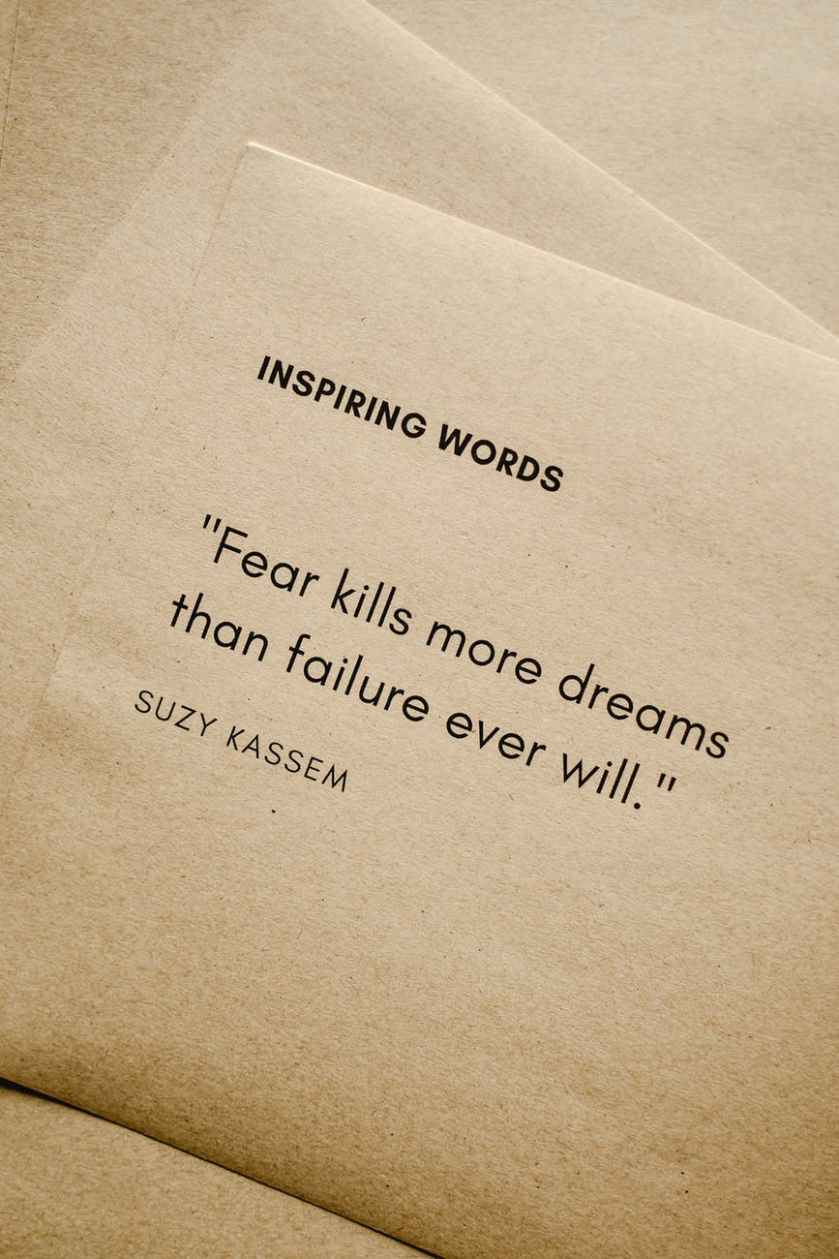
I truly believe one of the biggest things that has held me back from achieving goals, or at least achieving them as quickly as I could have, has been fear or failure. This is human nature to want to succeed and not look stupid or be embarrassed by a less than desirable outcome of something.

But I have to wonder, how many times has fear of failure stopped me from doing something great or finding a new passion or hobby to enjoy? I recently read Hello Fears by Michelle Poler, which I do recommend as a positive self growth opportunity. She documents her 100 days of facing down different fears from dancing in Times Square to speaking at a TedX conference. In her story, she breaks down different emotions and feelings she had to go through to conquer each of her fears.

Fear of failure is also know by the name atychiphobia. This may be an unwillingness to try anything new unless it is guaranteed to be a success. Sometimes this is tied to another psychological phenomenon known as imposter syndrome. It makes it challenging to feel as though you deserve something or that you will be good enough at whatever it is that you need or want to do.

Why are people afraid to fail?

Some people grow up in households where they are not supposed to show imperfections or they are held to super high standards. Everything is expected to be perfect and anything less than that is unacceptable. This could be something an adult has shown them or some internal pressure placed on theirselves.

Other reasons people are afraid to fail include potential shame or embarrassment that may come from not reaching a goal. They may place a lot of emphasis on what others think or have fear of failure accompanied by anxiety.

Perhaps you’ve been knocked down many times in the professional world when you’ve tried to express you ideas. This could be a block to further wanting to share ideas or come up with new innovative ways to do things.

How many successful people have failed?

Lots of successful people failed many, many times on their path to success. It is not always a linear process, but many times filled with ups and downs that teach lessons. One of the most famous examples is the inventor fo the lightbulb, Thomas Edison, who failed 1,000 before making the lightbulb function and work.

Have you ever heard of Harry Potter? Chances are you have because between the books and the movies, JK Rowling has made over $15 billion. It’s an international sensation, but was rejected 12 times at first.

Oprah Winfrey had a television gig that did not go so well where she faced challenges and was ultimately fired from that position. She didn’t give up and went on to have her own talk show and is a billionaire.

I could go on and on. Think of a famous person who you admire and respect. Do some research about their background. Chances are if they started a business, wrote a book, or starred in a movie, somewhere along the way they faced rejection and failure. The key is they did not let that stop them from pursuing their dreams.

Moral of the story? Failure is a step to growth so even if we might fail, we have to try. If we never try, then we’ll never know if we could have run that marathon, finished that degree, or started that new business. It will always be a “what if?”. How many what if’s do you have and what can you change moving forward?

Posted in Goal

Fear of Failure: The True Reason You Aren’t Successful

Do you have a fear of failure?

I truly believe one of the biggest things that has held me back from achieving goals, or at least achieving them as quickly as I could have, has been fear of failure. This is human nature to want to succeed and not look stupid or be embarrassed by a less than desirable outcome of something.

But I have to wonder, how many times has fear of failure stopped me from doing something great or finding a new passion or hobby to enjoy? I recently read Hello Fears by Michelle Poler, which I do recommend as a positive self growth opportunity. She documents her 100 days of facing down different fears from dancing in Times Square to speaking at a TedX conference. In her story, she breaks down different emotions and feelings she had to go through to conquer each of her fears.

Fear of failure is also known by the name atychiphobia. This may be an unwillingness to try anything new unless it is guaranteed to be a success. Sometimes this is tied to another psychological phenomenon known as imposter syndrome. It makes it challenging to feel as though you deserve something or that you will be good enough at whatever it is that you need or want to do.

Why do people have a fear of failure?

Some people grow up in households where they are not supposed to show imperfections or are held to super high standards. Everything is expected to be perfect and anything less than that is unacceptable. This could be something an adult has shown them or some internal pressure placed on themselves.

Other reasons people are afraid to fail include potential shame or embarrassment that may come from not reaching a goal. They may place a lot of emphasis on what others think or have fear of failure accompanied by anxiety.

Perhaps you’ve been knocked down many times in the professional world when you’ve tried to express your ideas. This could be a block to further wanting to share ideas or come up with new innovative ways to do things.

fear of failure
Photo by Andrea Piacquadio on Pexels.com

How many successful people have failed?

Lots of successful people failed many, many times on their path to success. It is not always a linear process, but many times filled with ups and downs that teach lessons. One of the most famous examples is the inventor of the lightbulb, Thomas Edison, who failed 1,000 before making the lightbulb function and work.

Have you ever heard of Harry Potter? Chances are you have because between the books and the movies, JK Rowling has made over $15 billion. It’s an international sensation, but was rejected 12 times at first.

Oprah Winfrey had a television gig that did not go so well where she faced challenges and was ultimately fired from that position. She didn’t give up and went on to have her own talk show and is a billionaire.

I could go on and on. Think of a famous person who you admire and respect. Do some research about their background. Chances are if they started a business, wrote a book, or starred in a movie, somewhere along the way they faced rejection and failure. The key is they did not let that stop them from pursuing their dreams.

Moral of the story? Failure is a step to growth so even if we might fail, we have to try. If we never try, then we’ll never know if we could have run that marathon, finished that degree, or started that new business. It will always be a “what if?”. How many what if’s do you have and what can you change moving forward?

Posted in Goal, Personal Skills, Time Management, Work From Home

Mastering the Power of Effective Scheduling: Some Tips to Make it Happen

Some people say that I’m a planner. Others say I’m calendar-oriented. Really, I just like to make sure that my time, tasks, and priorities are all reflected on my schedule. When someone asks me to do something and I agree (also power in saying no), I immediately add it to my Google Calendar, which can be accessed on my phone, iPad, and laptop. No matter where I am I have access to it.

If it is a work or professional meeting, I copy the Zoom or webinar link from the email and paste it directly into the calendar event that I create so that I do not have to search for the email when it’s time to log in.

Clarify your goals

It is important to know what you want to accomplish with your time. You cannot create an effective schedule if you don’t know what you are aiming for. I wrote a post on mini-goals here. Get specific on the main areas of your life and figure out the chunks of time that need to be spent on each.

Prioritize your tasks

When you sit down to work, or even at the beginning of every day, take a look at everything that needs to be accomplished. What is that one thing that can’t be put off? Do that first, in the morning if you can. For longer term projects, break it down into smaller deadlines and place those on your calendar. If you’re not sure how to prioritize, consider using a strategy like the Eisenhower Matrix.


Utilize a digital calendar like Google Calendar

Keep a calendar that can be accessed from all of your digital devices: laptop, phone, iPad, etc. That way, you always have access to what you need in the moment if someone asks to schedule something. Personally, because I work several part time jobs and manage my own schedule, I keep one Google Calendar for everything and color code by activity, including my personal commitments. For example, if a friend texts me and says, “hey, we should catch up on the phone Thursday around 8pm.” If I’m free, I actually confirm and add that to my calendar so I don’t forget to call or accidentally make plans to do something else because I forgot we were going to chat.

At work, I utilize my email kind of like a to do list. I try to check my email at certain points throughout the day, but if something comes on that I need to take care of that day or later in the week, I also add it to my calendar and include the reference email.

Learn to Say “Let Me Get Back to You”

If you’re a kind-hearted person who wants to follow through with helping people or do a good job, you’ll be tempted to say yes to everyone and everything. That is not a realistic way to manage a schedule because you will quickly become overwhelmed. However, instead of saying no right away, give yourself some think time when someone asks you to do something or for another meeting or a favor. Evaluate if it fits with your goals and priorities or fits in any extra time you have available for leisure. If not, perhaps you may have to decline or ask the person to check in with you at a later date.

These are just some of the strategies that I use on a regular basis to maintain my schedule. Please leave a comment if you’d like to hear more about any of them!

Posted in Goal, Outdoor Adventures

I Completed a Half Marathon: How I Did It!


*Affiliate links

When I give examples of a time in my life that I reached a major goal, I often refer back to when I ran a half marathon. In my twenties, I told myself I would run a half marathon before I turned 30. Each year, 30 would creep closer and closer until finally I was 29 and a half and had not started training at all. It became clear to me that if I was going to reach this deadline, I had to start immediately and I had to create a plan.

Step 1 – Invest in some level of commitment!

About 6 months before my impending deadline, I researched a half marathon and registered. I figured if I was going to spend almost a hundred bucks on something, I better stick with it. By putting money on my goal, there was an added pressure of not wanting that to go to waste.

Step 2- Create an action plan!

You are more likely to follow through on a goal if you have a solid plan on how to actually get there. When you get in your car to go somewhere new, you use your phone or GPS to guide you to your destination. You have to create a guide to get to the finish line. I started jogging and walking to build up my stamina. When the half marathon date was getting within sight, I created a 12 week mileage plan to get me to the 13.1 mile goal. I tracked my plan and what I actually stuck with. I wasn’t 100% accurate, but the key was to not give up and to keep going.

Step 3 – Adjust my environment

I didn’t realize how much time was involved in training for a half marathon when I first set out to do this. At the time, I was a full time teacher in grad school so I had to work every day and then go to class twice a week in the evenings. I decided the best time to run during the week was in the morning or it just wasn’t going to happen. Many nights I would sleep in my running clothes with my sneakers nearby and get up at 4:45am to meet my running partner. Thankfully, I had a friend to keep me going and we stayed accountable to one another.

After about building up to 4-5 miles, I started to get tired during my run. I realized I needed to do some research on how to sustain a longer run. It was time to invest in a few new items. I went and got fitted for proper running shoes and my favorite ones now are Brooks Ghost. Recently, I tried another brand, but I don’t like it as much so I will go back to Brooks with my next pair.

I knew I needed to carry water with me so I got one of those vests that can hold small bottles. One of my favorite discoveries was the sustaining power of GU. My favorite flavor was the chocolate. The little packets fit nicely in the vest as well. Because of my training plan, I was able to experiment with just the right amount of GU to keep me full, but not too full.

Step 4 – Tell everyone!

Some people say you should keep your goals to yourself. And some researchers say telling friends improves your chances of actually reaching the goal. For me, the more people I tell, the more likely I am to reach it. And because I was teaching kids, I had cheerleaders every day asking me how my training was going and rooting for me to succeed. That meant something and inspired me to keep going even when it got hard.

Step 5 – Follow through!

Sometimes this last step is the hardest one. Just show up. Follow through. Trust that you did all the training and that you’re ready. Weeks 9 and 10 I had bronchitis and I wasn’t sure I was going to get through to the end. However, I trusted that the weeks of training leading up to it would take me through. I didn’t go fast. I took my time because it was about finishing and not about speed. When I ran through that finish line, I felt a huge sense of accomplishment. It was amazing. I’m proud of reaching this goal and working hard to achieve it. You can do it too!

Posted in Goal

I completed a half marathon – Here are 5 steps you can try now!

I’m really proud of myself that I completed a half marathon

When I give examples of a time in my life that I reached a major goal, I often refer back to when I ran a half marathon. In my twenties, I told myself I would run a half marathon before I turned 30. Each year, 30 would creep closer and closer until finally I was 29 and a half and had not started training at all. It became clear to me that if I was going to reach this deadline, I had to start immediately and I had to create a plan.

Step 1 – Invest in some level of commitment!

About 6 months before my impending deadline, I researched a half marathon and registered. I figured if I was going to spend almost a hundred bucks on something, I better stick with it. By putting money on my goal, there was an added pressure of not wanting that to go to waste.

Step 2- Create an action plan!

You are more likely to follow through on a goal if you have a solid plan on how to actually get there. When you get in your car to go somewhere new, you use your phone or GPS to guide you to your destination. You have to create a guide to get to the finish line. I started jogging and walking to build up my stamina. When the half marathon date was getting within sight, I created a 12 week mileage plan to get me to the 13.1 mile goal. I tracked my plan and what I actually stuck with. I wasn’t 100% accurate, but the key was to not give up and to keep going.

completed a half marathon

Step 3 – Adjust my environment

I didn’t realize how much time was involved in training for a half marathon when I first set out to do this. At the time, I was a full time teacher in grad school so I had to work every day and then go to class twice a week in the evenings. I decided the best time to run during the week was in the morning or it just wasn’t going to happen. Many nights I would sleep in my running clothes with my sneakers nearby and get up at 4:45am to meet my running partner. Thankfully, I had a friend to keep me going and we stayed accountable to one another.

After about building up to 4-5 miles, I started to get tired during my run. I realized I needed to do some research on how to sustain a long run. It was time to invest in a few new items. I went and got fitted for proper running shoes and my favorite ones now are Brooks Ghost. Recently, I tried another brand, but I don’t like it as much so I will go back to Brooks with my next pair.

I knew I needed to carry water with me so I got one of those vests that can hold small bottles. One of my favorite discoveries was the sustaining power of GU. My favorite flavor was the chocolate. The little packets fit nicely in the vest as well. Because of my training plan, I was able to experiment with just the right amount of GU to keep me full, but not too full.

Step 4 – Tell everyone!

Some people say you should keep your goals to yourself. And some researchers say telling friends improves your chances of actually reaching the goal. For me, the more people I tell, the more likely I am to reach it. And because I was teaching kids, I had cheerleaders every day asking me how my training was going and rooting for me to succeed. That meant something and inspired me to keep going even when it got hard.

Step 5 – Follow through!

Sometimes this last step is the hardest one. Just show up. Follow through. Trust that you did all the training and that you’re ready. Weeks 9 and 10 I had bronchitis and I wasn’t sure I was going to get through to the end. However, I trusted that the weeks of training leading up to it would take me through. I didn’t go fast. I took my time because it was about finishing and not about speed. When I ran through that finish line, I felt a huge sense of accomplishment. It was amazing. I’m proud of reaching this goal and working hard to achieve it. You can do it too!