
Posted in Goal

5 Challenges of Starting a New Morning Routine Today

A new morning routine takes work and dedication to create. Well, I’ve written before about some things I do each morning to get started for the day, but I wanted to create a more consistent approach. So this week, I set out to do the same morning routine for 5 days straight and continue to work on becoming the morning person I wish to be.

Habits are something that needs to be continually practiced so that you don’t lose focus or let yourself slide. Starting a new routine is about building habits that eventually become so automatic you don’t even think about it. The problem is that when you first get started, you have to break through old habits and behaviors.

This was my new morning routine the past 5 days:

  1. Wake up around the same time and go for a 25-30 minute walk
  2. Stretch and drink a glass of water
  3. Make coffee and sit down to write my daily affirmations
  4. Make breakfast
  5. Eat breakfast, review the calendar, and make my realistic to-do list for the day
  6. Stretch and take a 5-minute break
  7. Begin working for the day
new morning routine
Photo by Pixabay on Pexels.com

Here are the 5 challenges I encountered this week as I started this new morning routine.

  1. Resistance – Since I was getting up early than I have been for the majority of summertime thus far, it was a challenge to wake up each day. I’ve also been a long-time snoozer and have been desperately trying to break this bad habit. I did hit snooze 2 of the 5 days, so it wasn’t a perfect week, but a great start.

2. Time – Now, the reason this week made sense to do this new morning routine was that my schedule was a lot more open than it has been. I didn’t have any courses that I was teaching or anywhere I needed to be before 11:00am each day. It was a clean slate to accomplish my morning tasks. It was also a good test to get me up and out of bed each morning at 7:00am rather than sleeping in until 9:00am.

3. Accountability – Well, this one is super important for anything that you are trying to do in your life. The first day I was walking early, my neighbor saw me. The second day she said, “Hey, I’ll go with you!” Usually, she walks a bit earlier, but she waited for me to go and it definitely helped me stay focused the rest of the week. On day 5, I did hit snooze and I was a bit late so I didn’t like how I felt at that moment because I wasn’t holding up my end of the bargain to myself or to her.

4. Planning – I am a breakfast person and I do like to eat when I wake up. That is typically the first thing I do in the morning before anything else. So, this routine was to switch it up and get the exercise portion done first. Sometimes after breakfast, I don’t feel like going for a walk, and then as the day goes on, I continue to make excuses not to get outside.

However, when I came back inside this week, I didn’t have a plan for what I was going to eat and I was hungrier because I waited longer to eat. I did pretty well focusing on fruits, vegetables, and proteins, but I think next week I will think through what I am going to have for breakfast each day so I’m not scrounging around.

5. Motivation – I wanted to get this new morning routine started now so that when I start teaching at 9:00am again, this will be automatic. However, because I didn’t have any early commitments, my motivation to actually get up and get moving each morning was lacking. To break through this mindset, I had to remind myself why I’m doing this. I want to be healthier. I want to have more energy. Walking is good for me. The why and purpose of this new goal needed to be a constant reminder in my head.

Overall, I had a good first week and I stuck to all of the things I wanted to do each morning. I did sleep in a bit one day and snoozed once another, but it’s a start. Even small improvements each day can have huge positive long-term impacts. What’s holding you back from starting your new morning routine? Or, if you have any helpful tips, comment below!

Posted in Goal, Inspiration and Motivation, Manifestation, Personal Skills

5 Inspirational Quotes I Live By

I love anything inspirational or motivational and my friends and family know it. When I taught K-12 students I used to have quotes all over my classroom. My favorite candy is Dove chocolates because of the sayings on the wrappers. Of course, I do like chocolate as well, but the quotes are what keep me coming back to Dove. I get lots of gifts like inspirational calendars or cards that I can reference or hang up in my work space.

In this post I want to share my top 5 favorite inspirational quotes and how I interpret them for my life.


“If you’re always trying to be normal, you’ll never know how amazing you can be.” – Maya Angelou

I love this quote because it reminds me that I don’t have to be like anyone else in this world. Also, normal is an abstract thing because what is normal anyway? It also encourages me to take risks. If I just stayed complacent with where I am, I may never discover that next new amazing thing that brings me happiness.


The greater danger for most of us lies not in setting our aim too high and falling short; but in setting our aim too low, and achieving our mark.

Michelangelo

Now this is a quote I often use in my courses when I teach goal-setting strategies. It kind of relates back to the first quote I mentioned here. As the first person in my family to graduate college, I saw an opportunity to keep going and now I have a terminal degree. I set my goal for the highest education possible and while it was challenging and time consuming, I did it. And if I hadn’t set the goal, I may never have known how much I was capable of.


Leadership is about empathy. It is about having the ability to relate to and connect with people for the purpose of inspiring and empowering their lives.” – Oprah Winfrey

As an aspiring leader who hopes to make a positive impact in this world, this quote really stands out to me. I’ve really tried to become a person who displays empathy and encourages others to build this quality. I think I’ve gotten better at it as I’ve gotten older and experienced lots of different life circumstances. I may not fully be able to understand someone’s unique situation, but I can provide grace and space as much as possible.


“When one door of happiness closes, another opens, but often we look so long at the closed door that we do not see the one that has been opened for us.”

Helen Keller

I love this quote because it’s a reminder that opportunities are always in front of us and we have to let go of the past in order to embrace the possibilities of the future. It’s easy to dwell on negativity or rejections because it’s not great to feel those emotions. And it’s okay to feel them and recognize it, but I cannot let it bring down so much that I miss out on something even more amazing right behind that new door.


“Yesterday is history. Tomorrow is a mystery. Today is a gift. That is why it is called the present.” — Alice Morse Earle

The quote above keeps me grounded in the reality that every day and every moment we have with one another is precious and we shouldn’t take it for granted. As someone who relives past mistakes and creates future problems, it’s also a quote that speaks to fact that I should focus on the here and now. I can’t change the past and I don’t know what the future holds, but I know that today I can be kinder, work hard, and appreciate the many blessings that I do have.

Please leave a comment if you’d like me to do any more blog posts on quotes I enjoy!

Posted in Goal, Manifestation

5 Inspirational Quotes I Live By From Famous People

When I was a teacher, I used to have inspirational quotes hanging all over my classroom.

I love anything inspirational or motivational and my friends and family know it. My favorite candy is Dove chocolates because of the sayings on the wrappers. Of course, I do like chocolate as well, but the quotes are what keep me coming back to Dove. I get lots of gifts like inspirational calendars or cards that I can reference or hang up in my work space.

In this post I want to share my top 5 favorite inspirational quotes and how I interpret them for my life.


“If you’re always trying to be normal, you’ll never know how amazing you can be.” – Maya Angelou

I love this quote because it reminds me that I don’t have to be like anyone else in this world. Also, normal is an abstract thing because what is normal anyway? It also encourages me to take risks. If I just stayed complacent with where I am, I may never discover that next new amazing thing that brings me happiness.


The greater danger for most of us lies not in setting our aim too high and falling short; but in setting our aim too low, and achieving our mark.

Michelangelo

Now this is a quote I often use in my courses when I teach goal-setting strategies. It kind of relates back to the first quote I mentioned here. As the first person in my family to graduate college, I saw an opportunity to keep going and now I have a terminal degree. I set my goal for the highest education possible and while it was challenging and time consuming, I did it. And if I hadn’t set the goal, I may never have known how much I was capable of.

inspirational quotes
Photo by Bich Tran on Pexels.com


Leadership is about empathy. It is about having the ability to relate to and connect with people for the purpose of inspiring and empowering their lives.” – Oprah Winfrey

As an aspiring leader who hopes to make a positive impact in this world, this quote really stands out to me. I’ve really tried to become a person who displays empathy and encourages others to build this quality. I think I’ve gotten better at it as I’ve gotten older and experienced lots of different life circumstances. I may not fully be able to understand someone’s unique situation, but I can provide grace and space as much as possible.


“When one door of happiness closes, another opens, but often we look so long at the closed door that we do not see the one that has been opened for us.”

Helen Keller

This is one of my favorite inspirational quotes because it’s a reminder that opportunities are always in front of us and we have to let go of the past in order to embrace the possibilities of the future. It’s easy to dwell on negativity or rejections because it’s not great to feel those emotions. And it’s okay to feel them and recognize them, but I cannot let it bring me down so much that I miss out on something even more amazing right behind that new door.


“Yesterday is history. Tomorrow is a mystery. Today is a gift. That is why it is called the present.” — Alice Morse Earle

The quote above keeps me grounded in the reality that every day and every moment we have with one another is precious and we shouldn’t take it for granted. As someone who relives past mistakes and creates future problems, it’s also a quote that speaks to fact that I should focus on the here and now. I can’t change the past and I don’t know what the future holds, but I know that today I can be kinder, work hard, and appreciate the many blessings that I do have.

Please leave a comment if you’d like me to do any more blog posts on inspirational quotes I enjoy!

Posted in Goal, Manifestation

Limiting Beliefs: Strategies I’m Using to Overcome Them and Create the Life I Want

Limiting beliefs used to run my life. I feel like the universe is trying to tell me something. Lately, everywhere I turn I hear someone mentioning limiting beliefs, including my therapist. So I took that as an opportunity to do a deep dive into what that is and give myself some strategies to overcome them.

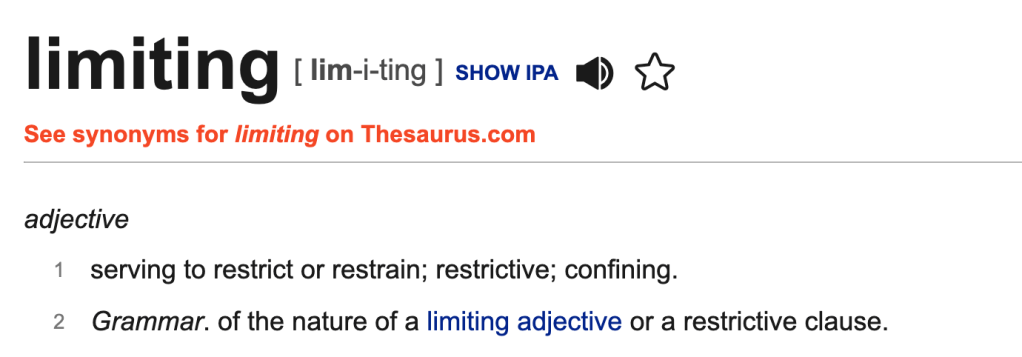
So first of all, what the heck are limiting beliefs and how do I know I have them? I had to break it down for myself to truly understand what I was dealing with. First I looked up the definitions for belief and limiting at dictionary.com

So putting it all together, I realized that these limiting beliefs were confining opinions or convictions about certain aspects of my life. The thoughts such as “I’m not smart enough to deserve this degree” or “I can never have as much money as that person” or “This business idea isn’t going to work out even if I try hard so I might as well give up.”

I could go on and on and I bet if you think about it, there is at least one aspect of your life where this may be the case. Perhaps the limiting beliefs are not so obvious to you anymore because these are things you’ve been telling yourself for so long that you truly believe them to be true.

limiting beliefs
Photo by Elina Fairytale on Pexels.com
What I’m learning is that we can make conscious choices to change our thought patterns and that can have direct impacts on our daily lives.
It’s one of the reasons that I started to write daily affirmations to change these limiting beliefs and start to create limitless beliefs and strategies to work through them. Here are some of the things I’ve been doing to help myself grow:

Look for Solutions

If my immediate reaction to something is “oh, that won’t work” or “that’s impossible” I look at the big picture and try to find solutions. Perhaps it seems like it won’t work or it’s not possible because I haven’t tried before or that’s the way I’ve always done it. For example, I’ve been struggling to lose weight. Instead of saying that nothing is working, I can reframe it and say the things I’ve tried haven’t worked. Therefore, what else can I try? Perhaps I need to combine some strategies and make them work in tandem to see the kind of results that I’m looking for.

Take Breaks – let it marinate

If I have lots of negative thoughts or limiting beliefs in a row, then I know it’s time to step back or step away. It’s easy to get caught up in the rat race of work, work, work, but that connection to a greater purpose needs to stay front and center. This is where I use strategies of visualization or go outside for a walk and breathe in that fresh air.

Recognize the thoughts in real time

This is a challenging one that I’ve truly been working on. It’s especially difficult when limiting beliefs have been such a part of my practice and I didn’t even realize it. I’ve particularly had a lot of financial blocks associated with what I thought I deserved or what was possible. So even though my blog hasn’t even made a full dollar yet, I’m taking any limiting belief or thought that comes my way and transforming them.

Now when I have thoughts about an action or activity or myself, I analyze them and decide if it serves me in a positive or negative capacity. If I determine that it’s negative or holding me back from greater potential, then I go back to the solutions aspect.

Write positive affirmations and surround yourself with them

Truly one of the most powerful things that I’ve done to break free from limiting beliefs is to write down affirmations. I have a goal of at least 3-5 per day that should be written. I also have cards posted in my office work area – “I am thankful”, “I am capable”, “I am valued”, “Anything is possible” so that there are constant visual reminders of that change in thought patterns.

My therapist and I have a goal that I will repeat my chosen affirmations to myself in the mirror at least 3 times per day. That has been transforming me to see myself in a more positive light as well.

What can you do?

This process is highly individual and requires a commitment to change. The first thing you need to do is recognize the limiting beliefs you have about family, personal growth, finances, professional goals, and prioritize the areas you wish to change.

Limiting beliefs can be a detriment to reaching personal goals and creating the life you want. And realize that you don’t have to be the way you’ve always been or believe the things you’ve always believed. Start small and set guiding goals for each week and keep going!

Posted in Goal, Personal Skills, Time Management

Setting Guiding Goals for the Week

Yes, I admit I am very attached to my calendar, my to do lists, and effective scheduling. I even set weekly plans months in advance. However, I used to make those weekly lists much more detailed than I do now. And that’s okay because time management and task management systems should evolve as your needs change. There are definitely strategies that remain helpful at any phase of planning, but what worked for you 2 years ago might not be as effective anymore. It’s important to continually evaluate if your systems are working for you and make changes as needed.

I recently started to keep my schedule a bit looser in some sense, which is the opposite of the time blocking method I’ve used in the past. Time blocking works really well for me when my schedule is packed and I have a lot to get done. Fortunately, since finishing my degree, I’m in a new stage of creating, where my schedule is much more focused on personal and professional development goals. I call these GUIDING GOALS.


So I’ll shared some of the strategies I’m using now to stay on target to reach my goals.

  1. First I set up my summer 2021 weekly planning document. For each of my category buckets, I list out my goals for the week being mindful of busier weeks and what is realistic. For example, I need to earn some additional money on non-teaching weeks, so I set a money goal for Rev.com, which is one the ways I made additional money. I also forward to potential expenses and set that as my guiding goal for that bucket. This document is my roadmap to success.
  2. Meet with an accountability partner – This step is especially important for me because it helps me prioritize my tasks each week. I may have my guiding goals such as write 2 blog posts, design a new Etsy template, or exercise a certain number of minutes, but they are not prescribed to a certain day yet. This one hour conversation allows me and my partner to share what we’d like to accomplish in the given week, explore our calendars, and set potential work times to meet those guiding goals. We sometimes even block out special work sessions during the week if our calendar allows. I suggest finding someone to be an accountability partner for you because it definitely helps you stay on track toward whatever it is you plan to accomplish.
  3. Set daily intentions – While I have a general overview of what I’d like to get done within the week and potential work times, I use the beginning of each day to sketch out what that day will look like. I go back to my goals document and see what I have already knocked off and think about what could be a good focus for that day. So even though I may not have every minute of my week planned out in advance, just that 15 minutes of reflection each morning helps me stay on track and not jump all over the place. Additionally, if I wake up in a particularly non-motivating mood, I may use some of that day for a nature recharge.
  4. Communicate, communicate, communicate – I feel like I’m a broken record with this one, but it’s important to communicate your schedule, your goals, and your needs to those who work closely with you. I do have a part time job which requires me to be present for certain meetings or get certain tasks done. However, those hours are not set and differ each week so it is important for me to communicate my weekly goals with my supervisor. I am extremely fortunate to have a supervisor who advocates for mental health breaks and prioritizing, and I know that is not always the case for employees. On the flip side, if blocks of time have been scheduled for meetings and they haven’t been filled, I always ask if it’s okay for me to remove that block from calendar so I can work on some of the other guiding goals I have.

TAKEAWAYS from this post:

  • Be mindful of the need to change systems in different seasons of your life
  • Communicate effectively
  • Set weekly guiding goals
  • Set daily intentions
Posted in Goal

Setting Guiding Goals for the Week: 4 Steps

I love my weekly guiding goals. Yes, I admit I am very attached to my calendar, my to do lists, and effective scheduling. I even set weekly plans months in advance. However, I used to make those weekly lists much more detailed than I do now. And that’s okay because time management and task management systems should evolve as your needs change. There are definitely strategies that remain helpful at any phase of planning, but what worked for you 2 years ago might not be as effective anymore. It’s important to continually evaluate if your systems are working for you and make changes as needed.

I recently started to keep my schedule a bit looser in some sense, which is the opposite of the time blocking method I’ve used in the past. Time blocking works really well for me when my schedule is packed and I have a lot to get done. Fortunately, since finishing my degree, I’m in a new stage of creating, where my schedule is much more focused on personal and professional development goals. I call these GUIDING GOALS.


guiding goals
Photo by Polina Zimmerman on Pexels.com

So I’ll shared some of the strategies I’m using now to stay on target to reach my guiding goals.

  1. First I set up my summer 2021 weekly planning document. For each of my category buckets, I list out my goals for the week being mindful of busier weeks and what is realistic. For example, I need to earn some additional money on non-teaching weeks, so I set a money goal for Rev.com, which is one the ways I made additional money. I also forward to potential expenses and set that as my guiding goal for that bucket. This document is my roadmap to success.
  2. Meet with an accountability partner – This step is especially important for me because it helps me prioritize my tasks each week. I may have my guiding goals such as write 2 blog posts, design a new Etsy template, or exercise a certain number of minutes, but they are not prescribed to a certain day yet. This one hour conversation allows me and my partner to share what we’d like to accomplish in the given week, explore our calendars, and set potential work times to meet those guiding goals. We sometimes even block out special work sessions during the week if our calendar allows. I suggest finding someone to be an accountability partner for you because it definitely helps you stay on track toward whatever it is you plan to accomplish.
  3. Set daily intentions – While I have a general overview of what I’d like to get done within the week and potential work times, I use the beginning of each day to sketch out what that day will look like. I go back to my goals document and see what I have already knocked off and think about what could be a good focus for that day. So even though I may not have every minute of my week planned out in advance, just that 15 minutes of reflection each morning helps me stay on track and not jump all over the place. Additionally, if I wake up in a particularly non-motivating mood, I may use some of that day for a nature recharge.
  4. Communicate, communicate, communicate – I feel like I’m a broken record with this one, but it’s important to communicate your schedule, your goals, and your needs to those who work closely with you. I do have a part time job which requires me to be present for certain meetings or get certain tasks done. However, those hours are not set and differ each week so it is important for me to communicate my weekly goals with my supervisor. I am extremely fortunate to have a supervisor who advocates for mental health breaks and prioritizing, and I know that is not always the case for employees. On the flip side, if blocks of time have been scheduled for meetings and they haven’t been filled, I always ask if it’s okay for me to remove that block from calendar so I can work on some of the other guiding goals I have.

TAKEAWAYS from this post:

  • Be mindful of the need to change systems in different seasons of your life
  • Communicate effectively
  • Set weekly guiding goals
  • Set daily intentions
Posted in Goal

Creating a Helpful Seasonal Action Plan and Calendar

I think everyone needs an action plan of sorts. But, it won’t look the same for everyone.

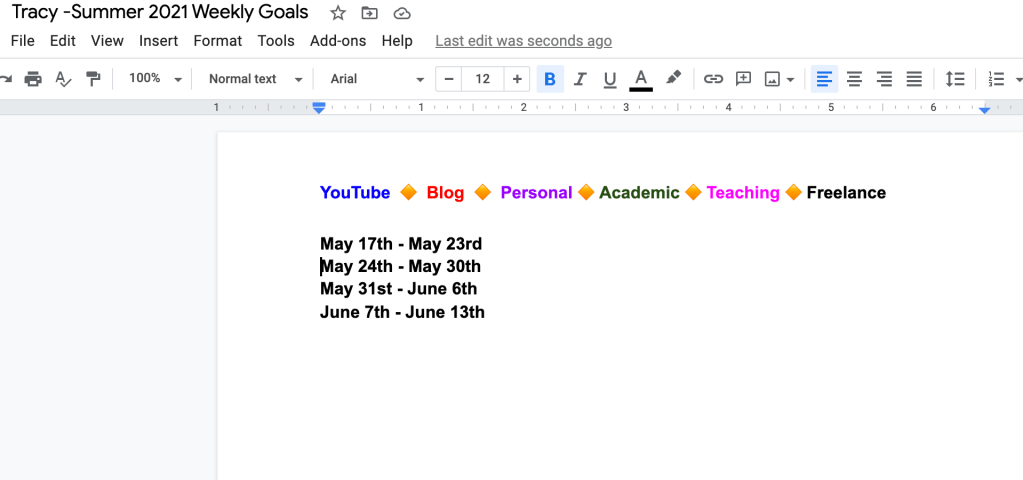
Being in school for so long has taught me to create a plan for each semester. So how exactly do I go about this? Basically, every spring, summer, and fall, I look at all of my deadlines and map it out onto a Google Doc with the weekly dates for the 12-16 weeks. I color code the main categories and have a key in the header and footer of each page. I learned this method from the National Center for Faculty Development and Diversity.

Even though I’m now graduating, I am going to continue this method of planning because it truly helps me to get a big picture overview of my goals. I can then match my big goals to subtasks by making weekly progress toward completion.

Here is a snapshot of a week from last summer:

action plan

Each week would have a similar format that I copy and pasted for the whole summer. In May, I go through and add in important deadlines and repeating tasks. For example, my teaching timesheet is due every two weeks. Now, I also include these repeating tasks in my Google Calendar. Some may find this process repetitive, but it actually helps me remember things by keeping it in multiple places.

So, because it’s time to think about Summer 2021, I am in the process of creating my next 12 weeks or so goals. I’m still working out what I’d like my categories to be, but I’ve started to put in my dates and then will create my outline and fill in goals. The first pass through is all the big items, and then I re-evaluate every Sunday and prioritize my week, filling in additional items as needed.

Summer 2021 action plan

action plan

FREE Google Doc Summer 2021 Planning template!!

Here is a YouTube video showing how I go through these steps for the summer!

Posted in Goal, Personal Skills, Time Management

Summer Goal Planning: Creating a Seasonal Action Plan and Calendar

Being in school for so long has taught me to create a plan for each semester. So how exactly do I go about this? Basically, every spring, summer, and fall, I look at all of my deadlines and map it out onto a Google Doc with the weekly dates for the 12-16 weeks. I color code the main categories and have a key in the header and footer of each page. I learned this method from the National Center for Faculty Development and Diversity.

Even though I’m now graduating, I am going to continue this method of planning because it truly helps me to get a big picture overview of my goals. I can then match my big goals to subtasks by making weekly progress toward completion.

Here is a snapshot of a week from last summer (with some items removed):

Each week would have a similar format that I copy and pasted for the whole summer. In May, I go through and add in important deadlines and repeating tasks. For example, my teaching timesheet is due every two weeks. Now, I also include these repeating tasks in my Google Calendar. Some may find this process repetitive, but it actually helps me remember things by keeping it in multiple places.

So, because it’s time to think about Summer 2021, I am in the process of creating my next 12 weeks or so goals. I’m still working out what I’d like my categories to be, but I’ve started to put in my dates and then will create my outline and fill in goals. The first pass through is all the big items, and then I re-evaluate every Sunday and prioritize my week, filling in additional items as needed.

FREE Google Doc Summer 2021 Planning template!!

Here is a YouTube video showing how I go through these steps for the summer!

Posted in Goal, Manifestation, Personal Skills, Time Management

It’s Okay to Change and Become a Better Version of Yourself

Sometimes I get stuck in this mindset of how people see me. Do they see me as the rebellious child, the dutiful teenager, the naive twenty-something, or who I actually am today? And honestly, I’m still figuring out who I am in a lot of ways. This year, especially, has been an opportunity to reflect and evaluate.

Over the last 5-10 years, I’ve taken time to work on my anxiety, leaving me to feel like a failure at times and at peace other times. However, it’s necessary to do the work on yourself before you can give to others. I used to think that was selfish, but now I’ve come to learn that I have to step back when needed. This is particularly true for overachievers like myself who just want to dive in and do the most. But, I also have to give myself the same grace I wish to offer others, in learning and becoming a more critically thoughtful, kind, goal-oriented person.

I just recently graduated with a terminal degree and this was my first weekend in 5 years that I didn’t have editing or work to do on a specific paper or assignment for school. Do I have other projects that I can work on? Yes, I do. But it’s not so pressing that I have to give up my Saturday or Sunday to complete them. With a more open schedule in the week ahead, these are things I can work on starting Monday morning for a more traditional work schedule.

So in light of this period of reflection, I thought I would share some of the resources I’ve used to continue my personal and professional growth.

  1. Project Implicit – One of the areas I’ve been working on is becoming more actively antiracist and aware of my own personal implicit biases. This website from Harvard allows you to take a series of implicit bias tests to see where you are on a number of important issues. It’s a starting place to then seek other resources to continue to learn and grow, such as “How to Be an Antiracist”, by Dr. Ibram X. Kendi.
  2. Inspirational books – Although I haven’t had a ton of time to read for enjoyment, I plan to change that in the near future and dive in to material that inspires me to reach for my goals and aspirations. Two of the books I’ve really enjoyed these last couple of months are “Hello” Fears by Michelle Poler and “Year of Yes” by Shonda Rhimes. Both taught me to embrace new opportunities and not let fear hold me back. For example, even putting this blog and my YouTube channel out there is scary for me.
  3. Free online courses – There are sooooooo many ways to get free knowledge. I paid a lot of money for my degrees, but you don’t necessarily need to pay for information now. You can go to YouTube or websites with free courses. Some are even worth paying for a membership if you intend to continue your professional learning. I wrote another blog post here about some of the websites that I utilize to take free courses on topics of interest.
  4. Therapy/counseling – I’ve said it before and I’ll say it again. I think everyone could benefit from talking to someone outside their day to day interactions. It’s helpful to process information, get strategies to change thought patterns, or deal with trauma. If you don’t know where to start, you can visit the CDC resources or National Alliance on Mental Illness. The process of counseling has helped me become more self-aware and grow my confidence.
  5. Affirmations – Along with counseling, the idea of positive affirmations is helping me to grow into the person I wish to become. I try to start my day with affirmations. Additionally, I have all of my 2021 goals posted next to my mirror on index cards by category. Each day, I see the goals I have for myself and I repeat statements that affirm my capability of achieving these goals for my future.

The final takeaway is that it’s never too late to change your thoughts, learn more, and become the version of yourself you wish to be. Don’t let fear or lack of time hold you back. Commit to 5 minutes each day to work on something for your personal self-improvement. Then, gradually increase that time as you are able to do so. I believe in you!!

Posted in Goal, Manifestation

It’s Okay to Change and Become a Better Version of Yourself: 5 Helpful Tips

Really, becoming a better version of yourself is possible and totally a personal journey.

Sometimes I get stuck in this mindset of how people see me. Do they see me as the rebellious child, the dutiful teenager, the naive twenty-something, or who I actually am today? And honestly, I’m still figuring out who I am in a lot of ways. This year, especially, has been an opportunity to reflect and evaluate.

Over the last 5-10 years, I’ve taken time to work on my anxiety, leaving me to feel like a failure at times and at peace other times. However, it’s necessary to do the work on yourself before you can give to others. I used to think that was selfish, but now I’ve come to learn that I have to step back when needed. This is particularly true for overachievers like myself who just want to dive in and do the most.

But, I also have to give myself the same grace I wish to offer others, in learning and becoming a more critically thoughtful, kind, goal-oriented person.

I recently graduated with a terminal degree and this was my first weekend in 5 years that I didn’t have editing or work to do on a specific paper or assignment for school. Do I have other projects that I can work on? Yes, I do. But it’s not so pressing that I have to give up my Saturday or Sunday to complete them. With a more open schedule in the week ahead, these are things I can work on starting Monday morning for a more traditional work schedule.

become a better version of yourself
Photo by Jill Wellington on Pexels.com

So in light of this period of reflection, I thought I would share some of the resources I’ve used to continue my personal and professional growth.

Become a better version of yourself:

  1. Project Implicit – One of the areas I’ve been working on is becoming more actively antiracist and aware of my own personal implicit biases. This website from Harvard allows you to take a series of implicit bias tests to see where you are on a number of important issues. It’s a starting place to then seek other resources to continue to learn and grow, such as “How to Be an Antiracist”, by Dr. Ibram X. Kendi.
  2. Inspirational books – Although I haven’t had a ton of time to read for enjoyment, I plan to change that in the near future and dive in to material that inspires me to reach for my goals and aspirations. Two of the books I’ve really enjoyed these last couple of months are “Hello” Fears by Michelle Poler and “Year of Yes” by Shonda Rhimes. Both taught me to embrace new opportunities and not let fear hold me back. For example, even putting this blog and my YouTube channel out there is scary for me.
  3. Free online courses – There are sooooooo many ways to get free knowledge. I paid a lot of money for my degrees, but you don’t necessarily need to pay for information now. You can go to YouTube or websites with free courses. Some are even worth paying for a membership if you intend to continue your professional learning. I wrote another blog post here about some of the websites that I utilize to take free courses on topics of interest. These are helpful tools on the journey to become a better version of yourself.
  4. Therapy/counseling – I’ve said it before and I’ll say it again. I think everyone could benefit from talking to someone outside their day to day interactions. It’s helpful to process information, get strategies to change thought patterns, or deal with trauma. If you don’t know where to start, you can visit the CDC resources or National Alliance on Mental Illness. The process of counseling has helped me become more self-aware and grow my confidence.
  5. Affirmations – Along with counseling, the idea of positive affirmations is helping me to grow into the person I wish to become. I try to start my day with affirmations. Additionally, I have all of my annual goals posted next to my mirror on index cards by category. Each day, I see the goals I have for myself and I repeat statements that affirm my capability of achieving these goals for my future.

The final takeaway is that it’s never too late to change your thoughts, learn more, and become the version of yourself you wish to be. Don’t let fear or lack of time hold you back. Commit to 5 minutes each day to work on something for your personal self-improvement. Then, gradually increase that time as you are able to do so. I believe in you!! You can become a better version of yourself!