Things that have pressing deadlines typically get done even when sometimes we have no idea how to make that happen. Even with procrastination, there comes a point where the panic monster sets in due to an upcoming deadline. You may not like the process of staying up all night or feeling rushed, but eventually, it gets done.
However, for me, I have found that method to be extremely stressful and anxiety-producing. I prefer to plan in advance and know my schedule using time management techniques and blocking my calendar. But sometimes, things just sneak up on you.
I moved in May 2020 into my parent’s house with the anticipation of leaving the country in several months. At that time, there were limited options for me to drop off donated items because many places in PA were still closed.
So, I boxed everything up and then brought it with me. Now, many of my items are still in boxes, and I have been meaning to go through them this past year. However, it wasn’t a priority and I didn’t have a deadline to get it done. I was more focused on finishing up my dissertation and working to pay the bills.
Now, I finally got the green light to move to Norway and I’m searching through boxes to find my winter clothes. I cannot find my heavy winter jacket anywhere. So, maybe that’s a sign that I just need to get one once I get there and not weigh down my luggage anymore.
In order to make sure that the things get done that you need to or want to, it’s important to prioritize early and often. Setting weekly or quarterly goals with a detailed action plan can help get you to the finish line.
The reality is, that we figure it out when it comes to the important things. The question is, how do we feel along the way? Are we stressed, frustrated, or focused? Only you can answer that question. For me, it truly depends on the task and type of goal I am trying to accomplish.
Strategies for scheduling meetings: Are you tasked with scheduling a lot of meetings or scheduling meetings with large groups of people with busy schedules? I’ve had to do both so I’ll share some of the strategies that I have used to simplify this process if possible.
I generally view these in 2 different categories. Scheduling within an organization can be a bit easier because you can utilize technology tools and systems to standardize meeting expectations.
However, this works best when everyone in the group is well-versed in the technology of the organization. Scheduling outside organizations requires clear directions so others can utilize the method you have set forth for that meeting.
Strategies for Scheduling meetings Within the organization
One of the easiest methods to schedule meetings within an organization is to share calendars through Gmail or Outlook. When I’m scheduling a meeting in Google Calendar in my organization, I can type in the guests’ names I need to meet with and view their available blocks of time to find a common time. You can change the settings to share as many or as few details as possible.
Doodle – This works for both inside and outside the organization. With Doodle, you can create a bookable calendar so people have to look at it when you’re available. You can also create events and list out dates and times so people can tell you when they’re available.
Strategies for Scheduling meetings Outside the organization
When trying to schedule outside the organization, it is also possible to utilize Google and Outlook calendars if those people use them as well. I often get Google Calendar invites from many people not in my organization.
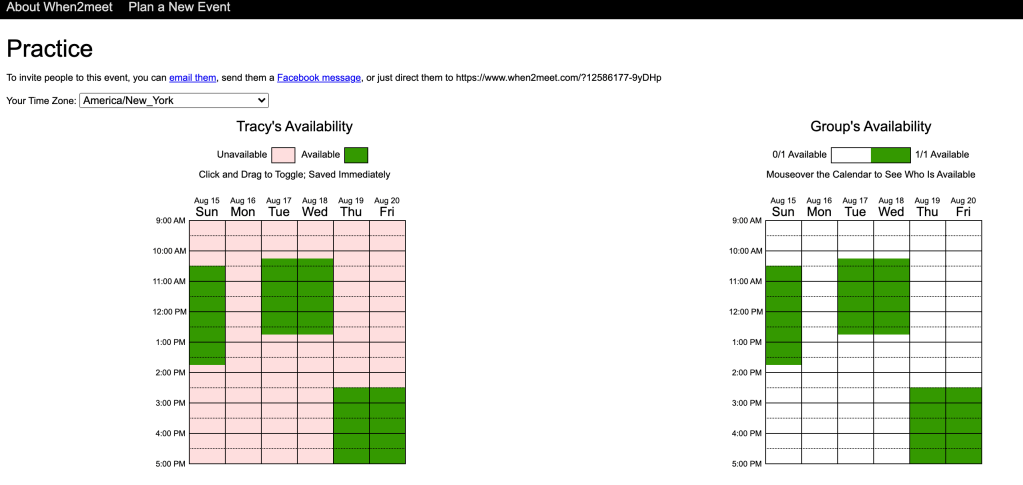
Another strategy is to use When2Meet, which allows potential meeting attendees to shade in all the blocks of time they are available. It then gets darker the more people are available at a given time indicating a better fit for a meeting. You can share the link with potential attendees and then choose the time when most people are available.
One of my colleagues just creates a Google Sheet with available times and has people put their names when they are available. It’s a similar process as When2Meet.
These are the main methods that I have used which I can personally recommend. However, there are so many other digital programs that you can use to manage your calendars and schedule meetings. This article shares the breakdown of 23 different programs you can use.
Ultimately, you want to choose the most time-efficient and user-friendly option available to you!
One of the things I really wanted to learn how to do this year with my iPad was to create a digital planner. I am very much a paper and pen kind of person, but I am trying to minimize the amount of paper items that I utilize.
I follow K Digital Studio on YouTube and Kirstin does an amazing job providing step by step instructions switching to digital note-taking. I actually watched her class on how to make a digital planner on SkillShare, which you can try for 30 days free through my referral link here.
She teaches you how to build a digital planner using Keynote on both the iPad and MacBook. It was a pretty easy process overall with the most time-consuming piece of linking the slides back to the month and week calendars.
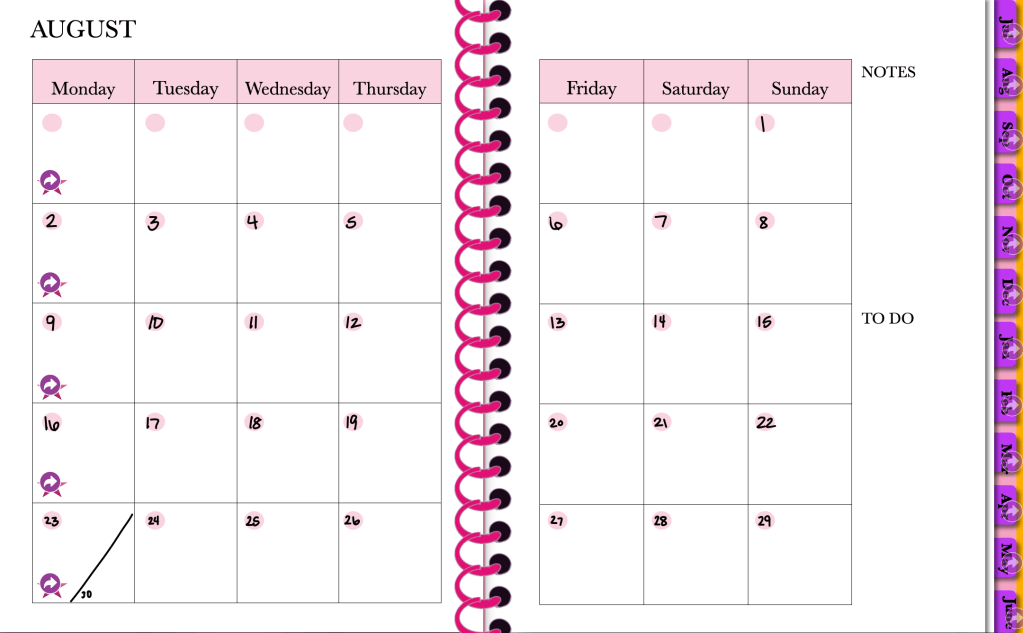
I created a blank cover for my planner and linked monthly calendars with the tabs on the sides. For example, here is my August 2021 monthly view of the calendar.
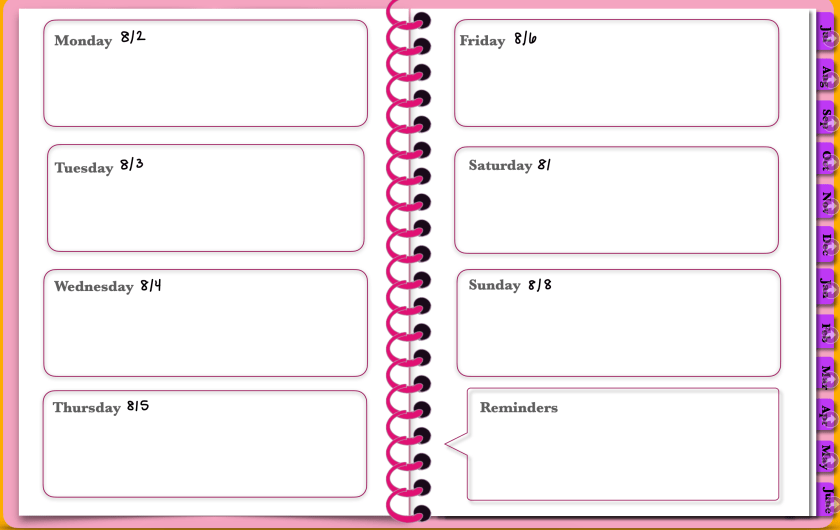
In Kirstin’s class, she teaches you how to make an undated planner, but I went ahead and dated mine for July 2021 – June 2022 in my own handwriting. Here are my daily pages:
I then exported the Keynote file to PDF and downloaded it to my GoodNotes app to use for the rest of the year!
My goal is to continue using SkillShare to learn how to make other digital products that I can sell online through my website and through Etsy.
Because this is my first attempt and I’m planning to use this version myself, I am providing a FREE download of the digital planner here:
“It is easier to resist at the beginning than at the end.”
― Leonardo da Vinci
Do you have a procrastination problem? This quote speaks to me deeply because there are many times I put something off so long and once I finally get going, adrenaline kicks in. Or, if it’s related to health and wellness, I start to see the fruits of my labor and then don’t want to stop. For example, I’ve been wanting to get up and walk every day for the last year. But, I didn’t do it.
I can probably think of a million excuses, but the reality is I was procrastinating on this one simple thing that is really good for me. Now, I just finished week 3 of waking up and walking first thing almost every day and today was the first day I actually woke up before my alarm and ready to go!
The word procrastinate means to put off something INTENTIONALLY.
That word intentional really gets me. It means I literally know that I should be doing something, yet I am choosing not to for whatever reason. Sometimes the reasons are good, but many times they are not. When we look deeper into the origins of the word:
“English speakers borrowed the word in the 16th century from Latin procrastinatus, which itself evolved from the prefix pro-, meaning “forward,” and crastinus, meaning “of tomorrow.” Like its synonyms “delay,” “lag,” “loiter,” “dawdle,” and “dally,” “procrastinate” means to move or act slowly so as to fall behind. It typically implies blameworthy delay especially through laziness or apathy.” – Merriam-Webster
Let’s get one thing clear. Procrastination is not the same as prioritization. Sometimes we have to say no to things in our lives because it’s not a priority for us now. However, if we say yes to something, when we really should have said no, this can cause us to increase our procrastination problem. Or, if you’re like me, you hate cleaning the bathroom so I always procrastinate on cleaning day. But once I’m done, I realize it didn’t actually take that long and it looks much nicer!
A useful Ted Talk to watch about procrastination is by Tim Urban. In this video, he describes the mental gymnastics that procrastinators go through to rationalize their behavior. He presents the information with humor and engagement and makes you realize that we all procrastinate on something. So the question is: what are the things you are procrastinating on?
I plan to make a list this week of the things I’ve been procrastinating on that probably won’t take much time to actually just do. It’s been on my mind to call a company about something I need help with and I’ve been delaying because well, you know, being on hold with those customer service lines are not always fun.
Another key point that Tim Urban makes is that there is more mental anguish when we procrastinate on things that don’t have a deadline. If there is a date by which something needs to be accomplished, we can delay starting, but eventually crunch time will come and we get it done. On the flip side, if there is no date looming in front of us, then it can cause a lot of anxiety and depression that we aren’t accomplishing the things we need or want to do. This is a huge procrastination problem.
So based on my own personal experiences, here are 6 tips on things you can do to try and reduce your procrastination problem.
Set a deadline Probably the best thing you can do for yourself is to set a deadline to complete something. Even if it’s self-imposed and not related to work or family. The hard part is sticking with it because it’s sometimes easier to let ourselves down than other people. Ohhhhhh, that’s a good line – remember that! I’ll have to write another blog post about that. There has to be a name for that dilemma.
Create a routine Starting a new routine is challenging, but possible. Start small and build up to where you want to be. I’ve been wanting to run every morning, but I’m so out of shape now that starting with walking makes more sense. And I’m proud of today finally waking up early and feeling that sense of wanting to get out of bed and go on a walk.
Say no when you need to I recognize that this is easier said than done. However, it is necessary to say no sometimes, especially to things we will end up procrastinating on in the long run and that will take a toll on our mental health.
Ask for help Remember, procrastination is INTENTIONALLY delaying the completion of something. If, after a period of time, you realize that you’re not motivated or your schedule is super busy, reach out to someone. Find an accountability partner who you can check in with if you’re trying to build a new habit. This can help with your procrastination problem.
Daily and weekly goal setting In order to minimize the likelihood of procrastinating on certain things, make it a habit to check in with your goals on a daily and weekly basis. By keeping your eye on the why you are more likely to stick with what needs to get done. And if something no longer serves you, don’t be afraid to let it go. Perhaps something you’ve been procrastinating on doesn’t actually need to happen. Let it go.
Prioritize Choose your priorities and focus your time and energy on those things. If you’re not sure, write down everything that you have to do. Then, start rearranging it to fit your reality. I don’t know about you, but sometimes I create this unrealistic lists of things to do and then I feel guilty when I don’t get it all done. I’m literally creating those feelings in my brain because I’m choosing to say that too many things are a priority. One method to use is the Eisenhower Matrix. Other methods involve creating different types of to do lists. These are excellent ways to solve your procrastination problem.
I write and think a lot about time management skills. I don’t consider myself to be an expert on time management skills yet. In fact, I consider myself a work in progress, constantly looking for ways to improve or better balance the competing demands of life. However, I love sharing what I’m learning about time management with others. For example, I created this time management 30 day reflection journal as a way to challenge yourself to dig deeper into how you manage your time.
Time flows in and out of our lives every second and no matter what, it passes. So the question is, are you making the most of your time? Sure, I also talk about productivity here, but that’s not the only thing that can benefit from effective time management skills. As I’ve shared time management tips and strategies before, now I want to talk a bit more about the reasons why you should care about your time management strategies.
5 Reasons Effective Time Management Skills Will Help You in the Long-Run
Less Stress – If you have ever been running late to something or staying up all night to finish a project by a deadline, then you know the kind of stress that procrastination can bring. Sometimes it’s unavoidable, but many times, we can take steps to identify upcoming dates and deadlines and be prepared before that time arrives.
MoreOpportunities – Whether this is for personal or professional reasons, you will get more opportunities because you will have time to say yes or no to the things you want to do. If you want to take on a new work project or hobby or just take some downtime for yourself, you will have the opportunity to choose.
Reaching Goals – If I had not managed my time effectively to set a training schedule around work, family, and other commitments, I probably would not have been able to complete a half marathon. By balancing commitments and prioritizing tasks, you have a greater chance of reaching personal and professional goals.
Positive Relationships – It is easier to follow through with a friend or coworker when you manage your calendar effectively. This could be as simple as entering all important birthdays, anniversaries, and events on an annual repeating basis so you can keep track of what is on the horizon.
Enjoy Life – As part of this work, work, work culture, it’s easy to get caught up in putting out fires and a sense of urgency around everything. Same thing with family schedules and the competing needs of the people around you. By keeping up with goals, prioritizing importance, and regularly checking your calendar, you may find more time to have some fun or just take some time for yourself. This one also goes hand in hand with less stress because you can feel confident that you did the best you could and hopefully enjoy the hard-earned time to yourself and with your family.
I want you to take away from this message that your time is important. It’s not necessary to fill the calendar to the brim all the time to be an “effective” time manager. Rather, it’s more important to focus your time on the things that matter and are important to you or perhaps necessary at a given time in your life. And your time management strategies and techniques may ebb and flow with the goals and circumstances of your life. Be true to that, to yourself, and to the people you care about.
My new focus is purposeful productivity. I recently read another post about the dangers of toxic productivity. I’m all for getting rid of the idea of being productive for productive’s sake or for the betterment of someone else’s goals and ambitions.
Have you seen that meme about how U.S. workers will be in the hospital having an email away message saying that they can be reached by text while other countries will have an away message that says I’ll get back to you in a few months or eventually or never?
Well, if you haven’t, you should Google it. And then reflect on it because it really slaps you in the face if you’re a workaholic like myself. It makes me reflect on how we’ve been conditioned to think that we owe our entire lives to our employer or our job. There’s even fear of retribution if we have to for some reason call out or handle personal or family emergencies.
Fortunately, I’ve actually worked in a lot of places that have been more understanding of my situations than I have. Meaning, I’ve often been tougher on myself or felt more guilty about not following through if something came up. But, that’s life. That’s reality. And people and family and your personal physical and mental health are more important than a job.
There are many conflicting opinions on what people should have done with their time during the pandemic. Some advocated for rest, while others said it was time to learn a new skill or finally reach that goal. The reality is that we were all living in a time of uncertainty and every single person’s own situation was unique and distinct to them. There is no room to judge others for what they should or shouldn’t have done with their time.
So as I’ve been seeing more and more about the toxic productivity culture, I tried to think of an alternative to always just being productive. I thought of purposeful productivity and was excited at the prospect of coining a new phrase. But alas, Google showed me there were a couple of really awesome articles already written about the topic. One useful checklist includes ideas for mental, digital, and physical areas of our lives. Another post includes 35 strategies to achieve purposeful productivity in your life.
My reason for trying to combine purpose and productivity is that sometimes we can be productive for our own self-care and not just for the sake of getting something done. Additionally, I find that when my actions are tied to a greater purpose or “why”, my productivity actually increases and I have more motivation to complete the task or activity.
As I think about being more purposeful in my day-to-day activities, I’m trying to develop a morning routine to help guide my productivity toward my purpose. There, I set my intentions and my to-do list to match my goals. Here are the questions I ask myself for reflection:
Why am I doing this particular task or activity?
Who does this benefit? (Is it me or someone I care about? Is it related to paying bills and my livelihood?)
Do I need to report back on my time and justify my work to anyone?
Is this connected to bigger goals for the future?
Can I make this task more efficient or automated like a habit?
Even if I can’t answer one of the above questions, it doesn’t necessarily mean it’s something I shouldn’t do. However, maybe it’s something that doesn’t need to be done quite at that moment or with a sense of urgency.
As I continue on this productivity journey, I plan to be mindful of my purpose and not fall into the trap of productivity for productivity’s sake. YOU are valuable and sometimes taking a nap or walking or building a sand castle with your kids is exactly the kind of purposeful productivity that you need.
Time management in the summer is a whole different ball game for me.
I don’t know about you, but once the days got longer and the sun started shining, my body and mind automatically switched into vacation mode. And I don’t think that’s a bad thing. The past two years have been especially taxing and it’s time to think about what that means for our post-pandemic future (check out this awesome post by my friend Sonya)!
I’m going to revisit one of my first ever blog posts about time management, which actually has the most likes out of all my posts thus far, and assess how that fits into my summer plans.
Here are the time management tips I gave:
Single task
Use a modified Pomodoro
Prioritize
Improve technology skills
Calendar
Now, I still stand by these tips as actionable ways to manage your time in an efficient and productive manner. However, although mentioned in the initial post, I did not explicitly state self-care as a time management tip. I want to emphasize now the hugely important role that self-care plays in time management. I say this as a person who recently went on a trip and ended up working half the time and not getting to truly detach and enjoy the full experience.
Summer is a time that should be full of adventure and excitement and wonder. I know I always looked forward to summer as a kid because my parents planned activities for us to do at the house or hikes in waterfalls with picnics and I got to eat my favorite Teddy Grahams. As an adult, I’m now the one in charge of picking my adventures and choosing how I plan to get things done.
My schedule is sort of strange right now and I’m trying to figure out the right balance between work and play. As a recent doctoral graduate, I want to create a lot of downtime for myself because I’ve basically spent more than half of my life in school. However, this is also a perfect opportunity to build up my blog and YouTube as well as network to become an academic coach or editor.
So while I will still subscribe to the tips mentioned above, I have a few things to add to my personal time management tip list for summer.
Prioritize mental and physical health. It is extremely hard to complete tasks to the best of your ability if you are exhausted or drained. I need to get back in the zone where I’m taking care of myself so that I can do the best for the people I love. I know myself well enough to know the best time for me to exercise is in the morning so I’m trying to get up and make sure I at least walk every day.
Schedule unscheduled time. Now, this tip might sound strange, but if you’re a planner like me, then you know what I mean. Don’t feel like you need to fill your calendar to the brim with activities and work and vacation. Allow your calendar to have more breathing room than you would throughout the rest of the year. Give yourself permission to take a day trip on a whim or build a pillow fort in the house with your kids.
Be forgiving with yourself and others. This tip holds true for any time in the future as well. For many individuals and families, summer is a time to relax a bit more, get out and enjoy the sunshine, and just generally slow down. We emphasize this work, work, work culture in the U.S., but what about life, life, life.
As a reforming workaholic, I am trying desperately to recognize how my overwork tendencies have created times in my life where I got burnt out too quickly. Try to recognize those signs in yourself and in others and be an encouragement to those who need a break.
For context, my interesting sense of time and ever-evolving perspective stems from a mother who is extremely early to everything and a father who shows up habitually late. I like to think of myself somewhere in the middle, but open to learning and accepting new ways of managing time based on personality, goals, and mutual understanding. Check out another amazing post from Sonya here!
Anyway, the moral of this story today is to enjoy your life and make the most of the time you have!
I am constantly looking for ways to improve productivity in an efficient manner that honors the self care I’ve committed to myself. I’m on a journey of professional and personal growth and I want to share 3 tips that have helped me become more productive (when I follow them).
Now, one book that I read this past year that truly helped me to understand how habits work and why I should start small is from James Clear’s Atomic Habits. It also made me realize why I stopped running long distances after completing my half marathon.
I had a large goal that I reached, but ultimately, I didn’t keep it up because I didn’t have another goal to work towards lined up afterwards. If you haven’t read this book yet, do it, because the advice seems so simple, yet powerful at the same time. It’s really about starting with small manageable steps toward larger goals.
Another book that I read recently is the Miracle Morning by Hal Elrod. While I don’t do everything on his list, I try to implement the practice of being intentional when I start my day. I’ve especially been working on trying to stop snoozing my alarm clock in the morning so I can wake up a bit more refreshed.
One method to improve productivity is to batch like tasks together in a single time block. For example, I might set aside 7:00am – 9:00am to complete household chores or do laundry. I also recommend only checking email at set times throughout the day. When it is easily accessible on our phones or in our Internet browser tabs, we are more likely to run to do whatever comes across instead of staying focused on the thing that was in front of us in the first place.
Another strategy is to use the Pomodoro technique to work in 25 minute increments with a 5 minute break. Spend 2 hours of your time block utilizing this technique to tackle a big project or report for work or your home life. I spent several months organizing my day using the time blocking method to make sure that I was able to get to everything on my list.
Narrow Your Daily Focus
I used to create these big long to do lists because I thought it made me more productive to have long lists. What I realized was that if I didn’t get to everything on my list, I would get mad at myself for not being as productive as I could have been. When I start my morning routine, I now focus what my priorities will be for the day. I use a variety of different types of to do lists, but I try not to overload or overwhelm myself with listing everything that needs to be done.
I can be proud at the end of the day if I manage to check off the majority of things I wanted to get done.
So what can you do if you’re trying to be more productive?
So you want to say no to new projects. Do you feel guilty saying no when someone asks you to do something at work or a favor from a friend? Do you say yes even when you don’t want to so you won’t let someone down? It’s easy to say yes because you feel like you have to, but true reflection is necessary to decide which things are worth saying yes to. And sometimes you may think you’re saying no to something, but your message comes across as ambivalent and you feel it’s too late to back out at that point.
I was just having a conversation today with a friend who thought she said no to something, but still got an excited email about continuing to be part of a project. I had her read me the initial message she sent and let her know that it indeed did not come across as a no as she intended. She ran her response by me to check that it was clear and the new tone of the message was still friendly and encouraging, yet set a clear boundary on participation in the project.
Now, this blog post will focus on generic ways to respectfully say no, but I’m happy to write new posts catering to both professional and personal life boundaries. Before saying flat out “no” to an opportunity, gathering, meeting, or project, it is okay to ask clarifying questions. For example, about 6 months ago I was asked to take on a 4-5 month consulting project. It would have been an awesome learning opportunity for me, but I already had 2 part-time commitments and was completing my final semester of grad school. Part of my response included:
I feel confident in my abilities to meet the requirements of the position, but I want to make sure I have a clear understanding of the expectations and relative time commitment.
After the response became clear that this would be a 20-30 hour per week commitment, I knew that I could not add that to my workload. I really wanted to say yes and do it, but I also wanted to make sure that I could carry out the responsibilities to the level of competence I wish to display. And this comes from previous experiences where I did overload myself and not perform to the best of my abilities.
Discerning when and how to say yes and no to opportunities is a lifelong practice of finding balance in your life. There is not necessarily a one size fits all method to this. I was listening in to a conversation on Clubhouse last night and someone said that it’s easier to start with no and change to yes later than to say yes to everything and have to eventually say no.
Here are 3 ways to respectfully say no to new projects and manage your time effectively.
Say no to new projects: Ask them to check in at a later time
This strategy works if the ask is something you’re possibly interested in saying yes to, but just don’t have the time at the moment to commit or to learn more about it. Your schedule is packed and you just can’t imagine taking on one new thing. Say you are not available at this time, but they can check back in with you in XX number of weeks or months. And if the person follows up and it comes back around and you still cannot commit, clearly state that unfortunately, you will not be able to take on this project or endeavor. Here is a sample of what I would say:
Thank you so much for reaching out to me about this opportunity. I am interested in this possible partnership, but unfortunately cannot commit at this time. Will you check back with me in 3 months if you are still interested in collaborating?
Now, this is the response that my friend used to make her no clear to the people in the email thread. She was truly excited about the project idea, which was expressed in the initial communications. However, she didn’t want to be one of the main people involved in the idea creation and the day to day of the project. This was a time she needed to say no to new projects.
So she sent a nice message back stating she was fully cheering them on in this opportunity, but could not take an active role. However, she left room for them to check back in if they had a specific task related to her area of expertise. Therefore, she was not committed in any way, but could offer support on very specific items if time permits later and there is a need.
3. Suggest an alternative
This is a great comprise “no” answer. Perhaps you don’t have the time or capacity to take something on, but you know someone who is. Check with that other person and then make the recommendation or connection. Personally, I like to check in with my contact before sending the other person to them that way I know if they are truly interested in the opportunity. It also creates a more positive interaction for everyone involved.
Maybe you want to say yes, but you can’t commit to 2 hour weekly check-in meetings. Clearly define your boundaries and say that you would be available to meet every other week or once a month. It is much better to set those boundaries up front from an overly cautious time commitment and then later decide to become move involved if you are able to do so.
In order to properly provide an alternative to whatever the ask is, it’s important to continue to build up your social and professional network. Take advantage of opportunities to meet with others in your field and areas of expertise. This way when you say no to new projects, there is a shared understanding and respect.
At the end of the day, if something is a definite no for you, make that clear in your response and wish the person well. You don’t necessarily owe an explanation and this is something I’m working on. I feel the need to justify my time by saying “oh, I already have this commitment and this commitment”, but the reality is simply saying no so you have time to take a break and protect your mental health is just as important.
I love my weekly guiding goals. Yes, I admit I am very attached to my calendar, my to do lists, and effective scheduling. I even set weekly plans months in advance. However, I used to make those weekly lists much more detailed than I do now. And that’s okay because time management and task management systems should evolve as your needs change. There are definitely strategies that remain helpful at any phase of planning, but what worked for you 2 years ago might not be as effective anymore. It’s important to continually evaluate if your systems are working for you and make changes as needed.
I recently started to keep my schedule a bit looser in some sense, which is the opposite of the time blocking method I’ve used in the past. Time blocking works really well for me when my schedule is packed and I have a lot to get done. Fortunately, since finishing my degree, I’m in a new stage of creating, where my schedule is much more focused on personal and professional development goals. I call these GUIDING GOALS.
So I’ll shared some of the strategies I’m using now to stay on target to reach my guiding goals.
First I set up my summer 2021 weekly planning document. For each of my category buckets, I list out my goals for the week being mindful of busier weeks and what is realistic. For example, I need to earn some additional money on non-teaching weeks, so I set a money goal for Rev.com, which is one the ways I made additional money. I also forward to potential expenses and set that as my guiding goal for that bucket. This document is my roadmap to success.
Meet with an accountability partner – This step is especially important for me because it helps me prioritize my tasks each week. I may have my guiding goals such as write 2 blog posts, design a new Etsy template, or exercise a certain number of minutes, but they are not prescribed to a certain day yet. This one hour conversation allows me and my partner to share what we’d like to accomplish in the given week, explore our calendars, and set potential work times to meet those guiding goals. We sometimes even block out special work sessions during the week if our calendar allows. I suggest finding someone to be an accountability partner for you because it definitely helps you stay on track toward whatever it is you plan to accomplish.
Set daily intentions – While I have a general overview of what I’d like to get done within the week and potential work times, I use the beginning of each day to sketch out what that day will look like. I go back to my goals document and see what I have already knocked off and think about what could be a good focus for that day. So even though I may not have every minute of my week planned out in advance, just that 15 minutes of reflection each morning helps me stay on track and not jump all over the place. Additionally, if I wake up in a particularly non-motivating mood, I may use some of that day for a nature recharge.
Communicate, communicate, communicate – I feel like I’m a broken record with this one, but it’s important to communicate your schedule, your goals, and your needs to those who work closely with you. I do have a part time job which requires me to be present for certain meetings or get certain tasks done. However, those hours are not set and differ each week so it is important for me to communicate my weekly goals with my supervisor. I am extremely fortunate to have a supervisor who advocates for mental health breaks and prioritizing, and I know that is not always the case for employees. On the flip side, if blocks of time have been scheduled for meetings and they haven’t been filled, I always ask if it’s okay for me to remove that block from calendar so I can work on some of the other guiding goals I have.
TAKEAWAYS from this post:
Be mindful of the need to change systems in different seasons of your life

















 Tracy Dee Tips