Strategies for scheduling meetings: Are you tasked with scheduling a lot of meetings or scheduling meetings with large groups of people with busy schedules? I’ve had to do both so I’ll share some of the strategies that I have used to simplify this process if possible.
I generally view these in 2 different categories. Scheduling within an organization can be a bit easier because you can utilize technology tools and systems to standardize meeting expectations.
However, this works best when everyone in the group is well-versed in the technology of the organization. Scheduling outside organizations requires clear directions so others can utilize the method you have set forth for that meeting.
Strategies for Scheduling meetings Within the organization
One of the easiest methods to schedule meetings within an organization is to share calendars through Gmail or Outlook. When I’m scheduling a meeting in Google Calendar in my organization, I can type in the guests’ names I need to meet with and view their available blocks of time to find a common time. You can change the settings to share as many or as few details as possible.
Doodle – This works for both inside and outside the organization. With Doodle, you can create a bookable calendar so people have to look at it when you’re available. You can also create events and list out dates and times so people can tell you when they’re available.
Strategies for Scheduling meetings Outside the organization
When trying to schedule outside the organization, it is also possible to utilize Google and Outlook calendars if those people use them as well. I often get Google Calendar invites from many people not in my organization.
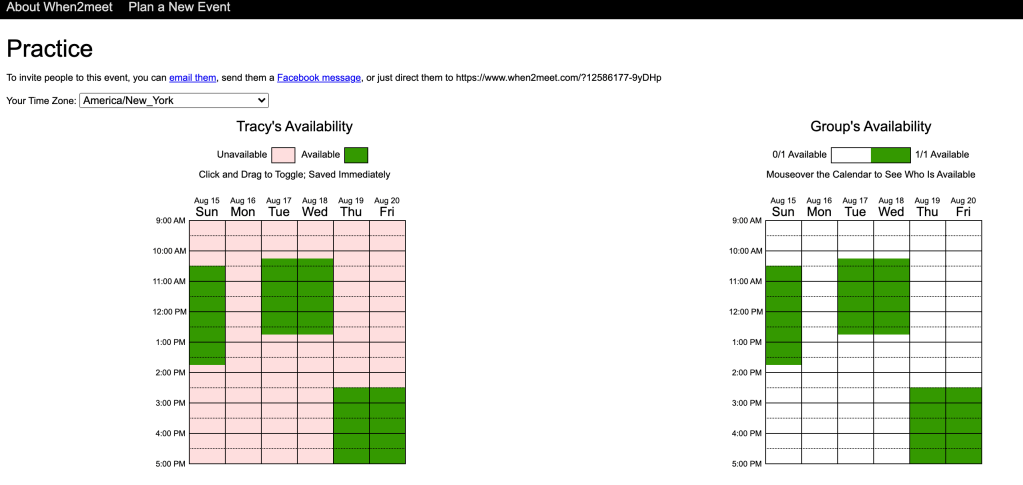
Another strategy is to use When2Meet, which allows potential meeting attendees to shade in all the blocks of time they are available. It then gets darker the more people are available at a given time indicating a better fit for a meeting. You can share the link with potential attendees and then choose the time when most people are available.
One of my colleagues just creates a Google Sheet with available times and has people put their names when they are available. It’s a similar process as When2Meet.
These are the main methods that I have used which I can personally recommend. However, there are so many other digital programs that you can use to manage your calendars and schedule meetings. This article shares the breakdown of 23 different programs you can use.
Ultimately, you want to choose the most time-efficient and user-friendly option available to you!
We all want to receive excellent customer service.
Is the customer always right? This has been the advice I’ve heard the majority of my life when getting trained to work with people in retail or service. Even if they aren’t right, how can we make them happy? Granted, there are some people who will never be happy no matter what you do to help them.
Despite those hopefully few and far between individuals, there are several things we can do to provide excellent customer service that will leave the individual(s) content and hopefully coming back for more.
Whenever possible, try not to multi-task when helping customers. Focus on the person you are trying to serve and problem solve before you go on to the next one. It’s easy to get distracted if there is a big line or multiple things are occurring at once.
However, people want to feel as though they are being listened to and that they have your full attention. It’s also a lot easier to make mistakes if your attention is divided among multiple things.
2. Ask clarifying questions or repeat to confirm information
Do not pretend to know everything if you truly do not understand what they are asking. Be prepared to ask follow up questions or seek clarifying information. You do not want to get to the end of a transaction only to have missed a vital piece of knowledge that would have changed how you handled the situation completely.
If needed, have the individuals write down or spell names if you are not sure because getting people’s names correct is the bare minimum of excellent customer service.
If you say you are going to do something, then do it to the best of your abilities. I recently took a phone call at work, but was too busy to truly answer the person’s questions. I asked for their phone number and said I would call them when I had a free moment that day. I actually called them back several hours later when I had time to process their questions and give them the attention they deserved.
They were so appreciative that I remembered their name and the information they told me (I had written it all down!). Additionally, it is important to follow through. Place a call to the proper people or connect them to whatever they are asking for. I have found that even if you don’t have the answer, the effort taken to find it out for them does not go unappreciated.
And then, simply be a kind and empathetic person. Try to put yourself in the customer’s shoes and think about what type of service and assistance you would want if you were in that situation.
It’s easy to become jaded by repetitive questions or complaining customers. However, if you choose to work in customer service, try to change your mindset and focus on the primary objective: how you can help them reach their goals.
One of the things I really wanted to learn how to do this year with my iPad was to create a digital planner. I am very much a paper and pen kind of person, but I am trying to minimize the amount of paper items that I utilize.
I follow K Digital Studio on YouTube and Kirstin does an amazing job providing step by step instructions switching to digital note-taking. I actually watched her class on how to make a digital planner on SkillShare, which you can try for 30 days free through my referral link here.
She teaches you how to build a digital planner using Keynote on both the iPad and MacBook. It was a pretty easy process overall with the most time-consuming piece of linking the slides back to the month and week calendars.
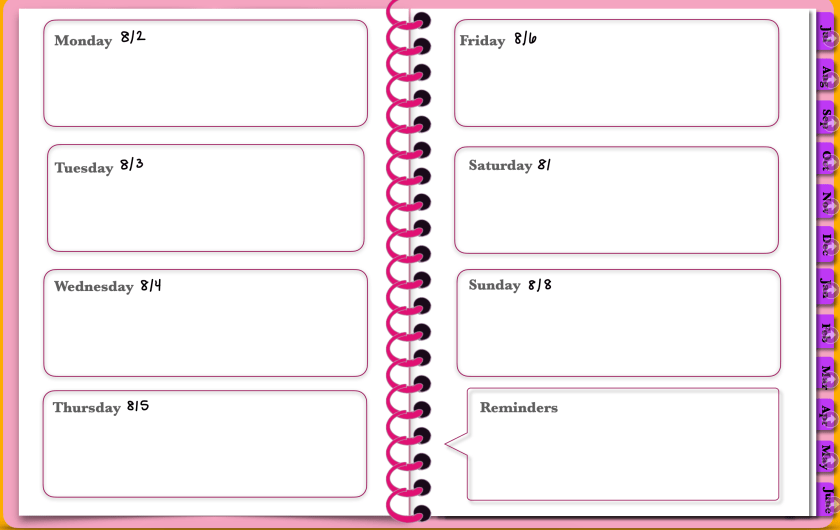
I created a blank cover for my planner and linked monthly calendars with the tabs on the sides. For example, here is my August 2021 monthly view of the calendar.
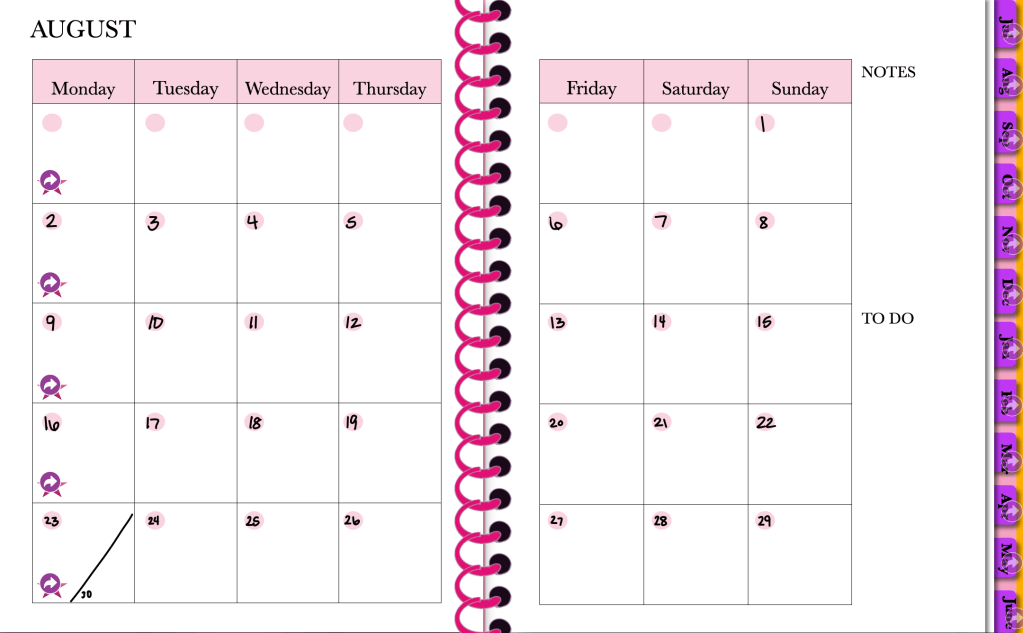
In Kirstin’s class, she teaches you how to make an undated planner, but I went ahead and dated mine for July 2021 – June 2022 in my own handwriting. Here are my daily pages:
I then exported the Keynote file to PDF and downloaded it to my GoodNotes app to use for the rest of the year!
My goal is to continue using SkillShare to learn how to make other digital products that I can sell online through my website and through Etsy.
Because this is my first attempt and I’m planning to use this version myself, I am providing a FREE download of the digital planner here:
When it comes to big life decisions, planning and preparation are key. However, sometimes we are faced with time constraints that limit the ability to see the big picture. I have been in both situations where I had the luxury of time and where I did not. There are some common strategies that I employed in all circumstances that helped me come to the ultimate decisions that I made.
While I sometimes wonder “what if” I had made a different decision, I do believe that everything happens for a reason and I’m on the path I’m supposed to be on. I’m personally in the process of using these steps to help me with a big life decision regarding leaving the country and potential work. So here are three strategies to consider as you think about the next big decision in your life.
Advice for big life decisions
1. Be selective about the advice your receive
I do believe it is important to seek out advice from the people who may be impacted by your decision or who have been in similar situations. However, be mindful of sharing your dilemma with every single person in your life. If you tell 15 people, you may end up getting 15 different suggestions on what you “should” do. Most people are trying to be helpful, but they can only speak from their personal perspectives and experience.
I am definitely a list type of gal. I love to write things down and check them off as I go. The benefit of writing pros and cons is to visualize all the possible things that could be good or bad about your decision. My suggestion is to do a brain dump first and just create two lists: one with all of the pros that go along with your possible decision and one with the cons that go along with your decision.
After getting every possible consequence, reason, or benefit that you can think of down on paper, then start to prioritize the importance of those impacts. For example, if you are thinking about moving to another state, but your child is in their senior year of high school, can you wait one year? Or, if there is an opportunity to make more money that could benefit the long run and the chance won’t come around again, then perhaps you might want to seize it.
3. Write down the most important questions
If there are any unknowns about your potential big life decision that someone could answer, then write down every question you have. What are the things you want to know? Who can you talk to for advice that you trust? What else has to happen if you make this decision?
You will probably think of questions as you are creating your pros and cons list and go back and forth between these two strategies. Do your best to find answers to these questions as you process the best course of action regarding this life decision. Again, prioritize the most important responses to help facilitate the best decision for you and the people you care about.
A few reminders as you think about what to do with these big life decisions:
You probably won’t be able to make everyone happy no matter which course you choose.
Don’t be swayed by everyone’s input to the point of confusion.
Be realistic about your timeline as you start planning so you don’t get rushed at the end if you can help it.
Whatever it is that you’re thinking about changing in your life, employ these strategies to try to come to the best decision possible. We are human and sometimes we don’t make the right ones, so be forgiving with yourself and the people around you as much as possible, particularly during stressful times. Big life decisions are no easy tasks. Wishing you every happiness in your life!
My new focus is purposeful productivity. I recently read another post about the dangers of toxic productivity. I’m all for getting rid of the idea of being productive for productive’s sake or for the betterment of someone else’s goals and ambitions.
Have you seen that meme about how U.S. workers will be in the hospital having an email away message saying that they can be reached by text while other countries will have an away message that says I’ll get back to you in a few months or eventually or never?
Well, if you haven’t, you should Google it. And then reflect on it because it really slaps you in the face if you’re a workaholic like myself. It makes me reflect on how we’ve been conditioned to think that we owe our entire lives to our employer or our job. There’s even fear of retribution if we have to for some reason call out or handle personal or family emergencies.
Fortunately, I’ve actually worked in a lot of places that have been more understanding of my situations than I have. Meaning, I’ve often been tougher on myself or felt more guilty about not following through if something came up. But, that’s life. That’s reality. And people and family and your personal physical and mental health are more important than a job.
There are many conflicting opinions on what people should have done with their time during the pandemic. Some advocated for rest, while others said it was time to learn a new skill or finally reach that goal. The reality is that we were all living in a time of uncertainty and every single person’s own situation was unique and distinct to them. There is no room to judge others for what they should or shouldn’t have done with their time.
So as I’ve been seeing more and more about the toxic productivity culture, I tried to think of an alternative to always just being productive. I thought of purposeful productivity and was excited at the prospect of coining a new phrase. But alas, Google showed me there were a couple of really awesome articles already written about the topic. One useful checklist includes ideas for mental, digital, and physical areas of our lives. Another post includes 35 strategies to achieve purposeful productivity in your life.
My reason for trying to combine purpose and productivity is that sometimes we can be productive for our own self-care and not just for the sake of getting something done. Additionally, I find that when my actions are tied to a greater purpose or “why”, my productivity actually increases and I have more motivation to complete the task or activity.
As I think about being more purposeful in my day-to-day activities, I’m trying to develop a morning routine to help guide my productivity toward my purpose. There, I set my intentions and my to-do list to match my goals. Here are the questions I ask myself for reflection:
Why am I doing this particular task or activity?
Who does this benefit? (Is it me or someone I care about? Is it related to paying bills and my livelihood?)
Do I need to report back on my time and justify my work to anyone?
Is this connected to bigger goals for the future?
Can I make this task more efficient or automated like a habit?
Even if I can’t answer one of the above questions, it doesn’t necessarily mean it’s something I shouldn’t do. However, maybe it’s something that doesn’t need to be done quite at that moment or with a sense of urgency.
As I continue on this productivity journey, I plan to be mindful of my purpose and not fall into the trap of productivity for productivity’s sake. YOU are valuable and sometimes taking a nap or walking or building a sand castle with your kids is exactly the kind of purposeful productivity that you need.
Time management in the summer is a whole different ball game for me.
I don’t know about you, but once the days got longer and the sun started shining, my body and mind automatically switched into vacation mode. And I don’t think that’s a bad thing. The past two years have been especially taxing and it’s time to think about what that means for our post-pandemic future (check out this awesome post by my friend Sonya)!
I’m going to revisit one of my first ever blog posts about time management, which actually has the most likes out of all my posts thus far, and assess how that fits into my summer plans.
Here are the time management tips I gave:
Single task
Use a modified Pomodoro
Prioritize
Improve technology skills
Calendar
Now, I still stand by these tips as actionable ways to manage your time in an efficient and productive manner. However, although mentioned in the initial post, I did not explicitly state self-care as a time management tip. I want to emphasize now the hugely important role that self-care plays in time management. I say this as a person who recently went on a trip and ended up working half the time and not getting to truly detach and enjoy the full experience.
Summer is a time that should be full of adventure and excitement and wonder. I know I always looked forward to summer as a kid because my parents planned activities for us to do at the house or hikes in waterfalls with picnics and I got to eat my favorite Teddy Grahams. As an adult, I’m now the one in charge of picking my adventures and choosing how I plan to get things done.
My schedule is sort of strange right now and I’m trying to figure out the right balance between work and play. As a recent doctoral graduate, I want to create a lot of downtime for myself because I’ve basically spent more than half of my life in school. However, this is also a perfect opportunity to build up my blog and YouTube as well as network to become an academic coach or editor.
So while I will still subscribe to the tips mentioned above, I have a few things to add to my personal time management tip list for summer.
Prioritize mental and physical health. It is extremely hard to complete tasks to the best of your ability if you are exhausted or drained. I need to get back in the zone where I’m taking care of myself so that I can do the best for the people I love. I know myself well enough to know the best time for me to exercise is in the morning so I’m trying to get up and make sure I at least walk every day.
Schedule unscheduled time. Now, this tip might sound strange, but if you’re a planner like me, then you know what I mean. Don’t feel like you need to fill your calendar to the brim with activities and work and vacation. Allow your calendar to have more breathing room than you would throughout the rest of the year. Give yourself permission to take a day trip on a whim or build a pillow fort in the house with your kids.
Be forgiving with yourself and others. This tip holds true for any time in the future as well. For many individuals and families, summer is a time to relax a bit more, get out and enjoy the sunshine, and just generally slow down. We emphasize this work, work, work culture in the U.S., but what about life, life, life.
As a reforming workaholic, I am trying desperately to recognize how my overwork tendencies have created times in my life where I got burnt out too quickly. Try to recognize those signs in yourself and in others and be an encouragement to those who need a break.
For context, my interesting sense of time and ever-evolving perspective stems from a mother who is extremely early to everything and a father who shows up habitually late. I like to think of myself somewhere in the middle, but open to learning and accepting new ways of managing time based on personality, goals, and mutual understanding. Check out another amazing post from Sonya here!
Anyway, the moral of this story today is to enjoy your life and make the most of the time you have!
What are the best podcasts for learning new things? I absolutely LOVE to learn new things. I’ve semi-joked with friends and family about just going to school forever. I even went so far as to look up the Guinness Book of Records information for the person with the most degrees. If I had unlimited money to pay for school, I might actually consider breaking that record of 30 degrees for the highest and 14 for the second-highest. I really think I could do it.
However, in the meantime, I search for free ways to gain new knowledge, of which there are plenty. There are numerous websites, YouTube channels, and podcasts that highlight new ideas, re-package long-standing ideas, and help process things that could help you in any area of your life.
If you’re interested in learning a new skill or content area, just start with Google and go from there. And if you don’t find what you’re looking for, perhaps that’s an opportunity for you to create a blog or something to fill that gap and share that knowledge with others.
Podcasts are a great way to get information and be entertained at the same time. I wanted to share here my top 5 best podcasts for learning. They are listed in no particular order as I listen to whatever sounds interesting when I log in to Apple Podcast.
Adam Grant is an organizational psychologist who regularly speaks and writes on the topics of work and creativity. Interestingly, he is one of the 10 most influential speakers on management. In addition to his podcast, I encourage you to subscribe to his newsletter to get new insights and information on a weekly basis. His podcasts span numerous topics from careers, regret, identity, and “the science of ….”, fill in the blank with many things. There is usually an expert researcher, thinker, or speaker who he talks with during each episode.
2. Hidden Brain with Shankar Vedantam
“Hidden Brain explores the unconscious patterns that drive human behavior and questions that lie at the heart of our complex and changing world. Our work, led by Host and Executive Editor Shankar Vedantam, is marked by a commitment to scientific and journalistic rigor, and a deep empathy for our guests and audience.”
This is one of the most fascinating podcasts to listen to on a regular basis. I love learning about how our brain works and the why behind certain behaviors. Late each summer they do a series on You 2.0 and discuss how to understand yourself and work to achieve your goals. This is one of the best podcasts for learning new things.
3. The Next Big Idea with Rufus Griscom, and featuring Malcolm Gladwell, Susan Cain, Adam Grant, and Daniel Pink
This podcast is all about discussing new and innovative ideas that can change the way we see the world, our work, and each other. A recent episode was on the future of email at work and it inspired me to monitor my own email usage for a week. Today’s episode is all about getting smarter and thinking outside of our brains featuring Annie Murphy Paul. I haven’t had a chance to listen to it yet, but I’m very intrigued by the description and the possibility of using science to get smarter.
As an economics major in college, I cannot help but be drawn to econ related content. As a reader of the Freaknomics book series, it’s only natural that I also listen to Stephen Dubner’s Freakonomics Radio. According to the podcast description, “Each week, Freakonomics Radio tells you things you always thought you knew (but didn’t) and things you never thought you wanted to know (but do) — from the economics of sleep to how to become great at just about anything.” And the description is highly accurate for the types of content in this podcast. I’m always interested to learn more about the topics he shares each week.
5. The Happiness Lab with Dr. Laurie Santos
If you haven’t yet taken The Science of Wellbeing through Coursera, I highly recommend doing so. It’s an excellent summer activity for self-reflection and personal development. In addition to the course, Dr. Santos hosts this podcast for deeper discussion on topics relating to money, happiness, life, and well-being. As a professor of psychology, she uses science and story-telling to share ways we can enrich our lives and the myths about things we think will make us happy.
I listen to lots more podcasts, but these are some of the best podcasts for learning new information. Check them out and let me know what you think!
I have to say one of the best personal development books I have read in the past year is Atomic Habits by James Clear. As I was reading, I kept thinking, that makes total sense. Why didn’t I think of that before? So even though most of the knowledge was pretty common, he packaged it in such a way that made it tangible and helpful.
The cover of the book says “tiny changes, remarkable results” and “An easy & proven way to build good habits and break bad ones.”
On a news clip, Clear talks about the fact that it isn’t us that’s our problem with building better habits, but it’s our system and environment. Furthermore, small changes that sometimes can go unnoticeable can actually go a long way and make a big difference.
He says, “if you can get 1 percent better each day for one year, you’ll end up thirty-seven times better by the time you’re done” (p. 15).
James Clear
On the flip side, getting worse has a huge detrimental effect over that one year.
Four and a half years ago I ran a half marathon. I trained, followed my plan, and met that goal. Then what happened? I took a day off from training. Then another day and then another. Before long, I had stopped running completely.
Clear says, “Achieving a goal only changes your life for the moment” (p. 25). His suggestion for changing my system now is to simply put sneakers next to my bed on the first day. Then, maybe add in another article of clothing until I get up and walk for a minute. Then, continue to compound those small changes until my system and routine are changed.
Another point that Clear makes in his book that has stuck with me is how our identity influences our habits. For a long time, I’ve been trying to be more of a morning person and I constantly say that I’m not. Those beliefs have power over our actions. If we want to change our identity, we need to start with small habits.
The four laws of behavior change can be used to build better habits. They are cue, craving, response, and reward. Clear says that we need to cue our environment to make habits obvious. Conversely, if we want to break a bad habit, we need to make it invisible. We have to train our brains to pick up clues and not even think about what’s happening.
I was just talking to my accountability partner this week about building habits. I referenced this book, which inspired me to write the post you are reading right now. One of the pieces of advice I gave came from Clear’s book, which is habit stacking.
Essentially, you place a new habit immediately after something that is already a habit. For example, I’m trying to get better at remembering to put moisturizer on my face at night. So, after I brush my teeth (an automatic habit), I put moisturizer on.
Recommendation on Reading Atomic Habits
I’m not going to give the whole book away because I do recommend that you read it. Throughout Clear’s discussion of how to build better habits and how to break bad ones, he gives clear, relevant examples and offers practical steps and advice to make it happen.
He has a cheat sheet that describes the four laws of creating a good habit with advice that you can download and print from his website. Additionally, it’s worth signing up for James Clear’s weekly newsletter that offers 3 short ideas, 2 quotes, and 1 question.
Overall, Atomic Habits has been highly influential in changing my thinking and behavior little by little, which I hope in the long run has hugely positive impacts on my life. Hey … I think it’s time I re-read this book for summer! Best of luck in your journey of building better habits!
On the second post, someone made a great comment asking for more ideas on how to create content for your blog. While I am no expert with my baby blog here, I have learned some strategies to create content and build ideas for blog posts. Since this blog is about learning, sharing, and growing together, then of course I will share what I’m learning along the way.
I read a lot of other blogs and watch YouTube channels to help build my knowledge of starting a blog. From what I’ve gathered, it takes 6 months to a year to start seeing profits from a blog. And even then, it’s highly dependent on the content you create, the audience you’ve grown, and the quality you provide. One of the more informative channels that I follow is Income School. They have a course you can pay for, but the videos include the majority of the content and strategies for free if you follow them.
I hope to add more value as I continue to learn, but for now I’ll share 4 ideas to curate content for blog posts:
Personal experience
This is probably the fastest and easiest way to generate content for your blog. As you think about things you’d like to write about, draw on your own experiences. For example, I do regular goal planning throughout the year and I shared my process in a Summer 2021 goal planning post. Another example I shared was my experience preparing for and running a half marathon.
Start with making a list of things that interest you and see if you want to write about any of those topics. Pick the one you have the most to say about and start writing. Now, you may prefer to write one blog post at a time in its entirety or you may choose my method of just tracking ideas and thoughts as they come to me.
Trending topics
Choose to write about trending topics on social media or in the news. I subscribe to a number of bigger blogs such as Medium and PCMag. It allows me to see which type of content is getting a lot of likes or mentions. Additionally, because I write a lot of productivity posts, I follow people on Twitter and LinkedIn to find out what topics are interesting to them.
If you are more advanced, you can use keywords that are popular in searches or invest in technology that helps you identify what those are. I am not at that level yet, but I hope to be in the next 6 months. From Income School, I learned that it takes about 8 months for most blog posts to mature and reach their maximum audience. I just started this blog in February 2021 and really started to ramp up my content in April 2021.
I spend a fair amount of time consuming content. I love to read and listen to podcasts or watch YouTube channels. Whenever I do this, I am constantly learning new things and gathering new ideas. Many times, I send myself an email with notes on what I read or watched because email is like my ongoing to do list and record keeping space.
I have several blog posts in draft mode right now reviewing books I’ve read to share my overall thoughts. In my conversations with friends, I make notes of the things they are interested in and what they are also reading and watching.
Yes, it’s my circle which could result in an echo chamber of sorts, but I love to hear their viewpoints on different topics and it informs me of the things they are interested in as well. The goal planning post and YouTube video was based on personal experience, but also a conversation with a friend on something that could help her with planning, but all helps me come up with content for blog posts.
My blog post on ways to say no was also a result of a conversation with a friend and some coaching to help her get the message across as she intended. Additionally, I’m currently editing a YouTube video on this topic so I can repurpose content from by blog and YouTube to get the message out to a wider audience.
Monitoring posts that do well
I initially started with the WordPress premium account, but I recently invested in the WordPress business account, which comes with a lot more optimization tools to see how blog posts are doing. One thing I am monitoring is which posts are getting more views and more likes. That tells me that those topics are popular and people want to see more information about that.
Another interesting feature of the business account is that I have a headline analyzer function. This helps me to create eye-catching headlines that have a better chance of eventually be picked up by Google (which takes time). For example, this headline has a score of 72 and a good score is between 40 and 60. I can write a follow up blog post in 6-8 months to update on how well this particularly post did.
What I plan to do is improve the posts that do well over time by adding more information to them or expanding even further. I watch the likes come in on different posts. What I’ve found is that I have a few loyal subscribers who like most of my posts and then some posts on time management and communication or email topics that seem to be doing well in the WordPress reader world.
However, one thing to note is that people can view your blog on the WordPress Reader, but not actually count as a view because they’re not on your page. So I encourage you to click directly on the blog and check out some other posts when you’re coming in from the WordPress Reader.
I hope this advice for developing content for blog posts was helpful and I look forward to sharing more with you as I continue on this blogging journey!
Receiving emails is just as much work as sending emails. I was listening to a podcast recently about the nature of emails in the work world. The premise was that it has, in fact, decreased productivity and lessened our ability to engage in deep thinking. This podcast was from The Next Big Idea, hosted by Rufus Griscom and Cal Newport.
The episode discusses the evolution of emails and strategies to continue to engage in deep thinking despite the ongoing distractions of the email barrage. They note “Communication overload undermines your productivity, erodes your focus, zaps your energy, and makes you miserable.” On average, people check their email every six minutes.
I wanted to test out my emails in and out for one week. My contract work is slowing down so this is to be expected a much slower pace of emails than I have typically dealt with in the past.
Here is the breakdown of my email usage (sending and receiving emails):
So most days, I was below the average number of emails received. As you can see from my emails out, not every email needed a reply from me. It may have been a subscription or information that I filed away in my folders. I like to keep my emails organized as much as possible.
What Cal Newport argues is that not everything needs to be an email. There is a really nice blog post with 3 rules for reducing emails. Additionally, I recommend listening to the podcast episode to get some takeaways on how to reduce emails and for organizations to create better systems and processes for handling information.
I look forward to reading Cal Newport’s book, A World Without Email: Reimagining Work in Age of Communication Overload. I believe this thought process to be the future of work and it’s time for entrepreneurs to get ahead of the game and find resources to streamline communication. I’ll post a review once I finish reading it!

















 Tracy Dee Tips